


LS2 cutaway pic - 2005 400 HP


Thread Starter
N2O Lover
Joined: Jul 2003
Posts: 1,365
Likes: 0

Originally posted by Whaazup17
yep push rods don't get the revs that over head would get
yep push rods don't get the revs that over head would get
Reliability and consistency are another reason. HP means nothing if you cannot deliver it.

Registered User
Joined: Apr 2003
Posts: 7,297
Likes: 0
Originally posted by DebianDog
Yeah re-readng some of those posts it reminded me that in the Feb's Hotrod magazine had an interseting article about Pro Stock and Pro Import.. One is a carbed supercharged pushrod V8.. another uses a EFI turbocharged DOCH I6 (Supra motor)... Two different powerplants from two different set of rules, inside very similar chassis and drivelines. The Pro Import car makes more peak HP (it like 1300 vs 1100), but slower since they can't figure out how to adjust the clutch to launch it, since a turbo's are load dependent.. like trying to hit a moving target..
Reliability and consistency are another reason. HP means nothing if you cannot deliver it.
Yeah re-readng some of those posts it reminded me that in the Feb's Hotrod magazine had an interseting article about Pro Stock and Pro Import.. One is a carbed supercharged pushrod V8.. another uses a EFI turbocharged DOCH I6 (Supra motor)... Two different powerplants from two different set of rules, inside very similar chassis and drivelines. The Pro Import car makes more peak HP (it like 1300 vs 1100), but slower since they can't figure out how to adjust the clutch to launch it, since a turbo's are load dependent.. like trying to hit a moving target..
Reliability and consistency are another reason. HP means nothing if you cannot deliver it.
and the street glow supra uses computer fuel mangament and everything
Thread Starter
N2O Lover
Joined: Jul 2003
Posts: 1,365
Likes: 0
Originally posted by Whaazup17
I remember that a 500 c.i. big block can't beat that I love how they can't show the design of the intake manifold
I remember that a 500 c.i. big block can't beat that I love how they can't show the design of the intake manifold
 That was weak!
Registered User
Joined: Apr 2003
Posts: 7,297
Likes: 0
Originally posted by DebianDog
"Yes it is a secret, tape it up" That was weak!
"Yes it is a secret, tape it up"
That was weak!
I don't like people looking at the carberators I flow but if they buy one then they can find out all they want heh

Jose
Joined: Mar 2003
Posts: 819
Likes: 0
yea the whole push rod and sohc v8 thing popped in my head a couple weeks ago, im not familar w/ v8's that much. is there dohc 4v/cylinder setups similar to a typical 16v dohc 4cylinder?
and wouldn't the dohc v8's be more "tuneable", fuel efficient, and more advanced compared to the 50's technology of push rods?
and wouldn't the dohc v8's be more "tuneable", fuel efficient, and more advanced compared to the 50's technology of push rods?
Last edited by sentra of attention; Mar 20, 2004 at 08:54 AM.
Thread Starter
N2O Lover
Joined: Jul 2003
Posts: 1,365
Likes: 0
Originally posted by sentra of attention
yea the whole push rod and sohc v8 thing popped in my head a couple weeks ago, im not familar w/ v8's that much. is there dohc 4v/cylinder setups similar to a typical 16v dohc 4cylinder?
and wouldn't the dohc v8's be more "tuneable", fuel efficient, and more advanced compared to the 50's technology of push rods?
yea the whole push rod and sohc v8 thing popped in my head a couple weeks ago, im not familar w/ v8's that much. is there dohc 4v/cylinder setups similar to a typical 16v dohc 4cylinder?
and wouldn't the dohc v8's be more "tuneable", fuel efficient, and more advanced compared to the 50's technology of push rods?
My favorite story:
On a warm, sunny day in May 1992, a ‘blind’ comparison test was performed by General Motors’ executives on a massive pavement area called Black Lake, deep within the secretive GM Milford Proving Grounds outside of Detroit, Michigan. The conclusions drawn from this test would change the course of history for General Motors Powertrain, its customers and the automobile industry.
At the time, the automotive business was ferociously arguing the merits of building complex, seemingly high tech, dual overhead cam (dohc) internal combustion engines versus building simple, seemingly low tech, pushrod engines. This hands-on comparison by the execs was to put the debate to a seat-of-the-pants experience and allow the leaders of GM to decide the course for the future for GM Powertrain.
The executive leadership of GM would drive pairs of similar appearing vehicles and compare how each vehicle felt—not knowing what engine type was powering the vehicles. Of most interest to readers of this book were two black Corvettes parked at the end of the lineup. One ‘Vette was fitted with a 330 hp, early version of the LT4 Gen II V8 pushrod engine. The other ‘Vette was equipped with the ZR1-spec, Lotus-designed, all-aluminum, dohc engine full specs . Both vehicles were equipped with automatic transmissions. Both were fully integrated for their specific powerplants to give a real world experience to the executives.
The results surprised even the most ardent supporters of the pushrod architecture. The executives couldn’t get over how one of the ‘Vettes pulled from the moment they pressed on the throttle. The surge. The thrust. The torque.
In contrast, they commented on how the engine in the other ‘Vette seemed to take a moment to ‘wind up’ before pushing them back in the seat. This vehicle required more precision and planning when driving fast, to keep the engine up in the RPM band when the power was needed.
As the day went on, executive after executive came to the same conclusion. After all had tested the vehicles, the hoods were raised. To anyone who has driven or ridden in a 300+ hp small block Chevy V8 engine powered vehicle, it comes as no surprise the Corvette the executives liked was the Gen II pushrod V8-equipped vehicle.
From then on, the course for GMs V8 powertrain was set. The world’s finest pushrod V8 would be created to power the most profitable vehicle’s in the General Motors fleet. This was the birth of the Gen III small block V8.
At the time, the automotive business was ferociously arguing the merits of building complex, seemingly high tech, dual overhead cam (dohc) internal combustion engines versus building simple, seemingly low tech, pushrod engines. This hands-on comparison by the execs was to put the debate to a seat-of-the-pants experience and allow the leaders of GM to decide the course for the future for GM Powertrain.
The executive leadership of GM would drive pairs of similar appearing vehicles and compare how each vehicle felt—not knowing what engine type was powering the vehicles. Of most interest to readers of this book were two black Corvettes parked at the end of the lineup. One ‘Vette was fitted with a 330 hp, early version of the LT4 Gen II V8 pushrod engine. The other ‘Vette was equipped with the ZR1-spec, Lotus-designed, all-aluminum, dohc engine full specs . Both vehicles were equipped with automatic transmissions. Both were fully integrated for their specific powerplants to give a real world experience to the executives.
The results surprised even the most ardent supporters of the pushrod architecture. The executives couldn’t get over how one of the ‘Vettes pulled from the moment they pressed on the throttle. The surge. The thrust. The torque.
In contrast, they commented on how the engine in the other ‘Vette seemed to take a moment to ‘wind up’ before pushing them back in the seat. This vehicle required more precision and planning when driving fast, to keep the engine up in the RPM band when the power was needed.
As the day went on, executive after executive came to the same conclusion. After all had tested the vehicles, the hoods were raised. To anyone who has driven or ridden in a 300+ hp small block Chevy V8 engine powered vehicle, it comes as no surprise the Corvette the executives liked was the Gen II pushrod V8-equipped vehicle.
From then on, the course for GMs V8 powertrain was set. The world’s finest pushrod V8 would be created to power the most profitable vehicle’s in the General Motors fleet. This was the birth of the Gen III small block V8.
__________________
Debian Dog
2001 Trans-Am - A4 w/2.73 Steel Driveshaft - Full weight
2004 SRT-4 - MPx, PSI intake
Best Times 1/4
N/A - 12.56@110.51
N2O - 11.43@123.15 100 shot
See My Cars - Listen to the 224/228 closed & open - My Latest Video of Drag Run
Debian Dog
2001 Trans-Am - A4 w/2.73 Steel Driveshaft - Full weight
2004 SRT-4 - MPx, PSI intake
Best Times 1/4
N/A - 12.56@110.51
N2O - 11.43@123.15 100 shot
See My Cars - Listen to the 224/228 closed & open - My Latest Video of Drag Run
Originally posted by moldyhands
Show me an 11 second import that only has a few thousand in it, and I'll show you a car owner that's always talking about when his car's going to get fixed and what broke.
Show me an 11 second import that only has a few thousand in it, and I'll show you a car owner that's always talking about when his car's going to get fixed and what broke.

The little 5.0 that could
Joined: Apr 2003
Posts: 13,275
Likes: 0
Originally posted by sentra of attention
yea the whole push rod and sohc v8 thing popped in my head a couple weeks ago, im not familar w/ v8's that much. is there dohc 4v/cylinder setups similar to a typical 16v dohc 4cylinder?
and wouldn't the dohc v8's be more "tuneable", fuel efficient, and more advanced compared to the 50's technology of push rods?
yea the whole push rod and sohc v8 thing popped in my head a couple weeks ago, im not familar w/ v8's that much. is there dohc 4v/cylinder setups similar to a typical 16v dohc 4cylinder?
and wouldn't the dohc v8's be more "tuneable", fuel efficient, and more advanced compared to the 50's technology of push rods?
__________________
-Vince
-Vince
Thread Starter
N2O Lover
Joined: Jul 2003
Posts: 1,365
Likes: 0
Tunable? Crap they are almost too tunable. Something like 200+ things you can edit with them. We have all the tools avaliable too... well NOW.
Here is a test run I did the other day check out my stock MAF vs an aftermarket one.
Edit: Notice I did NOT get 100% thottle That's fixed
Something like 200+ things you can edit with them. We have all the tools avaliable too... well NOW.Here is a test run I did the other day check out my stock MAF vs an aftermarket one.
Edit: Notice I did NOT get 100% thottle
That's fixed
Last edited by DebianDog; Mar 20, 2004 at 09:32 AM.
Jose
Joined: Mar 2003
Posts: 819
Likes: 0
Engine Specifications
lt5 1990-1992 1993-1995
GENERAL
SAE Net Power 375 hp @ 6,000 rpm 405 hp @ 5,800 rpm
SAE Net Torque 370 ft lbs @ 4,800 rpm 385 ft lbs @ 4,800 rpm
lt1 lt4
Horsepower (hp @ rpm) 300 @ 5,000 330 @ 5,800
Torque (lb-ft @ rpm) 340 @ 4,000 340 @ 4,500
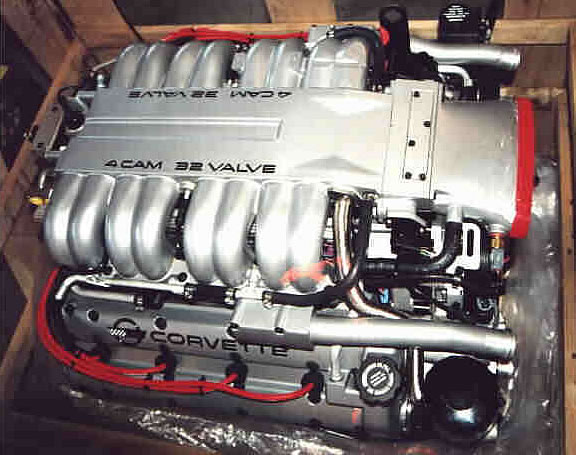
the lt5 is the 4 cam 32v that u were just taling about, right?
umm i prefer 405 hp 385 torque more than 330hp 340 torque.
am i comparing the right engines?
al the info is from http://corvetteactioncenter.com/specs/index.html that debian dog posted
lt5 1990-1992 1993-1995
GENERAL
SAE Net Power 375 hp @ 6,000 rpm 405 hp @ 5,800 rpm
SAE Net Torque 370 ft lbs @ 4,800 rpm 385 ft lbs @ 4,800 rpm
lt1 lt4
Horsepower (hp @ rpm) 300 @ 5,000 330 @ 5,800
Torque (lb-ft @ rpm) 340 @ 4,000 340 @ 4,500
the lt5 is the 4 cam 32v that u were just taling about, right?
umm i prefer 405 hp 385 torque more than 330hp 340 torque.
am i comparing the right engines?
al the info is from http://corvetteactioncenter.com/specs/index.html that debian dog posted
Last edited by sentra of attention; Mar 20, 2004 at 09:55 AM.
Jose
Joined: Mar 2003
Posts: 819
Likes: 0
edit:
i cant find the specs on the lt2 could some one hook me up?
i cant find the specs on the lt2 could some one hook me up?


