


How do you get 1300 reliable hp?


Thread Starter
Registered User
Joined: Aug 2003
Posts: 4,769
Likes: 0
 How do you get 1300 reliable hp?
I know you can run it off diesel until you go to the race track, but i have no knowledge as to how to get this to work. It sure would make a cool project.
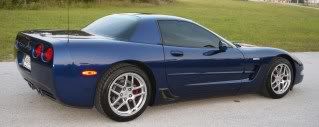
there she is
there she is
Last edited by tampamax; Jan 11, 2004 at 04:28 PM.

Registered User
Joined: Dec 2003
Posts: 2,001
Likes: 0
How do you get 1300 reliable hp?
^-- you don't
^-- you don't
__________________
2013 Ford Escape Titanium - grocery getting power
TR's Tactical Trunk Monkey Crew #001
Midgets and Beer!!!
the book of faces
2013 Ford Escape Titanium - grocery getting power
TR's Tactical Trunk Monkey Crew #001
Midgets and Beer!!!
the book of faces
Thread Starter
Registered User
Joined: Aug 2003
Posts: 4,769
Likes: 0
what do you mean by narrow rpm range?
I was thinking you'd need to bolt up a torqe tube and go. The deminsion the guy emailed me of it seems easy enough to fit in an average size engine bay, but i accidently deleted to email for good-doh.
I was thinking you'd need to bolt up a torqe tube and go. The deminsion the guy emailed me of it seems easy enough to fit in an average size engine bay, but i accidently deleted to email for good-doh.
__________________
You don't like it? So sue me. Don't take me seriously though.
You don't like it? So sue me. Don't take me seriously though.

Guest
Joined: May 2002
Posts: 0
Likes: 0
Turbine engines can only make power in a very narrow RPM range and is slow to change RPMs due to the high turbine speeds and the inertia of the turbine wheels.
If not for those limitation turbines would have been running cars years ago, but electric hybrids will help bring about turbine in cars.
If not for those limitation turbines would have been running cars years ago, but electric hybrids will help bring about turbine in cars.
Thread Starter
Registered User
Joined: Aug 2003
Posts: 4,769
Likes: 0
Originally posted by 0HP930
Turbine engines can only make power in a very narrow RPM range and is slow to change RPMs due to the high turbine speeds and the inertia of the turbine wheels.
Turbine engines can only make power in a very narrow RPM range and is slow to change RPMs due to the high turbine speeds and the inertia of the turbine wheels.
You could very well be right, and i'm not starting and argument here, so i'll just ask if you have, or could direct me to where i may find, dyno charts of the same or similar jet engines?

I have fuzzy eyebrows
Joined: Oct 2001
Posts: 4,269
Likes: 0
Not entirely true. I worked on that particular engine for 6 years. Its a power house for sure. Plenty of torque from 46% to 110% of operating rpm range. I think max rpm was around 36,000 rpm so you can do the math on what range of rpm it can provide TQ. I know at ground idle (46%) we dropped the rotor brake and began spinning up the dual rotors (51 ft diameter each) from that rpm. We had to SLOWLY advance the throttle because it would overtorque the drivetrain in an instant.
It does however have limitations...at the lower rpm ranges to get that large amount of tq requires some very hot ITT's...which wear parts much quicker.. I think with a reduction drive and the right tranny combo that engine could be made to do wonderous things. Of course the cost could be more than practical. But it would be a fun project.
A better bet would be a PT6...one of the high HP models. They have 1200 ft/lbs on tap coming on at surprisingly low rpms. Actually..they can easily exceed that but thats the limits on the gearbox. You can actually read the Tq on a gauge in the cockpit as you load the engine.
It does however have limitations...at the lower rpm ranges to get that large amount of tq requires some very hot ITT's...which wear parts much quicker.. I think with a reduction drive and the right tranny combo that engine could be made to do wonderous things. Of course the cost could be more than practical. But it would be a fun project.
A better bet would be a PT6...one of the high HP models. They have 1200 ft/lbs on tap coming on at surprisingly low rpms. Actually..they can easily exceed that but thats the limits on the gearbox. You can actually read the Tq on a gauge in the cockpit as you load the engine.
__________________
if it's cheap & reliable, it ain't fast, if it's fast & cheap, it ain't reliable, if it's fast & reliable, it ain't cheap
if it's cheap & reliable, it ain't fast, if it's fast & cheap, it ain't reliable, if it's fast & reliable, it ain't cheap
Thread Starter
Registered User
Joined: Aug 2003
Posts: 4,769
Likes: 0
Originally posted by HybridSS
Not entirely true. I worked on that particular engine for 6 years. Its a power house for sure. Plenty of torque from 46% to 110% of operating rpm range. I think max rpm was around 36,000 rpm so you can do the math on what range of rpm it can provide TQ. I know at ground idle (46%) we dropped the rotor brake and began spinning up the dual rotors (51 ft diameter each) from that rpm. We had to SLOWLY advance the throttle because it would overtorque the drivetrain in an instant.
It does however have limitations...at the lower rpm ranges to get that large amount of tq requires some very hot ITT's...which wear parts much quicker.. I think with a reduction drive and the right tranny combo that engine could be made to do wonderous things. Of course the cost could be more than practical. But it would be a fun project.
A better bet would be a PT6...one of the high HP models. They have 1200 ft/lbs on tap coming on at surprisingly low rpms. Actually..they can easily exceed that but thats the limits on the gearbox. You can actually read the Tq on a gauge in the cockpit as you load the engine.
Not entirely true. I worked on that particular engine for 6 years. Its a power house for sure. Plenty of torque from 46% to 110% of operating rpm range. I think max rpm was around 36,000 rpm so you can do the math on what range of rpm it can provide TQ. I know at ground idle (46%) we dropped the rotor brake and began spinning up the dual rotors (51 ft diameter each) from that rpm. We had to SLOWLY advance the throttle because it would overtorque the drivetrain in an instant.
It does however have limitations...at the lower rpm ranges to get that large amount of tq requires some very hot ITT's...which wear parts much quicker.. I think with a reduction drive and the right tranny combo that engine could be made to do wonderous things. Of course the cost could be more than practical. But it would be a fun project.
A better bet would be a PT6...one of the high HP models. They have 1200 ft/lbs on tap coming on at surprisingly low rpms. Actually..they can easily exceed that but thats the limits on the gearbox. You can actually read the Tq on a gauge in the cockpit as you load the engine.
How cool. Could you maybe direct me to a few good sources of info on how to learn about the engine i posted on and the one you mentioned.
Also, with a jet engine that uses a shaft to provide power(to whatever) do they still measure the thrust said engine produces? If so do you know what this particular model puts out? The reason i ask is because of the way the gases are expelled it looks rather easy to harness the thrust for forward momentum by routing the exhuast out the back of a vehicle.
Guest
Joined: May 2002
Posts: 0
Likes: 0
I would have to see a spec chart to be sure but the torque and power numbers at 46% would be comparable to what you could get out of a more practical piston engine.
Those max power numbers are only going to be available at the optimum RPM ranges.
If you have to shift gears (an auto would be preferable) you would probably grow impatient waiting for the RPMs to drop between each upshift.
Those max power numbers are only going to be available at the optimum RPM ranges.
If you have to shift gears (an auto would be preferable) you would probably grow impatient waiting for the RPMs to drop between each upshift.
I have fuzzy eyebrows
Joined: Oct 2001
Posts: 4,269
Likes: 0
The gases expelled from a turbine are not worth a whole lot as thrust. Most of the energy has been used and tranferred to the power turbine. do a search on google under turbine powered cars. Lots of info. One of my favorites was this one....way back in the lete 60s:
One of Burt's most interesting experiences was his involvement with the construction of a turbine powered race car that was eventually run at Indianapolis during qualifying.
In 1967, engineer and STP team owner Andy Granatelli brough a revolutionary new turbine-powered car to Indianapolis. Driver Parnelli Jones dominated the entire field for the majority of the race on race day. During the last few laps, a small $6 bearing failed, and the turbine died. With four laps to go, A.J. Foyt passed Jones for the lead and eventual victory . However, the turbine had demonstrated its potential.
Jack Adams, like Granatelli, also saw the potential of the turbine, and had begun construction of his own turbine-powered Indy car. Adams had been a pilot for Delta, and decided to retire when the company transitioned from prop-driven aircraft to jets. He then created his own business in Memphis, Tennessee, dealing in aircraft sales.
Adams had approached RFRL engineer Glenn Bryant about building the turbine-powered race car, and Bryant agreed to participate. Stan Burt would be involved in the entire process as well, and construction of the car took plave in Bryant's basement.
The car was designed around a GM Allison 250 Turbo-Shaft turbine engine, capable of revving to 33,000RPM's. The engine had originally been designed for use in helicopters, but the Adams design team turned the motor sideways and re-plumbed the oil lines to get it to work in the front engine-mounted, 4-wheel drive car. The chassis was an all monocoque construction, and the suspension and wheels were originally faired in. Unforunately, this would hinder any attempts at repairing broken components during a race. The cockpit had an aircraft-like appearance, and the driver was virtually laying down. The cockpit tub was supported by balsa, and the exhaust from the front-mounted turbine ran beside the cockpit, although it was well insulated. The car was extremely aerodynamic, featuring boundary recovery on the tail. The Indy officials would ban the use of the rear wheel fairings, and the car ran without them.
The Adams team was originally sponsored by Wynn's
One of Burt's most interesting experiences was his involvement with the construction of a turbine powered race car that was eventually run at Indianapolis during qualifying.
In 1967, engineer and STP team owner Andy Granatelli brough a revolutionary new turbine-powered car to Indianapolis. Driver Parnelli Jones dominated the entire field for the majority of the race on race day. During the last few laps, a small $6 bearing failed, and the turbine died. With four laps to go, A.J. Foyt passed Jones for the lead and eventual victory . However, the turbine had demonstrated its potential.
Jack Adams, like Granatelli, also saw the potential of the turbine, and had begun construction of his own turbine-powered Indy car. Adams had been a pilot for Delta, and decided to retire when the company transitioned from prop-driven aircraft to jets. He then created his own business in Memphis, Tennessee, dealing in aircraft sales.
Adams had approached RFRL engineer Glenn Bryant about building the turbine-powered race car, and Bryant agreed to participate. Stan Burt would be involved in the entire process as well, and construction of the car took plave in Bryant's basement.
The car was designed around a GM Allison 250 Turbo-Shaft turbine engine, capable of revving to 33,000RPM's. The engine had originally been designed for use in helicopters, but the Adams design team turned the motor sideways and re-plumbed the oil lines to get it to work in the front engine-mounted, 4-wheel drive car. The chassis was an all monocoque construction, and the suspension and wheels were originally faired in. Unforunately, this would hinder any attempts at repairing broken components during a race. The cockpit had an aircraft-like appearance, and the driver was virtually laying down. The cockpit tub was supported by balsa, and the exhaust from the front-mounted turbine ran beside the cockpit, although it was well insulated. The car was extremely aerodynamic, featuring boundary recovery on the tail. The Indy officials would ban the use of the rear wheel fairings, and the car ran without them.
The Adams team was originally sponsored by Wynn's
__________________
if it's cheap & reliable, it ain't fast, if it's fast & cheap, it ain't reliable, if it's fast & reliable, it ain't cheap
if it's cheap & reliable, it ain't fast, if it's fast & cheap, it ain't reliable, if it's fast & reliable, it ain't cheap


