Every time there’s a major change in formula for a race series, it’s all too easy to find oneself heckling from the balcony, a la Statler and Waldorf from “The Muppet Show.” It’s a worryingly short journey from objective critique to obdurate criticism, and the majority of us are watching motorsports as fans and purists with no skin in the game. If Formula 1’s new power formula of half recovered energy, half internal combustion engine, was formulated to lure in Audi and entice Honda to stay, then OK, job done. But it’s not – as yet – compelling viewing.
The opening grands prix of 2026 left us intrigued but not excited by regulations that have cars and drivers backing off or downshifting before their braking point to harvest energy for the next straight, or making passes that look as cheap as those seen when CART Indy cars ran the Hanford Device on superspeedways.
The late, great Tony Brooks once explained to our writer Nigel Roebuck, “To be worth driving or watching, a racing car should always have more power than its chassis can cope with.” Which may be the case with the new F1 cars – a combined ICE and battery maximum of 1,000hp is a lot, especially now there’s no ground effect, tires are slightly narrower and the wheelbase is shorter – but how would we know? We’re not going to be able to witness and pass judgment on the finer points of drivers or cars until we know they’re at their respective limits in every corner.
It’s appropriate in RACER No. 339, The Technology Issue, that we explain (with calm impartiality, of course) how F1’s new formula produced the racing we saw in the opening grands prix, and why some teams have nailed it and others are at their wits’ end trying to figure it out.
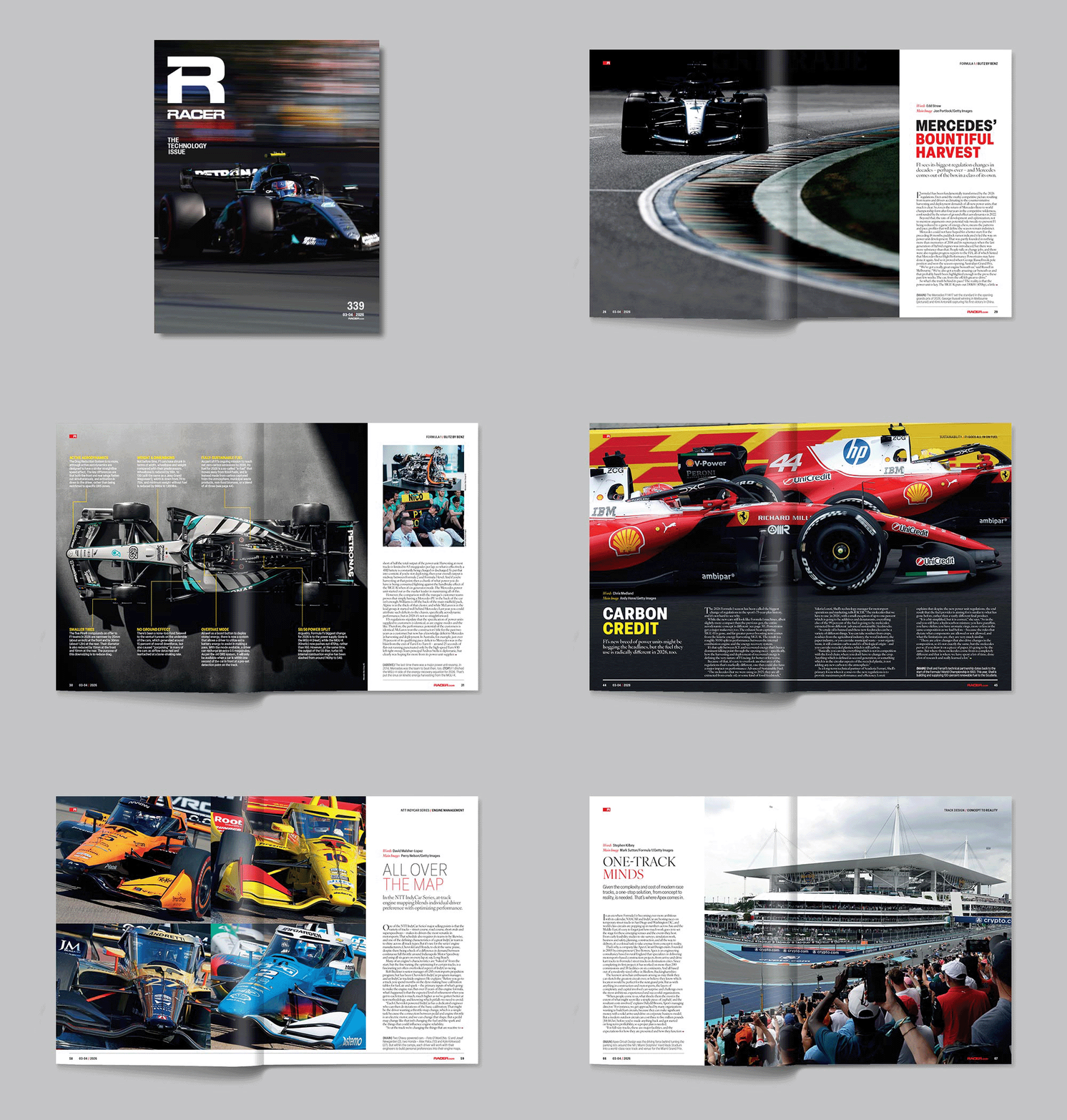
Formula 1 being so tech rich, we’ve also taken the opportunity to examine how ever-improving driver-in-loop simulators shape both cars and driving styles, and why they are still fallible when it comes to translating that performance into reality.
We’ve also delved into F1’s past to examine aero regulations and innovations that came and went – by regulation or ever improving designer knowledge – and we’ve also told the story of 1986, when horsepower was at its peak and barely contained, yet Alain Prost, Nigel Mansell, Nelson Piquet and Ayrton Senna produced one of the greatest seasons in history.
Formula 1’s new breed of power units have stolen the headlines, but the fuel they use is radically different in 2026, as is Firestone’s similarly eco-responsible evolution of its tires for the NTT IndyCar Series and Indy NXT championship. We explain both. And we also take a look at the science – and the art – of racetrack design.
-------------------------------------------------------------------------
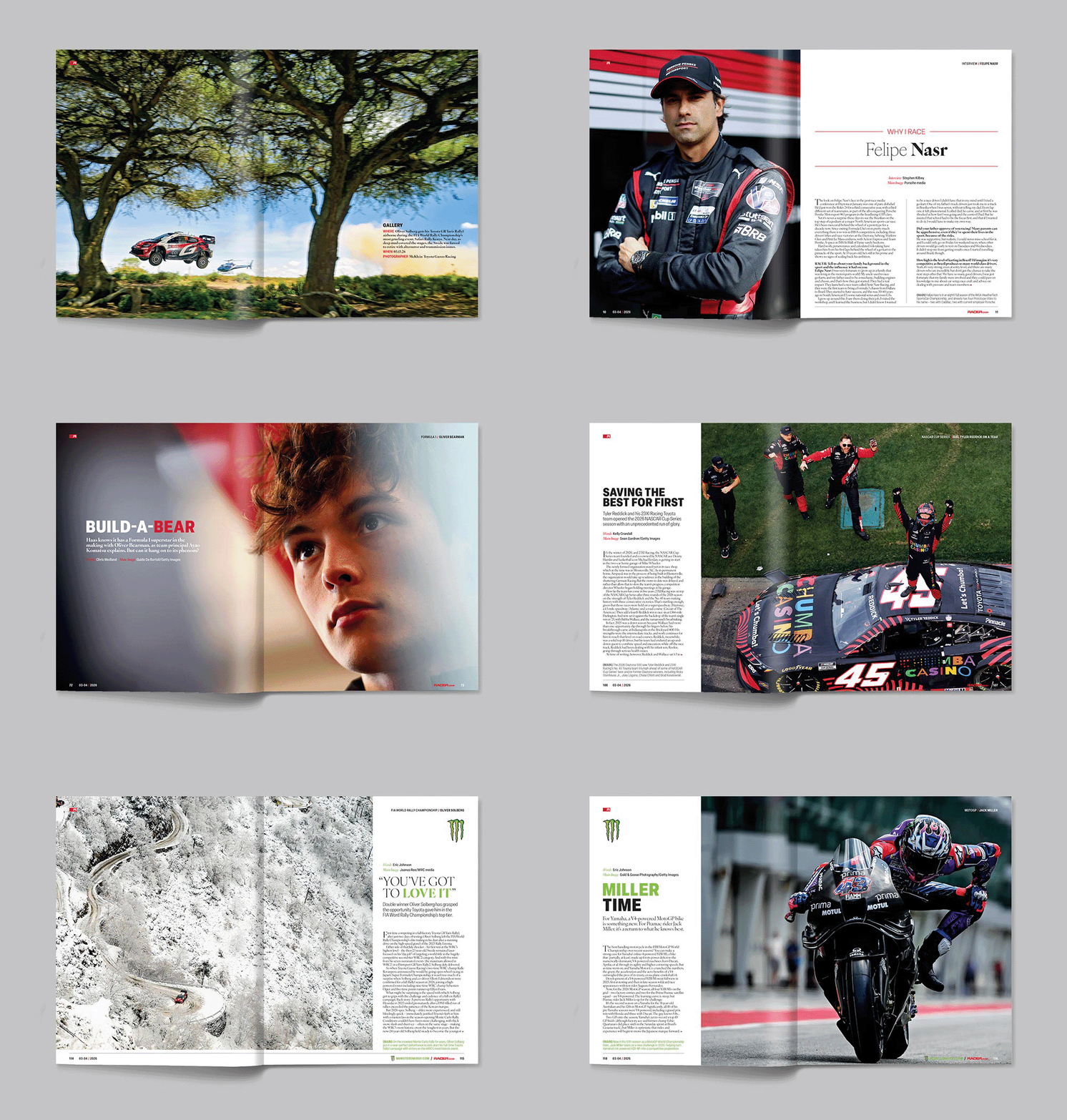
It’s not all tech talk. We mark the 30th anniversary of Chip Ganassi Racing’s first Indy car championship with a look back on that first title in 1996 and some subsequent milestone seasons since, but we also feature the team gunning for CGR with renewed vigor in the 2026 NTT IndyCar Series, Andretti Global. And it almost goes without saying that we check in with Tyler Reddick and 23XI Racing after their history-making start to the NASCAR Cup Series season. Four wins, including the Daytona 500, from the first six races!
And speaking of American teams, Haas F1 appears to have a gem in series sophomore Oliver Bearman. Team principal Ayao Komatsu explains to RACER just how good the 20-year-old Brit is already.
On the subject of aces, we have interviews with IMSA’s current driver to beat, Porsche Penske Motorsport’s Felipe Nasr, four-time Champ Car champ (and regular sports car race winner) Sebastien Bourdais, WRC rapidly-rising superstar Oliver Solberg, and MotoGP winner Jack Miller on his efforts to move Yamaha up the grid.
And it doesn’t end there. Stick around for a deep dive into the Chevrolet Corvette E-Ray street car and our take on the off-road phenomenon that is King of the Hammers.
CLICK HERE to purchase the new issue of RACER. Get 6 print issues of RACER Magazine, unlimited digital access to the RACER archive, and 24/7 motorsports streaming on the RACER+ App for one year at only $8.33/month, two years at $7.71/month, or three years at $7.22/month.
CLICK HERE and subscribe now for the ultimate motorsports fan experience.
Topics
fia formula 1
porsche penske motorsport
ntt indycar series
andretti global
chip ganassi racing
oliver bearman
tyler reddick
chevrolet corvette e-ray
daytona 500
Current Issue
Industry
David Malsher-Lopez