The triangulated four-bar systems do not require a Panhard bar to laterally locate the rear axle (although in tight street rod applications, routing exhaust can become far more difficult). Art Morrison also pointed out that for optimal operation, they should not be used on frames narrower than 39 inches. Also, throughout their use, the pinion angle can change slightly as the two sets of suspension arms travel on different axis.
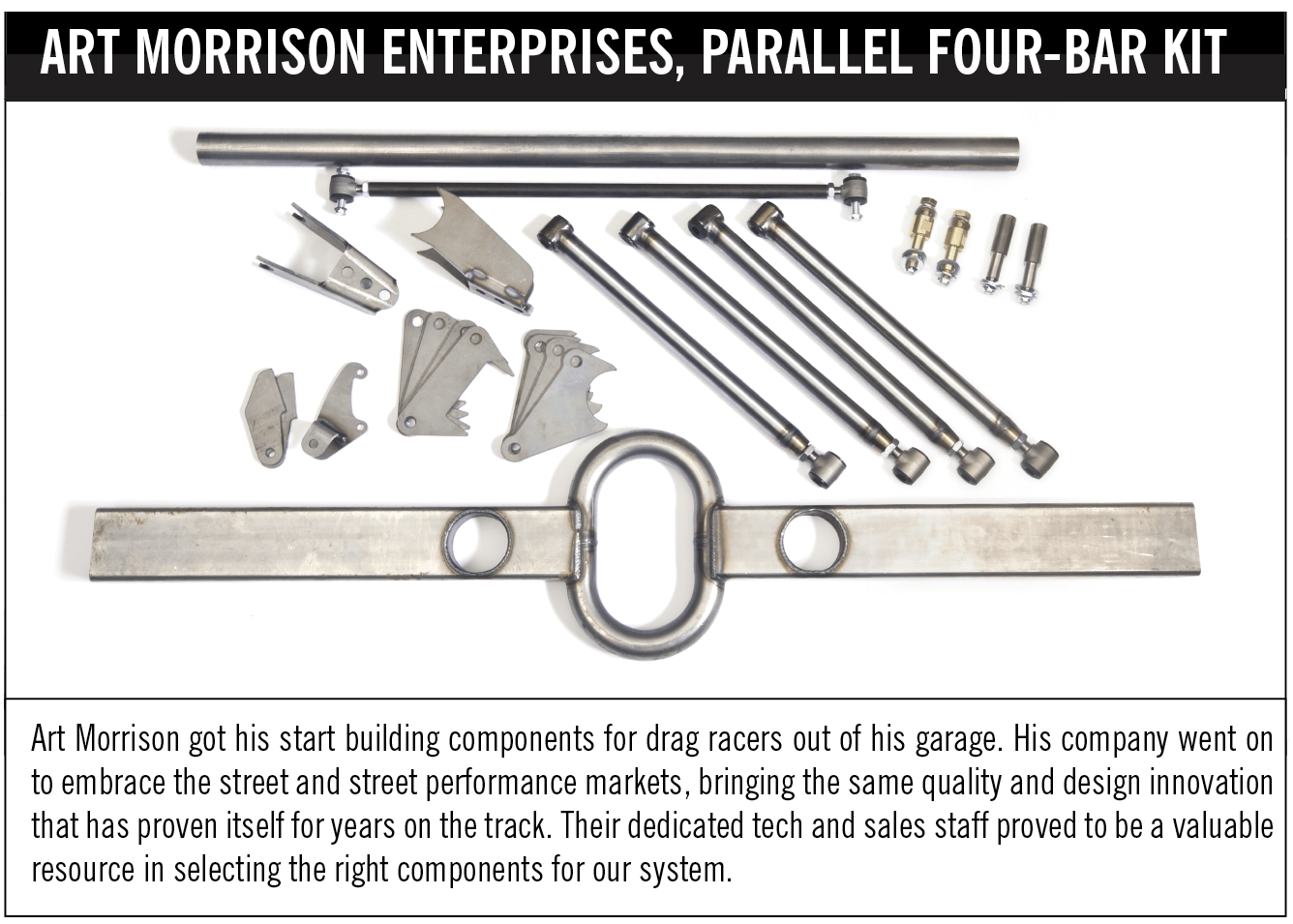
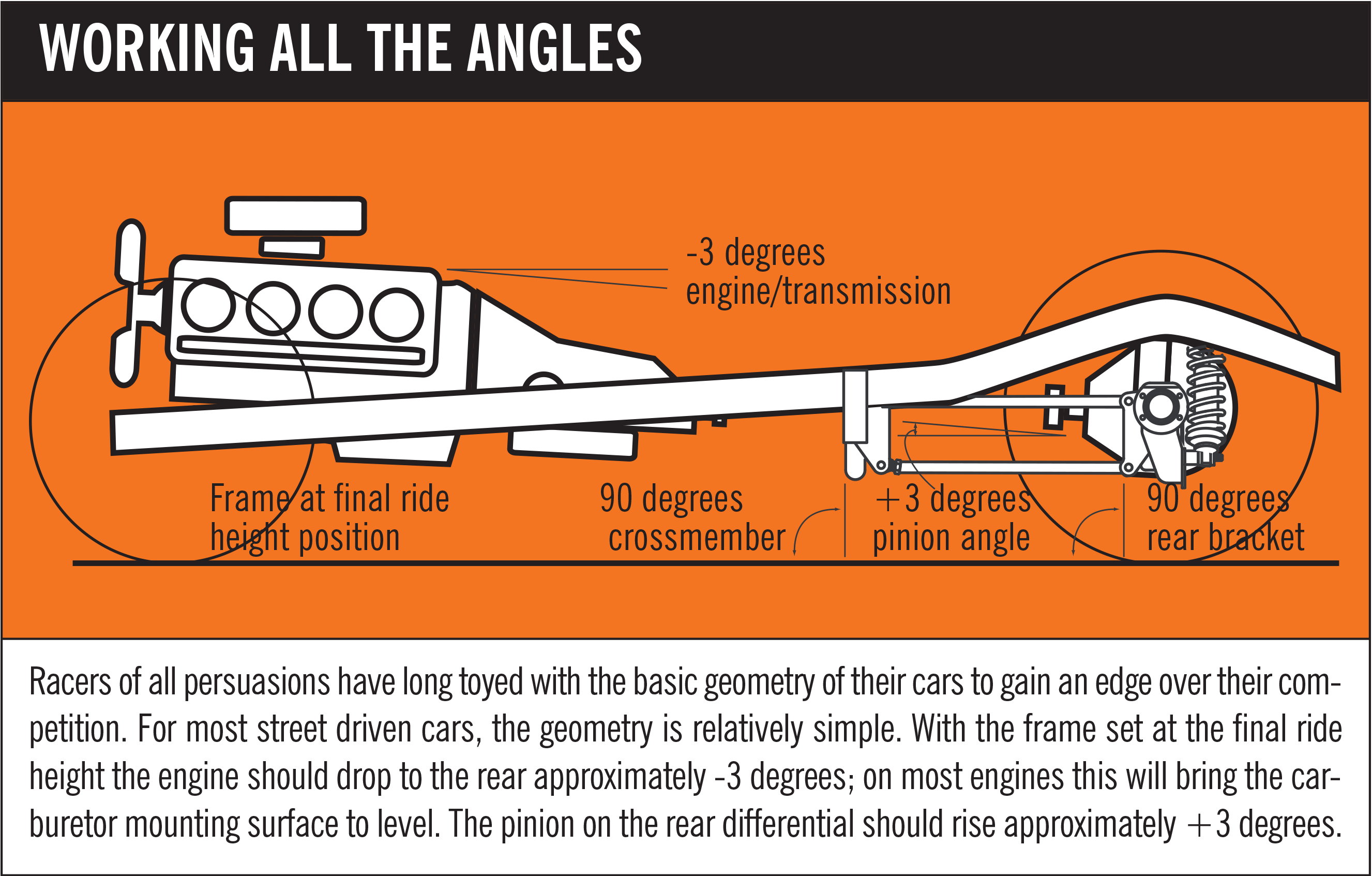
The parallel four-bar systems do require an additional Panhard bar to firmly locate the rear suspension side-to-side, but offer greater clearance for exhaust. This system maintains the same pinion angle throughout its full travel and is strongly recommended for lowered and air-suspended cars and trucks. The installation for these systems is fairly straightforward and was right on target for our project.
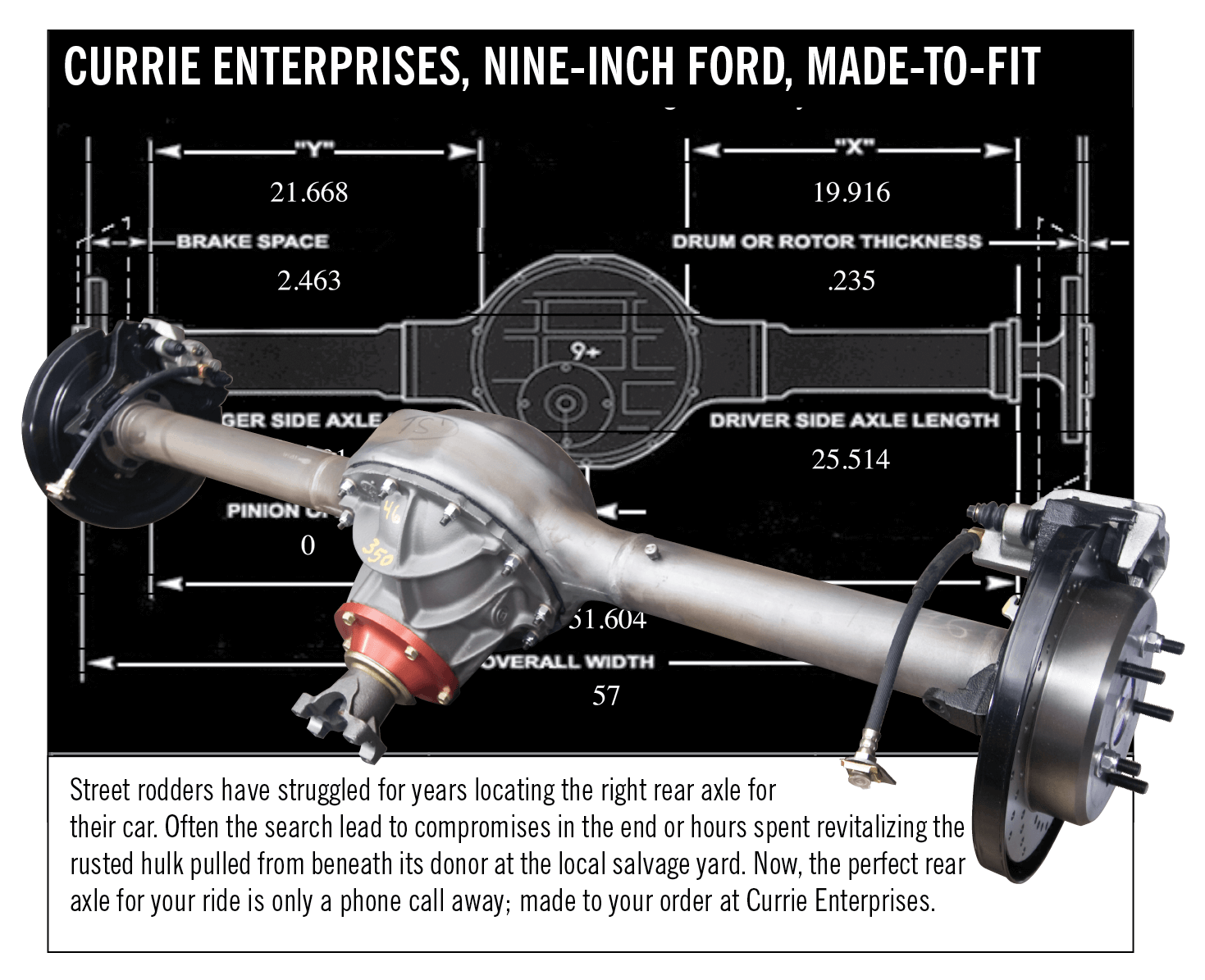
Upgrading the rear axle brought back memories of searching junkyards, swap meets, and local classifieds for a rear axle that would fit beneath the car with the wheels I wanted. It always seemed that compromises had to be made simply to make it work. Thankfully, those days are long gone, and ordering a custom-made nine-inch Ford rear axle with Explorer disc brakes and a 3.50:1 Positraction differential that perfectly fits our application is a painless process, thanks to the folks at Currie Enterprises. The quality of their rear-end assemblies and seemingly limitless options made this an easy choice for our new system.
Follow along as I share some of the insights I gained on this project and put my ’35 Chevy back on the road.