Freeze Frame Image LLC
I’ve known George Huisman for 20-plus years. In fact, I recall sitting in his office back in early 2007 when he announced startup plans for his latest Mustang project. George’s company, Classic Design Concepts (“CDC,” as it’s referred to within the automotive industry,
classicdesignconcepts.com), was in the initial pre-production startup phase to produce a limited number of 1967 Mustang GTs using the new Dynacorn Mustang bodies as a platform. He and CDC Marketing Director Marnie Kramer discussed the upcoming SEMA Show where they’d display a special trio of cars to introduce their new CDC Mustang product line. After hearing the news, I asked George if he’d be interested in having a photo-feature written about the CDC ’67 Mustang project. His response? “Sure, why not?”
The S197 (fifth-generation) Mustang convertible roll bar — or “light bar,” as it became known due to its built-in third brake light — put George’s Michigan-based company on the Mustang map. Over the years, CDC has developed a variety of restyling products for late-model Mustangs, but behind the scenes, they were also involved in supplying components for post-production Mustangs, such as models from Shelby, Saleen, Foose and others. Following CDC’s introduction of a 1969 and ’70-style Shaker hood scoop for SN-95 (fourth-generation) Mustangs, Ford invited George to participate in the development of the 2003 Mach 1, a special-edition Mustang that included a functional Shaker hood.
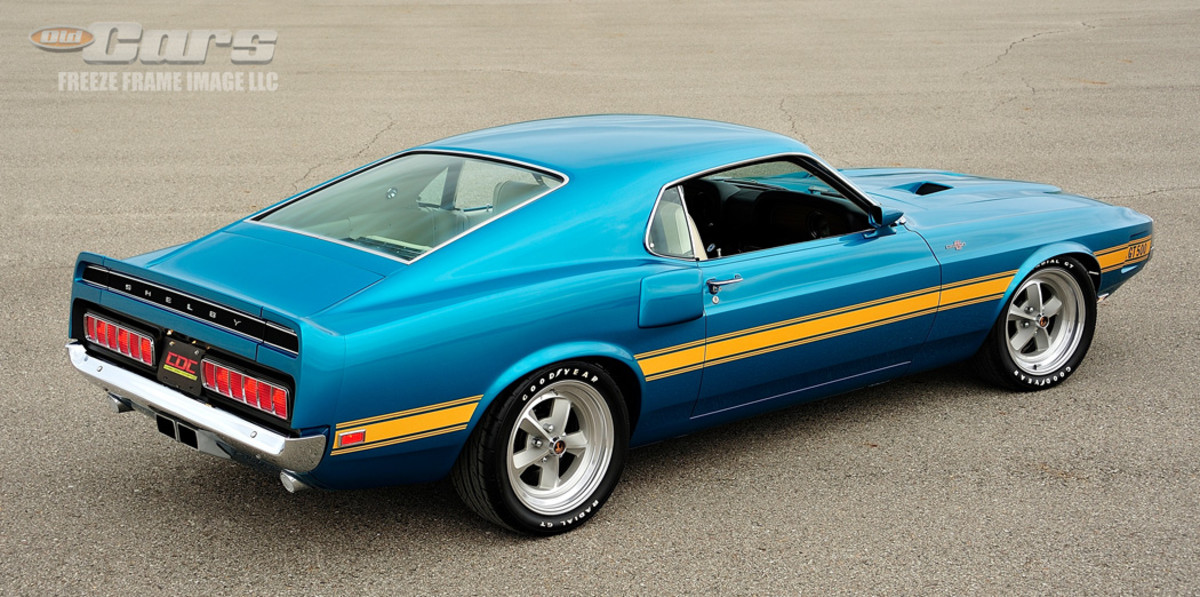
The wheels look like the factory 15-inch five spokes that came on 1969 Shelbys, but these are one-of-a-kind 17-inch billet LW69s from Legendary Wheels.
Freeze Frame Image LLC
Mustang business leads to a Shelby
Since the early ’90s, CDC’s primary focus has been on new Mustangs, including its latest Outlaw package for S550 (sixth-generation) Mustangs, but at heart, George is a vintage muscle car guy. Thanks to contacts developed over the years, George has owned many factory Ford performance cars, from GT-E Cougars to the one-off 1969 Boss 302 that was originally shipped to Shelby American as a prototype for a Boss-powered GT350. Back in 2018, one of George’s contacts gave him a lead about a 1969 Shelby GT500 survivor that had spent its entire life in the dry Colorado climate.
“He’s primarily a Pontiac Trans-Am guy,” George explains, “but he always lets me know if he comes across an interesting Ford muscle car. He described the Shelby, and I bought it sight unseen.”
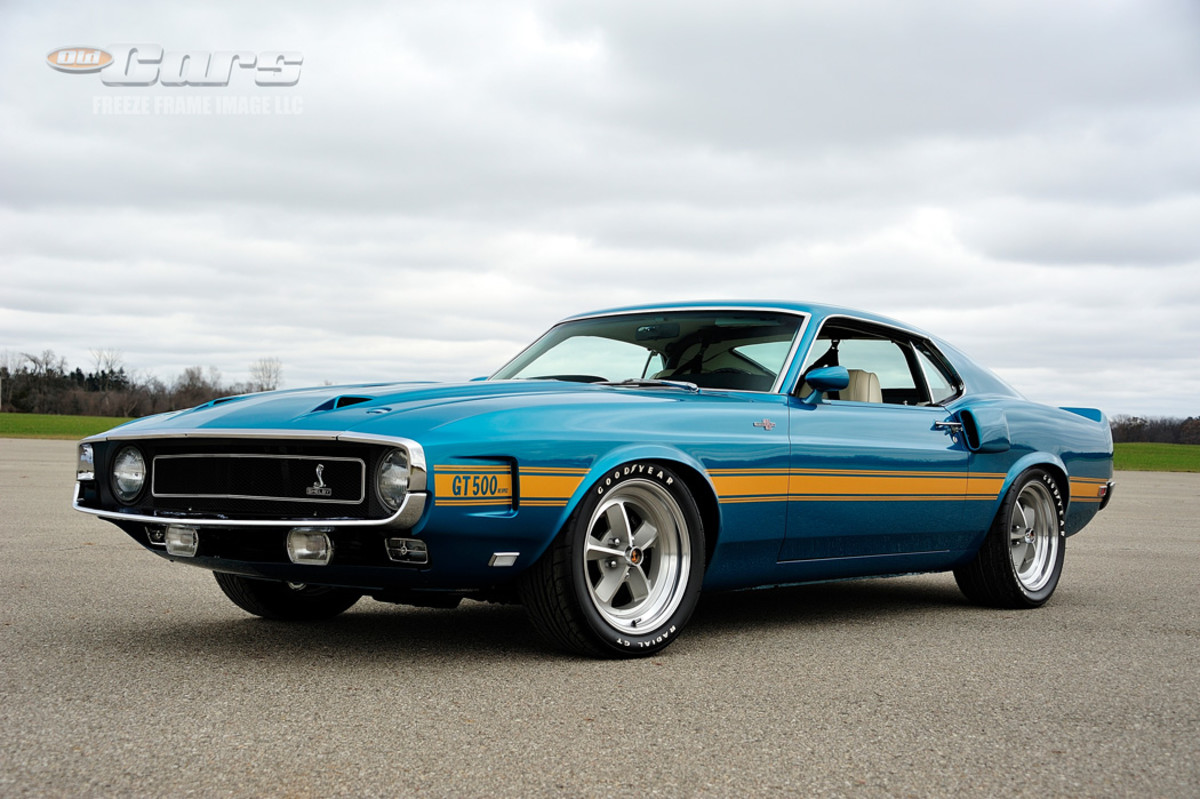
Huisman describes the Gulfstream Aqua, white-interior Shelby survivor as the typical “I’m going to restore it one day” car. A two-owner car with 54,000 miles and minor rust, but in good overall shape, the GT500 (VIN 9F02R481951) was structurally sound. The exterior looked worse than it really was, as a previous owner had started working on the body. The passenger side fiberglass fender most obviously showed signs of the beginning of the restoration that hit a dead end.
For Huisman, the Shelby was the perfect starting point for a restoration. Never one to follow the norms and always an out-of-the-box thinker, George aimed for a concours-type restoration, but with a few reversible modern updates to enhance reliability, performance, drivability and safety.
A Shelby with a twist
“We built it with the plan to tastefully ‘re-spec’ the Shelby GT500 with modern components to make it more enjoyable to drive,” says George’s son, Travis, in a company blog. “In our opinion, too many of these cars get restored only to get trailered or towed to car shows. We wanted to build a Shelby that’s enjoyable to drive without losing its original charm. This car is a driver, not a pro-touring track weapon or a restomod trying to be a late-model car with too many modern technology distractions.”
The overall project started at the CDC facility in Milford, Mich., where the GT500 was disassembled in preparation for body work and the paint application by Hunter Brown at Brown’s Auto Body Services (
Brown's Auto Body Services, Inc.). This shop in rural Louisiana, Mo., is well-known within the Mustang/Shelby community for its world-class concours restorations. Chris Brown and his team repaired the fiberglass, replaced some sheet metal (primarily the lower rear quarter panel area), then mocked up the entire body with each panel in place to assure perfect body panel alignment and gaps before the application of the Gulfstream Aqua paint. At the same time back in Milford, Huisman and the CDC team cleaned and detailed the engine, suspension and other components in preparation for reassembly to concours specifications, with a few notable exceptions.
Updating a classic
For starters, the factory 428 Cobra Jet was cleaned and detailed per original. However, Holley Terminator Stealth electronic fuel injection replaced the factory Holley four-barrel.
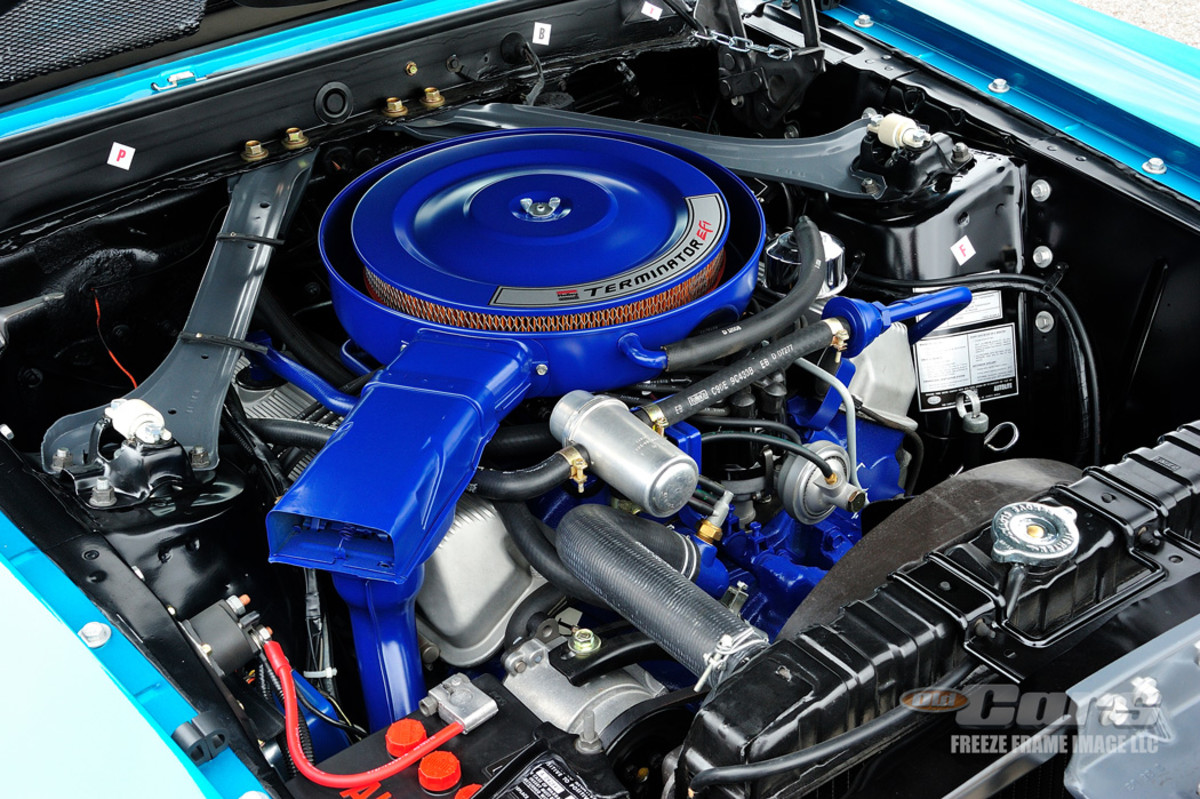
You wouldn't know it at first glance, but this 428 Cobra Jet lights the fire via EFI.