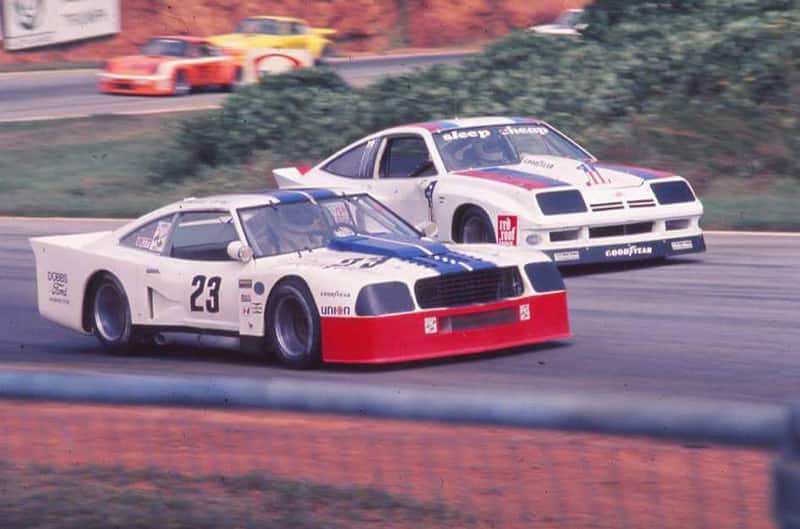
Under the Cobra II’s louvered hood resided a seriously-potent 351 Cleveland built by Gapp and Roush. The cast-iron small-block featured a steel crankshaft, four-bolt main bearing caps, Mister Rod connecting rods, and a General Kinetics camshaft. Special pistons, G&R ported heads (featuring titanium valves, springs, and retainers), and a dry-sump oil system all helped to push the fuel-injected mill to output 535 horsepower. All those ponies were then channeled through a NASCAR Toploader four-speed transmission with a Schiefer clutch and aluminum flywheel, before contacting the pavement via huge Goodyear Blue Streak tires mounted to 15-inch BBS alloy wheels!
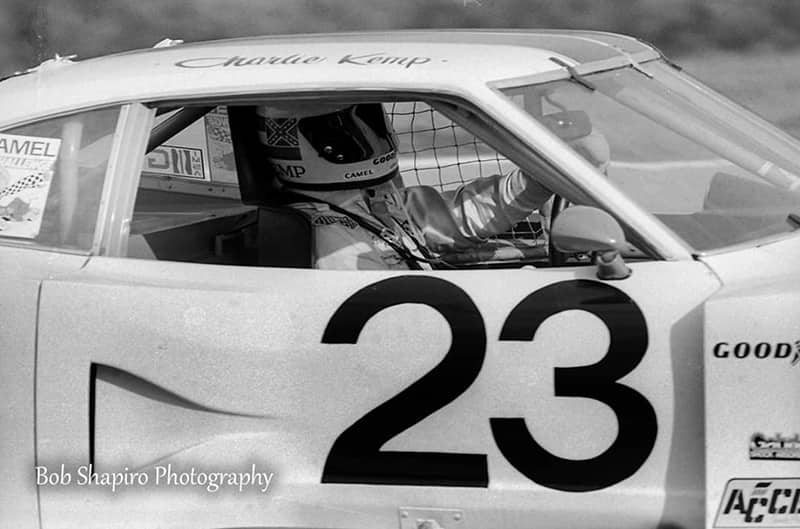
The unwelcome surprise came for Charlie when he and co-driver (Sam Posey) arrived with the car at Daytona. Charlie recalls, “It became a real battle to get the car in. First, IMSA saw the car and declared it ‘totally illegal,’ even though we’d followed the rule book and I’d asked John Bishop to come to Detroit and look at the car.” Charlie threatened to sue the IMSA, causing Bill France Sr. to become personally involved in the heated debate. Charlie further recalls, “My lawyer, John Bishop, and myself went to see ‘Big Bill’ in his suite at Daytona. And it was really funny because Bill France told John Bishop, ‘What are you looking for? Are you trying to do some sort of amateur racing, or are you trying to do professional racing? You’ve got the best thing that’s happened. You’ve got Chevrolet vs. Ford vs. those foreign cars.’ And he said, “Let the damn thing run!” IMSA officials subsequently created a new Le Mans GTX category specifically for Kemp’s Cobra II – and it was off to the races.
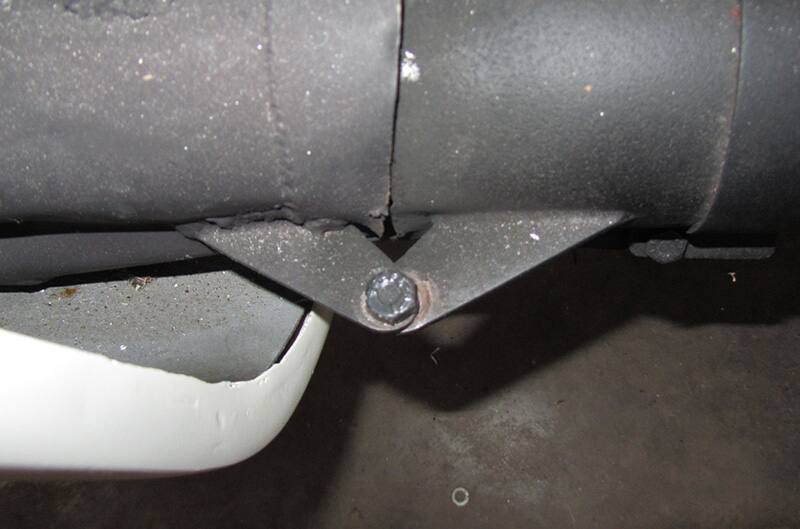
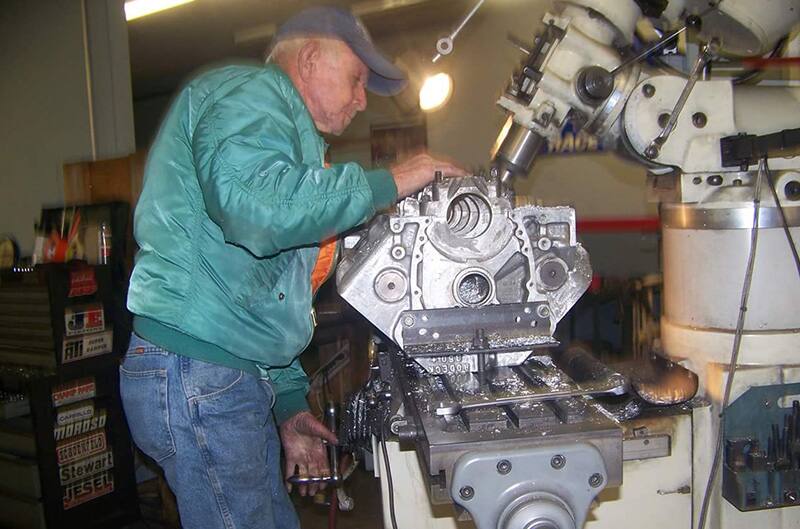
And race it did. Charlie’s Cobra II clocked 212 mph in its Daytona debut – blasting past his GT350R’s 184 mph top speed on that same track. Through the next four seasons, Charlie would campaign his outrageous Cobra II, continuously adapting it to comply with IMSA officials’ unrelenting list of never-ending grievances. In addition to the installation of door handles, a genuinely innovative hinged exhaust system, and the forced omission of the Cobra II’s original hood and fender louvers – the cast-iron Gapp and Roush motor would eventually be replaced by a stronger nickel-steel unit built by Pete Hood (who’d served as Charlie’s mechanic during his GT350R years). Hood’s updated motor raised the Cobra’s output to a more reliable 570 horsepower. And by the end of its run (having incorporated a modified fuel-injection system), the Cobra II’s output would climb to 635 hp in its most ferocious form. Unfortunately, however, the car’s early races were plagued by persistent braking issues and a variety of other failures such as electrical shorts and even blown cylinder walls (prompting the switch to Hood’s Australian-sourced nickel-steel block). And by the 1980s, the arrival of Ford’s new third-generation Mustang rendered Kemp’s Cobra II program obsolete.
Even in the absence of Ford’s financial support, though, the Kemp Cobra II had quickly earned an enviable reputation as a fan-favorite – and a sensation in enthusiast magazines. In August 1976, Road & Track declared it, “…the current state of the art in GT race car design.” And Car Craft proclaimed, “The best word to describe the car is plain old nasty.” Never one to miss the opportunity to capitalize on excitement, Charlie worked with Jimmy Dobbs to produce a limited series of street-legal replicas of the wide-bodied race car that would be sold exclusively through Dobbs Ford. Sadly, the Kemp Cobra II road cars never made it past the assembly of a single prototype – the very car that had been used to make the panels for Charlie’s race car. That prototype remains part of Jimmy Dobbs’ private collection to this day.