That it does; in fact, the whole car just looks right, one of those designs that seemed to fall right off the auto-show stand into everyday traffic without so much as a once-over in between. Cipponeri has upgraded the leather and a few of the accessories in the interior, but it’s still a bare-bones affair, the gauges in the panel and the dull sheen of the dashboard plastic instantly recognizable from the contemporary Neon and Intrepid sedans. A sticker in the doorjamb warns of HOT EXHAUST PIPES directly below your feet.
A twist of the fragile-feeling manual-key-release ignition cylinder, also familiar from Neons, and the 400-hp, 8.0-liter V-10 comes to life, settling into an unworried idle that immediately marks it as being infinitely more modern than the Cobras it was supposed to succeed. There’s plenty of room in the cockpit—by Miata standards, at least—and the shifter has long, light throws. You wouldn’t want to do a lot of parallel parking with this car, as the corners can be hard to see. Nor would you want to roll it over; my Impact racing helmet is a full 6 inches clear of the roll bar and windshield frame.
There’s no chance of testing my helmet’s rollover resistance, of course; not in this sweetheart of a roadster. I don’t expect it to be fast, because it isn’t, at least not by modern standards. Contemporaneous testers struggled to get the early Vipers down to the 13-second mark through a quarter-mile; today, a dealer will happily sell you a 5300-pound Jeep Grand Cherokee Trackhawk that can more or less count one Mississippi, two Mississippi before running the big snake down at the 1320 line.
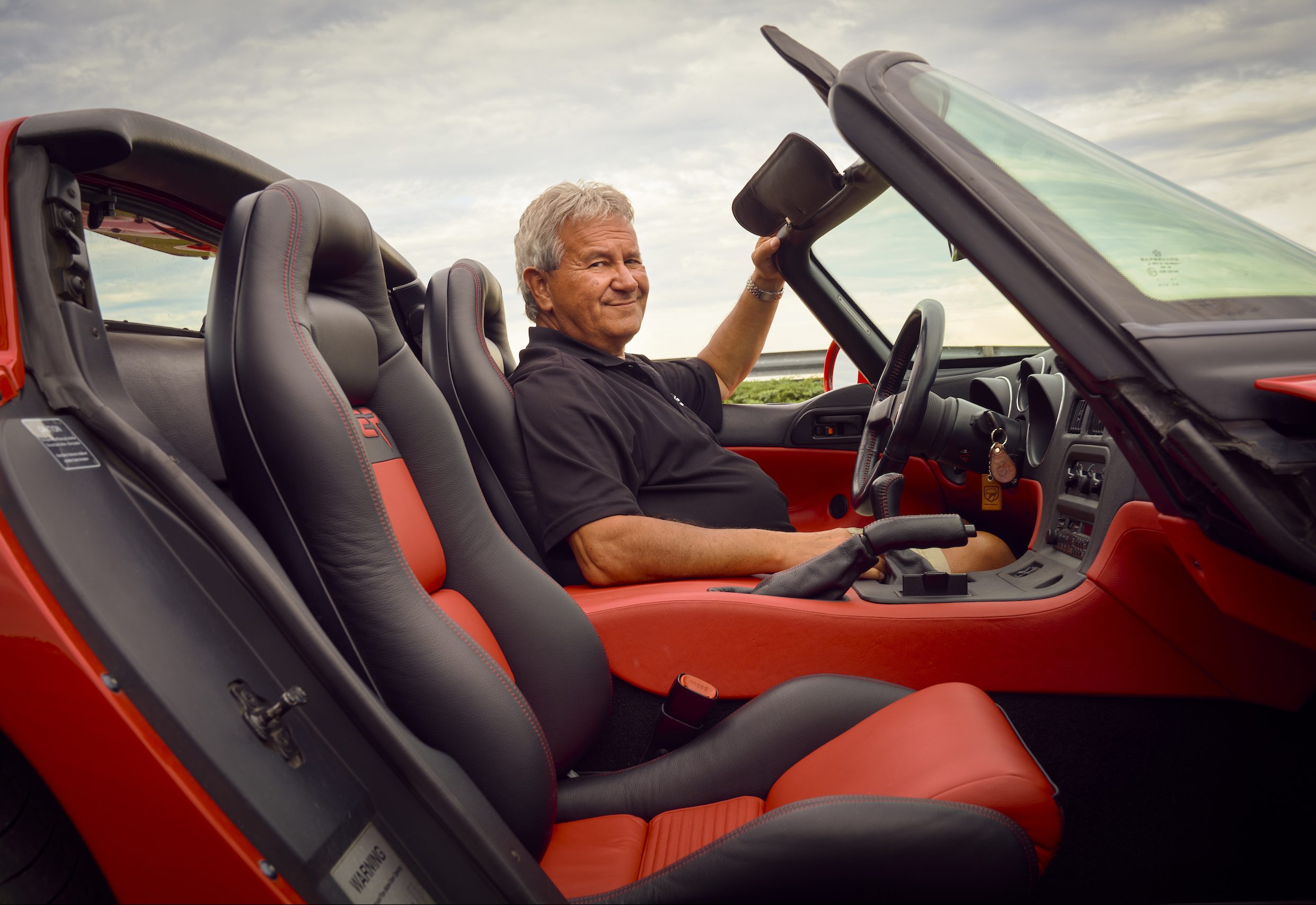
RT/10 owner Mike Cipponeri served as an electrical system engineer for “Team Viper” from 1989 to 1996. Andrew Trahan
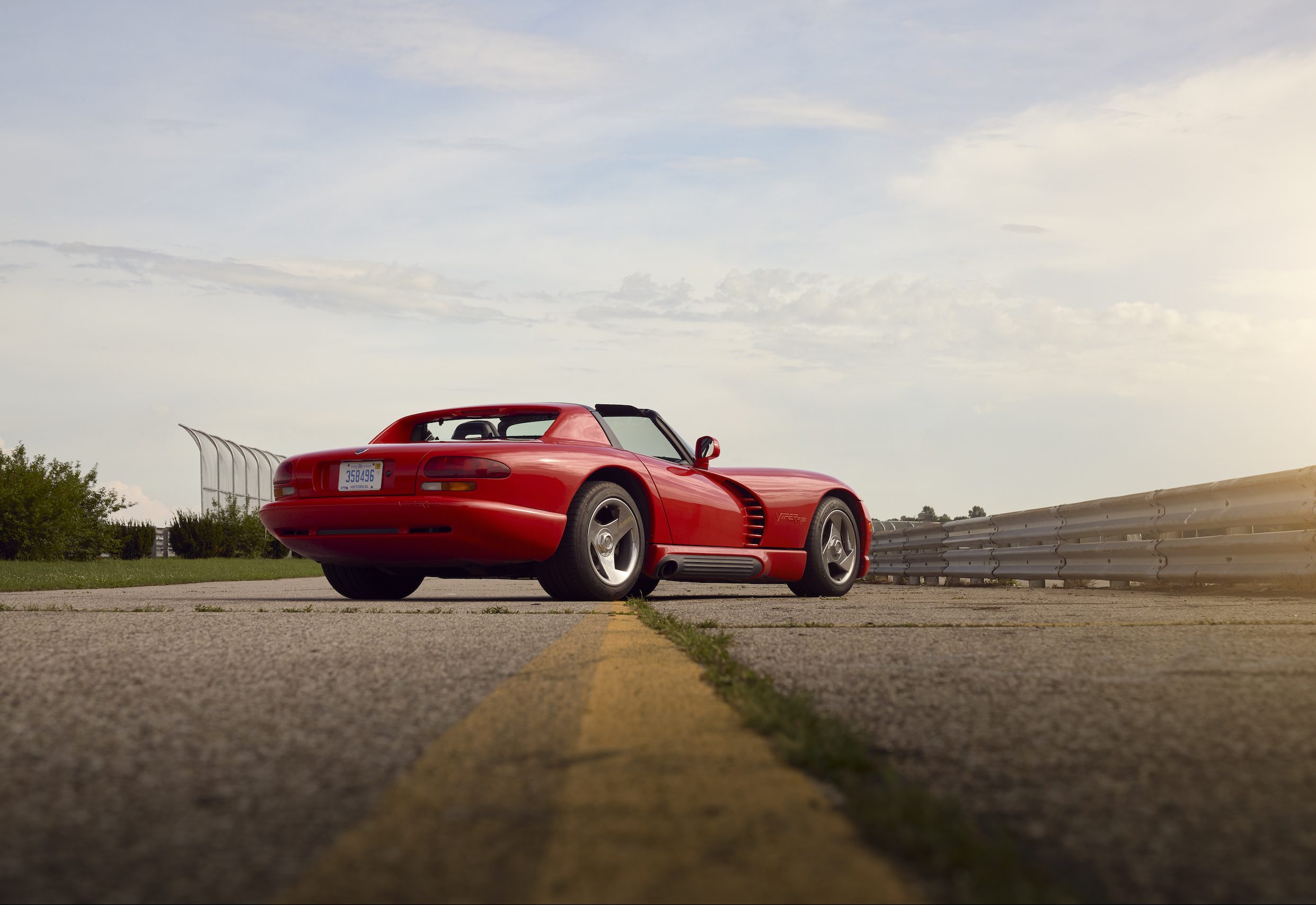
Andrew Trahan
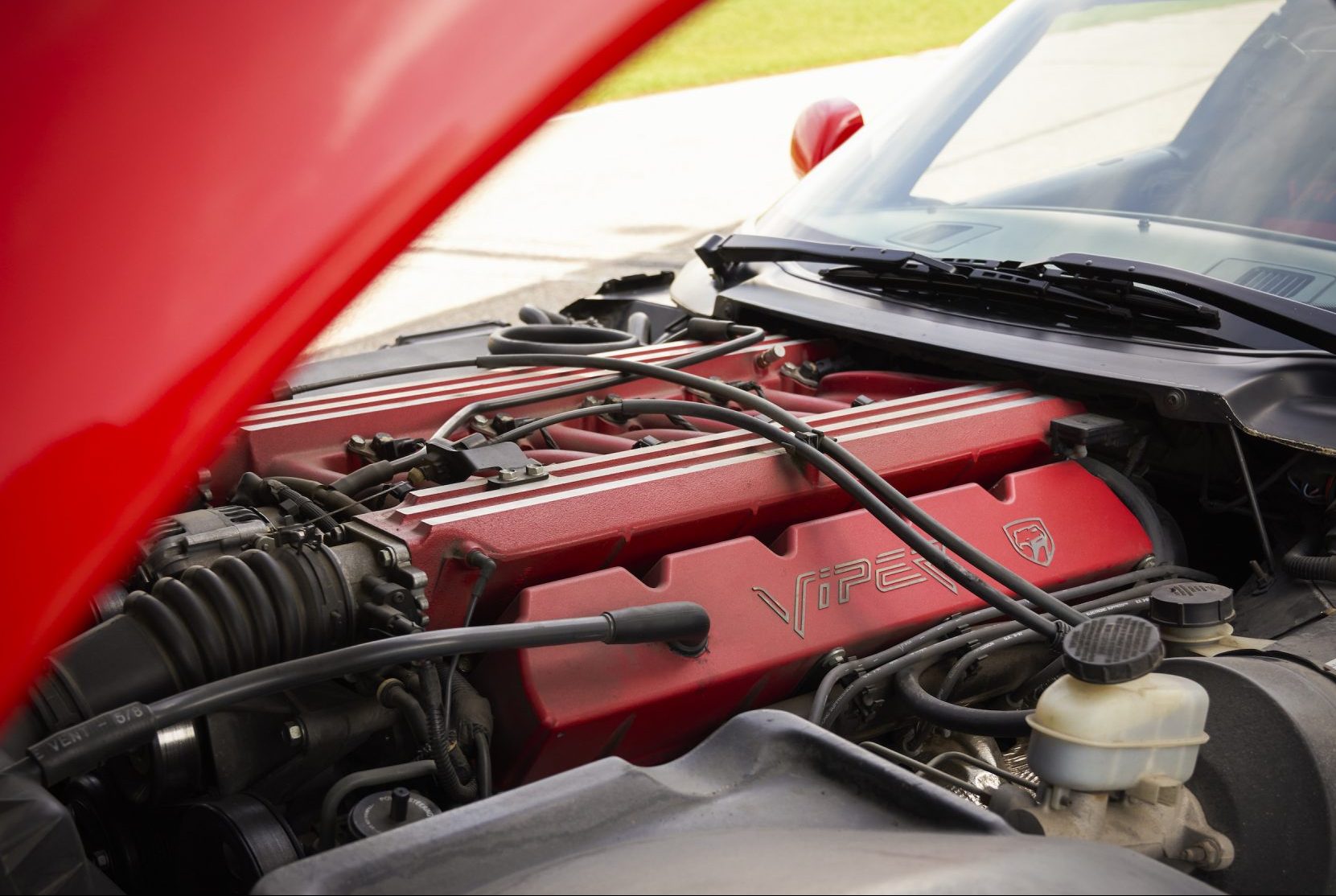
Seeing red: Back in the raceway’s paddock, the first-gen Viper’s naturally aspirated aluminum 8.0-liter V-10 burbled confidently under its front-tilt hood. Andrew TrahanYet the RT/10 makes speed down GingerMan’s back and front straights in steady and relaxed fashion, revving the big V-10 across a short sweep of the dial all the way to the front of fourth gear before it’s time to get on the brakes. Even taking the vintage spec of brake pad and tire into consideration, this Viper feels slightly under-braked, a concern brought into sharper relief by the near impossibility of heel-and-toeing at pace. I get the feeling that you could do it if you really got into the last inch or so of brake-pedal travel, but to do so would be to court a lockup of the rear wheels; the Viper did not get antilock brakes until 2001.
There are no such worries about the steering, which is direct and informative. GingerMan’s Turn 5–6 combination is always willing to reveal a car’s shortcomings in that department. You have to roll on the brakes while cranking in a bit more steering angle to get through 6 and set up for the short run to Turn 7. In period, the Viper was famous for developing serious levels of cornering grip, and so it proves again here, cheerfully accepting a lot of g without wagging the tail or washing the nose too much. Many sports cars are tortured here by a lack of gearing, torque, or both, but the Viper steams out in third gear without complaints. It could do it in fourth as well, and for an entire lap, I treat the car like it has no gearshift at all, leaving it in that direct-drive fourth gear.
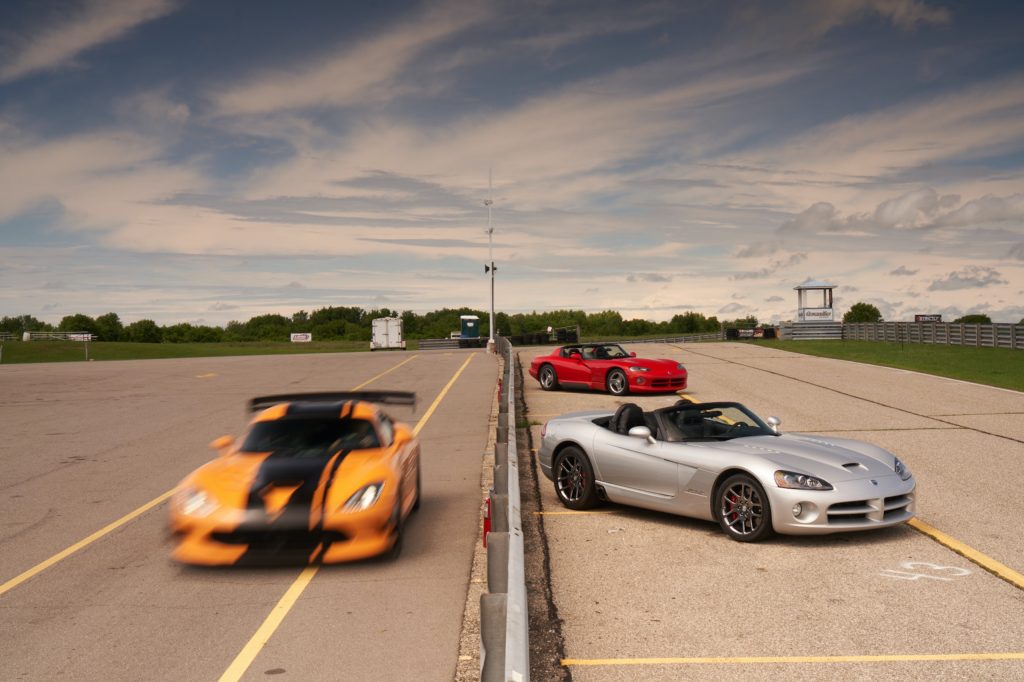
While two-thirds of the snakes on hand were relatively unmodified, the 2016 ACR Viper (a streak of papaya orange) was far from stock. Andrew TrahanFor the road testers of the era, who used the rather fussy and flexy L98-engined C4 Corvette as a benchmark, this Viper must have been a revelation. On a whim, I trail-brake it into Turn 7 and feel how ably the chassis adjusts its entry angle. It feels race-bred and not very street car–ish at all, yet without the snap-happy tail that true race cars need. And it never gets hot or bothered, even after 10 laps. I don’t want to come back to pit lane.
But I have every reason to, in the form of Steve Urbanec’s silver SRT-10. Although I like and enjoy the early Vipers, it’s not until the third generation that the cars started to display significant track pace. It’s usable on the street, as well. Urbanec and his wife drove the car here, with a trunk full of collapsible chairs, and they run the effective A/C as much as they want. Dismissed as “the Dodge Corvette” at the time by many Viper loyalists, the third-gen car is simply better at doing all the, well, car stuff.
The spec sheets will tell you that it’s a 500-hp car against the 400 horses of the original or the 415 of the second-generation cars, and it’s obviously packing a little more brake, but the spec sheet cannot convey the comparative ferocity with which the ’03 attacks GingerMan. It’s perhaps 10 mph faster in every corner, with vastly shorter brake zones and a pedal arrangement that encourages leaning on the ABS at every turn-in point. You could walk out of a modern C7 or C8 Corvette, get in this car, and not feel like you were giving up much in the way of pace.