Let’s Break Down Some Brake Myths, Shall We?
By
Garrett Davis October 29, 2019
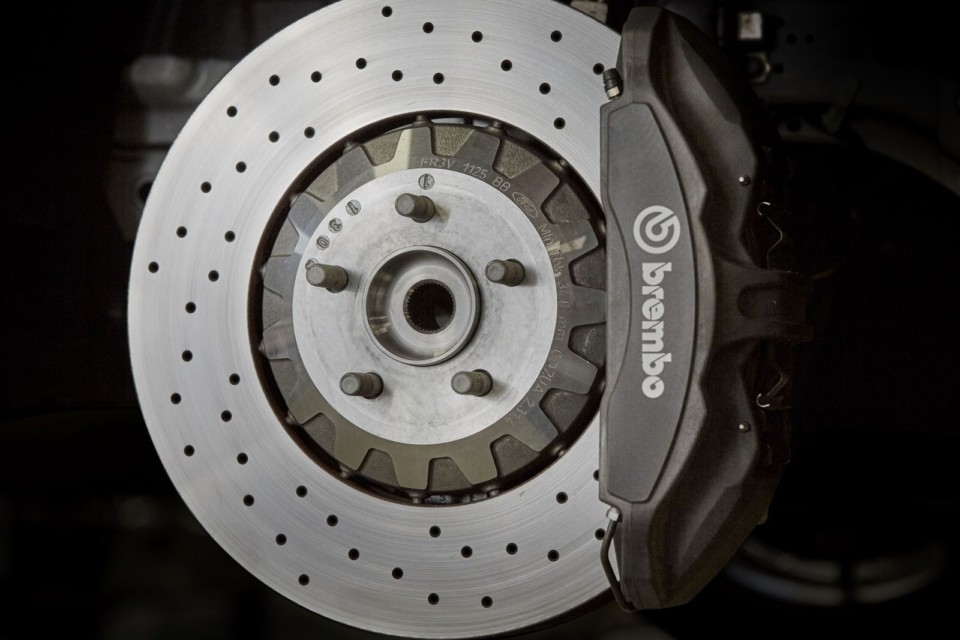
Source: Ford Motor Company – brakes from the GT350
The automotive industry is absolutely packed full of myths, misconceptions, and sometimes even lies. While some are in the realm of marketing, and some are in the realm of maintenance, all bug the absolute crap out of me. I could rant for hours on this stuff, so I decided to curtail my rage to just one segment of the industry for this article, and tackle three myths within the wide category of brakes.
OK… *Takes deep breath*. Let’s get into this.
Marketing Gripes – What Does “Better” Mean?
Brakes are one of those weird areas where “better” might not be “better” for you. More expensive doesn’t necessarily mean an improvement, and buying brake pads above what you need could make your life miserable, or even be dangerous in extreme cases. Unfortunately, marketing around the brakes industry doesn’t really reflect this fact, and the layman could be forgiven for wanting to spend a little extra to get a better brake pad that might be safer, last longer, or create less dust…, just to end up with the exact opposite of what he wanted, and be charged a premium in the process.
So let’s brake down (pun intended) what you actually need, and when not to overpay:
If the marketing copy is to be believed, the more you pay, the better the brake pad is. Well that’s the problem. Better for what? For who? Let’s say you just picked up a new Mustang GT. This is your daily and weekend fun car to take to the canyons every once in a while, and maybe the occasional track day or autocross. You’re going to want some good pads that can handle high heat without fading out to nothing, right? Nice! A set of $250 racing pads would do great on the track!
But what about the other 98% of the time you’re driving your car? Well that’s where we get into my issue here. A high performance track pad is going to be great at what it does, but as a side effect of that, they are often loud, create a lot of dust, have poor bite when cold, and tend to wear rotors more quickly. As a daily driver, those sound more like headaches than advantages to me. Of course if you stick with stock or OEM equivalent pads, then you’ll have the opposite problem of them fading quickly and glazing when you actually put some real heat into them. That’s where a good balance needs to be struck. Something like the
EBC Greens or Yellows ride this line well.
“Better” isn’t necessarily always “better.”
Drilled VS Slotted VS Plain and Boring
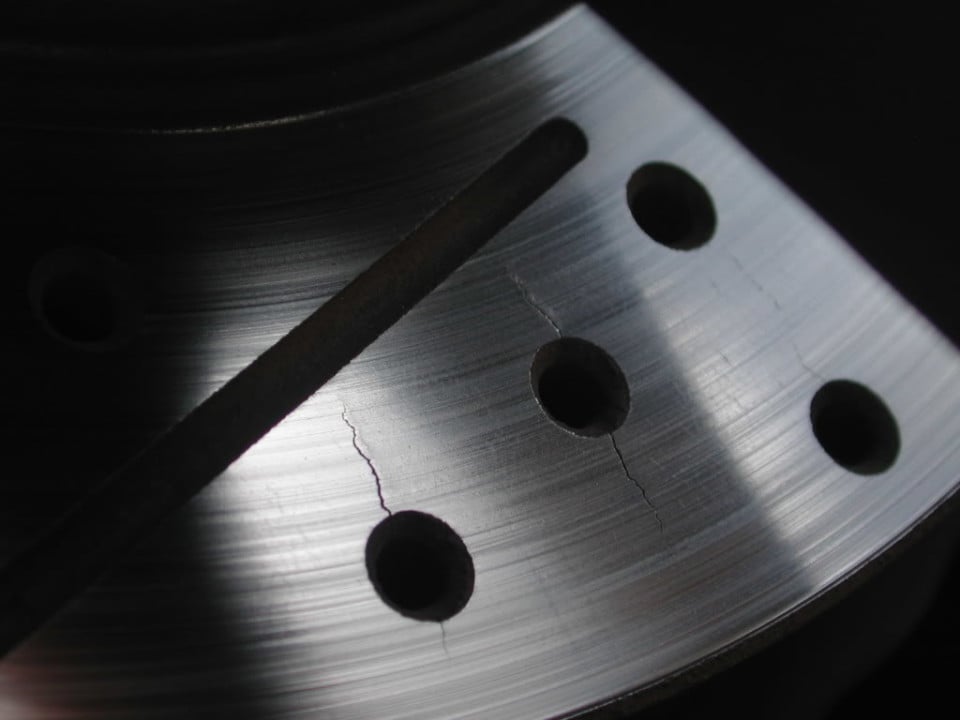
Drilled and slotted rotors look awesome. They just do. They look like the Jason Statham of brake rotors, for serious drivers who want to do serious things with their cars. The difference is J. Stathe doesn’t crack under pressure, but drilled rotors do. Want an easy way to prove they’re more for looks than actual performance? Google around and look at any real race car’s brakes. IMSA, Nascar, F1, WRC, you name it. You’ll see slotted rotors sometimes (especially in rally), but never drilled in anything that is competing at a high level.
So why do these serious performance cars like the GT350R, or even Porsches, have drilled rotors? The simple answer is that they’re strong enough that they won’t be a big problem for most drivers on the street, but if you really push them to their limits, they will crack long before straight rotors will. If they are pushed hard, but not to the extreme, you get some pretty interesting wear patterns as well (more on that below).
So where did drilled rotors come from then?
They actually were borne of serious racing, funnily enough. Back in the age of asbestos brake pads (ignorance isn’t always bliss), there was an issue of outgassing with the pads under high heat. Basically the bonding agents in the pad would evaporate and create a thin layer of gas that prevented good contact between the pad and the rotor. The rather rudimentary solution at the time was to just drill a bunch of holes in those suckers and go racing — and that worked pretty well for the time.
The issue is that these days, we no longer use asbestos in our brake pads (no, not even
Raybestos pads, despite the name), and with how far material science has advanced in this industry, outgassing is no longer the issue it once was.