The problem with"cheating" type stories is that the people who write them have NEVER read the rule book and don't know much about cars......and then take the word of someone making an accusation, who knows less than the person writing the story.....
Easy to accuse someone, but far harder to prove anything.
-----------------------
If the know-it-all rules makers wrote a bad rule, they have no
business disqualifying the people who read the rule and strictly apply it......but since the know-it-all rule makers are
now exposed as not being very smart, the rules makers DON"T
REWRITE THE RULE, the rules makers DISQUALIFY the guy who followed it exactly, and embarrassed them.
----------------------
Smokey Yunick should have said "The rule book didn't say what
I did was illegal!"
-----------------
Top 20 racing cheats: “If you ain’t cheatin’ you ain’t tryin’”
(You will notice the dumas story writer did not say who they were quoting.....probably because the story writer made it up and didn't actually hear ANYONE say it.)
Preston Lerner
06 May 2021
Share 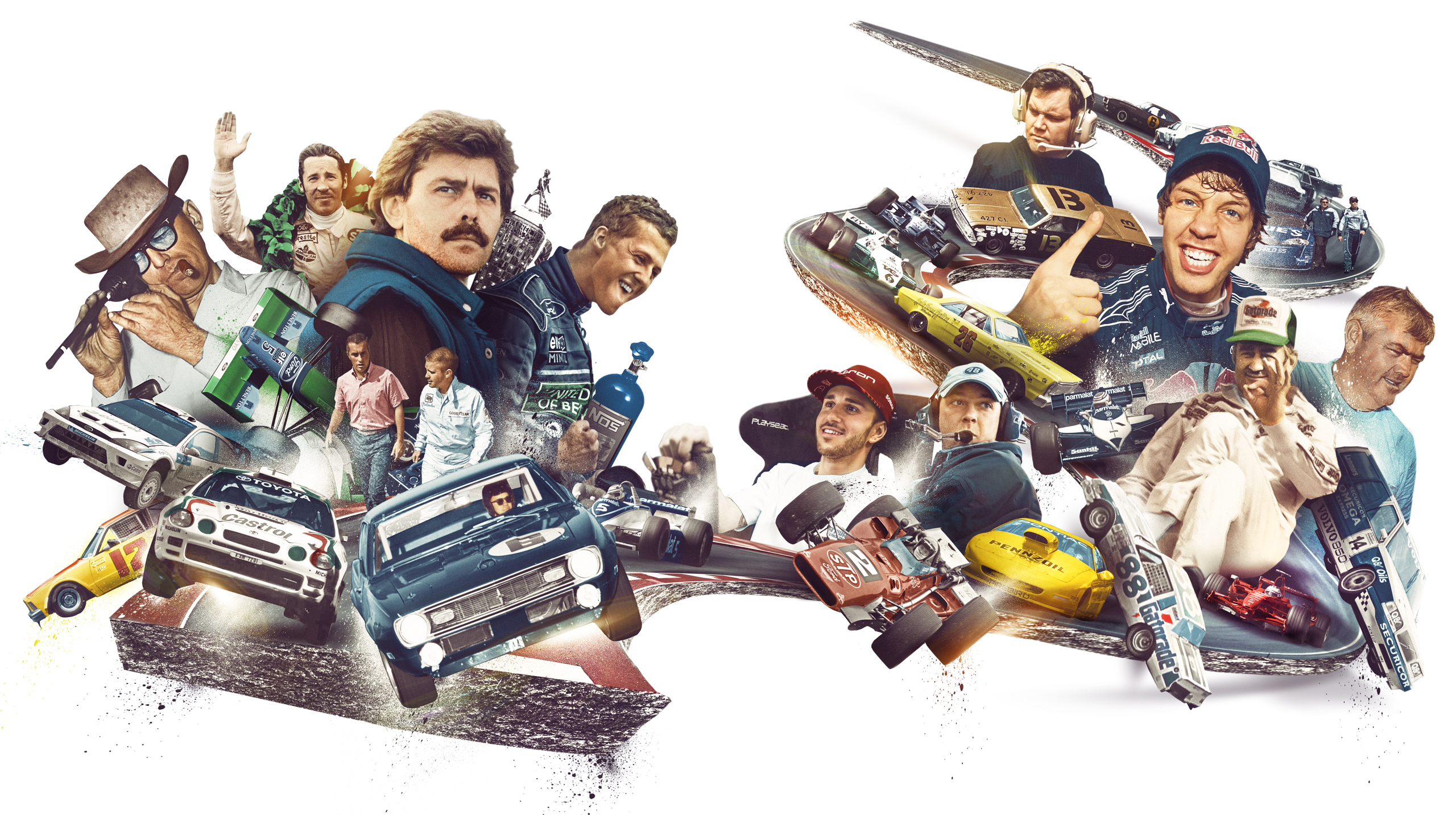
Neil JamiesonRules are to race car builders as passwords are to hackers: pesky annoyances that are meant to be circumvented. Is that cheating? Only if you get busted. As Darrell Waltrip put it after he and
A.J. Foyt had their qualifying times for the 1976 Daytona 500 tossed out because they were packing hidden nitrous-oxide bottles: “If you cheat and don’t get caught, you look like a hero. If you cheat and get caught, you look like a dope. Put me where I belong.”
Since the dawn of motorsports, tech inspectors charged with enforcing the rules have been engaged in a never-ending game of whack-a-mole with car builders determined to evade them. To be fair, a lot of straight shooters operate in the gray area between right and wrong—such as Roger Penske, who dominated the Indy 500 in 1994 with pushrod engines made by Mercedes that exploited a rule in the USAC rulebook. But it’s no coincidence that the winner of the first-ever NASCAR race in 1949 was disqualified for using illegal springs optimized for running moonshine......and may not have had a rule against it anyway.
Progress being what it is, the bad guys have gotten a lot more sophisticated since then. Here’s a top 20 list of the most ingenious cheats of the past half-century:
Bumper Drafting....well why didn't you rule writers say specifically that it was illegal? Does the story writer know what "bump drafting" is? There is no 'bumper drafting" where a bumper is torn off a car....to my knowledge.
Bobby Allison cruised to a 22-second victory in the Daytona 500 in 1982 despite losing the rear bumper of his Buick Regal on Lap 3. Or maybe he won precisely because his notoriously creative (euphemism alert!) crew chief, Gary Nelson, made sure the bumper would fall off. Although Allison denied that the missing bodywork improved aerodynamic performance, he magically ran the last 100 miles on a single tank of gas without the benefit of a drafting partner. Nelson was later named NASCAR’s chief tech inspector. Talk about putting the fox in charge of the henhouse.................The dumas writer doesn't understand that when you were hired as chief tech inspector, you were hired because you know what to look for. NASCAR did not hire an inspector to make cars illegal....but the writer probably doesn't know what an inspector is anyway. 22 seconds after 500 miles? I agree that it didn't make a difference.
Hot Seat....this video has nothing to do with the story writers implying something illegal.
https://www.youtube.com/watch?v=v2DuRwnQQRk&feature=emb_logo
After wrecking his Lotus 64 during practice for the Indy 500 in 1969, Mario Andretti was forced to drive his backup car, a Brawner Hawk that habitually ran hot. Although he qualified second, his oil temperature was off the charts, and USAC refused to allow the car to be fitted with an external oil cooler. Cue the Mission: Impossible crew. During an all-nighter, an oil cooler was concealed behind Andretti’s seat. The next afternoon, Andretti’s back was badly blistered—but he didn’t feel a thing until long after winning the race.
If the rule writers were so short-sighted they did not write the rule properly, why is the dumas writer implying that Andretti cheated?