When we saw some social media posts by Larry Jeffers Race Cars concerning the announcement of new differential technology, it was an eye-catcher. The posts noted the "game changer" with the use of the Chrisman rear end in some of its customers' cars.
Chrisman described his theory of the advantages of using the one-piece “live” axle and housing design.
“The number of splines doesn’t make any difference — it’s the diameter of the shaft,” he says. “A 1.710-inch diameter, 40-spline unit is pretty much the standard of the racing axle industry. Our one-piece axle may also be a 40-spline design, but it is 2.562-inches in diameter, which makes a big difference in overall strength.”
“Our spline teeth are much larger and wider compared to a 1-inch axle,” Chrisman continues. “Plus, the contact tolerances between the spool and axle make a big difference in strength. There is a plumbers’ analogy that doubling the size of a pipe allows 4-times the volume of fluid through it. Though that is a rough comparison, the overall increased diameters of axles, spools, and splines can increase strength on a similarly exponential basis.”
“We are developing more modular components and spools for the TSP rearend,” says Ham. “It will have a one-piece axle based around 40-splines. We have also made a relationship with a foundry here in Australia that is going to produce many different ratios of 10.5-to 11-inch ring and pinions for us. We will have many ratios for 1/8- and 1/4-mile racing.”
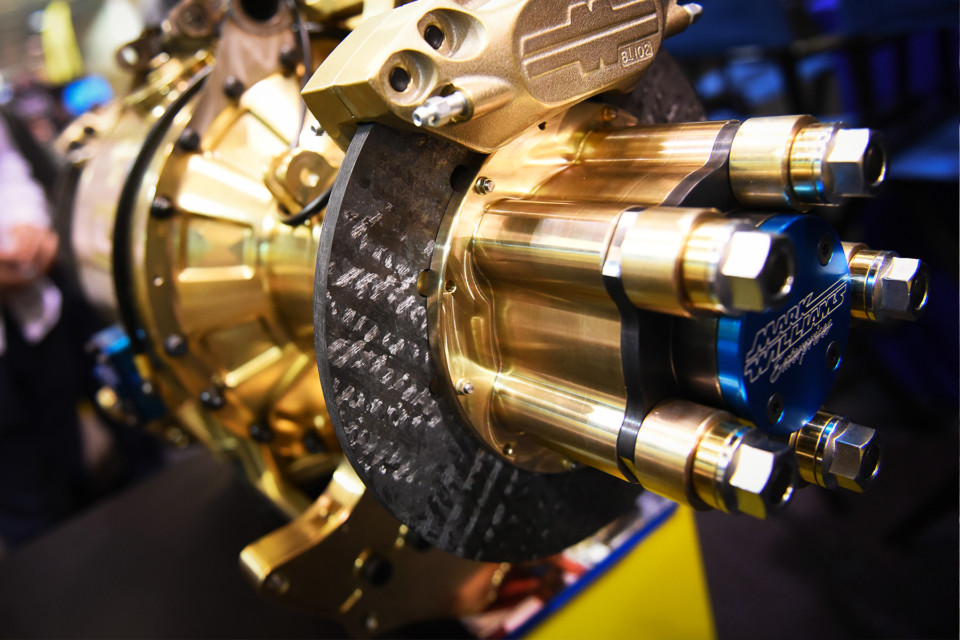
The goal at Carmack Engineering was to create a housing that contains the heavier 11-inch ring and pinion but will still have an overall differential weight similar to a standard chrome-moly fabricated rearend.
Both companies agree that the specific materials chosen to construct their overall rear ends assemblies are critical.
“Calculating various load and force ratings, we chose materials with rigidity, yet had good elongation characteristics,” Carmack said. “You can’t use material so hard that it will tend to stress-crack. We went back and forth in discussions with Alcoa Aluminum concerning the best material choices. Unfortunately, these materials aren’t cheap, either.”
One interesting aspect to the Carmack Engineering rearend that is unheard-of in extreme motorsports is the offered warranty. Its rearend assembly carries a one- or two-year warranty, depending on the gear ratio used. This protection for the customer illustrates Carmack’s certainty concerning the reliability of his product.