745 shares
Camber: What Is It And How Can It Make You Faster
By
Tommy Parry April 27, 2019While the eye-catching tuning phenomenon known as “demon camber” or “hella flush” doesn’t provide much in the way of performance – in fact it hurts it – its extreme styling brings the viewer’s eyes into relation with the concept of camber, something which evades casual drivers and even a few petrolheads.
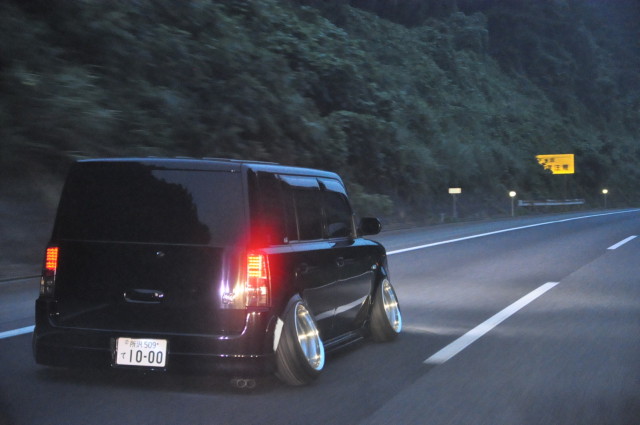
With its wheels mounted strangely, as if the suspension were broken, this car’s unconventional stance makes for strange reactions from both the layman and the enthusiast alike.
In learning a bit about how camber works, its role in tire wear, cornering performance, ease of adjustment, and the limitations various suspension designs have when it comes to camber, any car’s handling can be quickly optimized for a reasonable cost.
 What Is Camber?
Camber is the angle at which the wheel and tire stand relative to the road – assuming it is perfectly flat. The easiest way to envision what camber looks like is to view the wheel and tire head on. When stationary, the tire maintains a static camber angle, whereas when the car is cornering, due to body roll, the contact patch is reduced. In order to counteract this effect and have the greatest amount of tire on the road while cornering, camber settings must be taken into consideration and adjusted accordingly.
While conventional thinking might lead one to believe that the wheel is perfectly perpendicular to the road on which it sits, it is often intentionally tilted slightly to counteract the forces imparted on it by cornering. If the top of the tire is leaned in closer to the center of the car, that particular wheel and tire exhibit what is called negative camber. Positive camber, on the other hand, has the top of the wheel pointed outwards. While this article delves into the merits of negative camber, there are benefits to some positive camber in racing as well. However, this situation is typically isolated to circle track racing where cars run on banked race tracks.
How Does It Work?
Negative camber is the characteristic generally desired in performance driving. When we use the term, we’re referring to static negative camber. That is, the wheel and tire should exhibit some negative camber while sitting. When you barrel into a corner, the laws of physics have you, the wheels, and the tires pushed toward the outside of the corner.
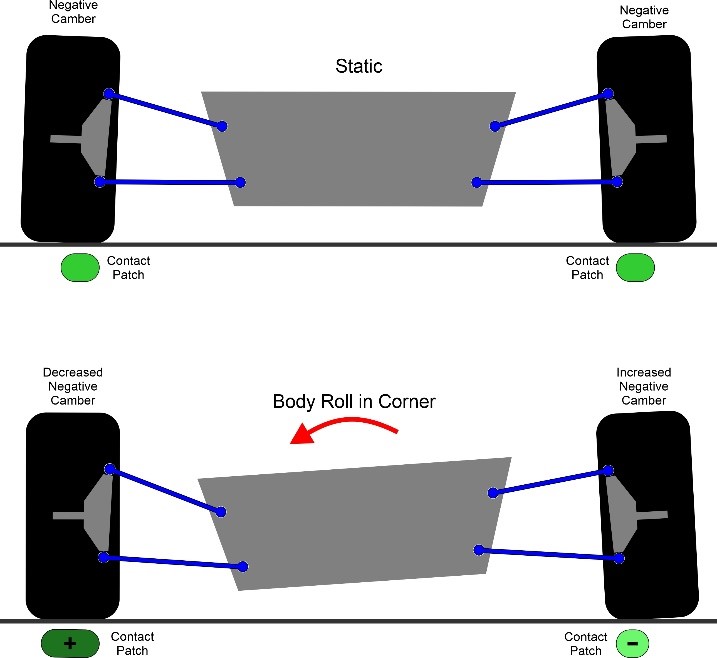
When the wheels and tires are pushed outwards and the car’s body rolls, the contact patch, or the area of the tire which comes into contact with the surface of the road, diminishes significantly as it rolls over onto its outer shoulder.