54 shares
A Look Inside The Most Powerful N/A Nissan VQ-Series Engine Ever
By
Tommy Parry January 21, 2020Perhaps the Nissan VQ-series engine doesn’t get the credit it deserves. While it’s not known for making dragster-levels of power as easily as a VR38DETT, it’s still a stout, light, and compact engine with plenty of potential. One brave privateer racer wanted to explore the limits of this oft-derided V6, and after a year of restricted running in Koni Challenge with his 350Z, he turned it into a sprint-race and time-attack car. No longer shackled by stringent rulebooks, he pushed the VQ engine to its limit.
With the handcuffs removed, Sasha Anis began to explore the VQ’s potential, somewhat conservatively. After reaching the limits of the VQ35DE, Sasha decided to install a VQ35HR — a rare version of the VQ with high-flow heads, among other improvements.
The first iteration of his HR engine used a VQ37 crankshaft, VQ35HR heads,
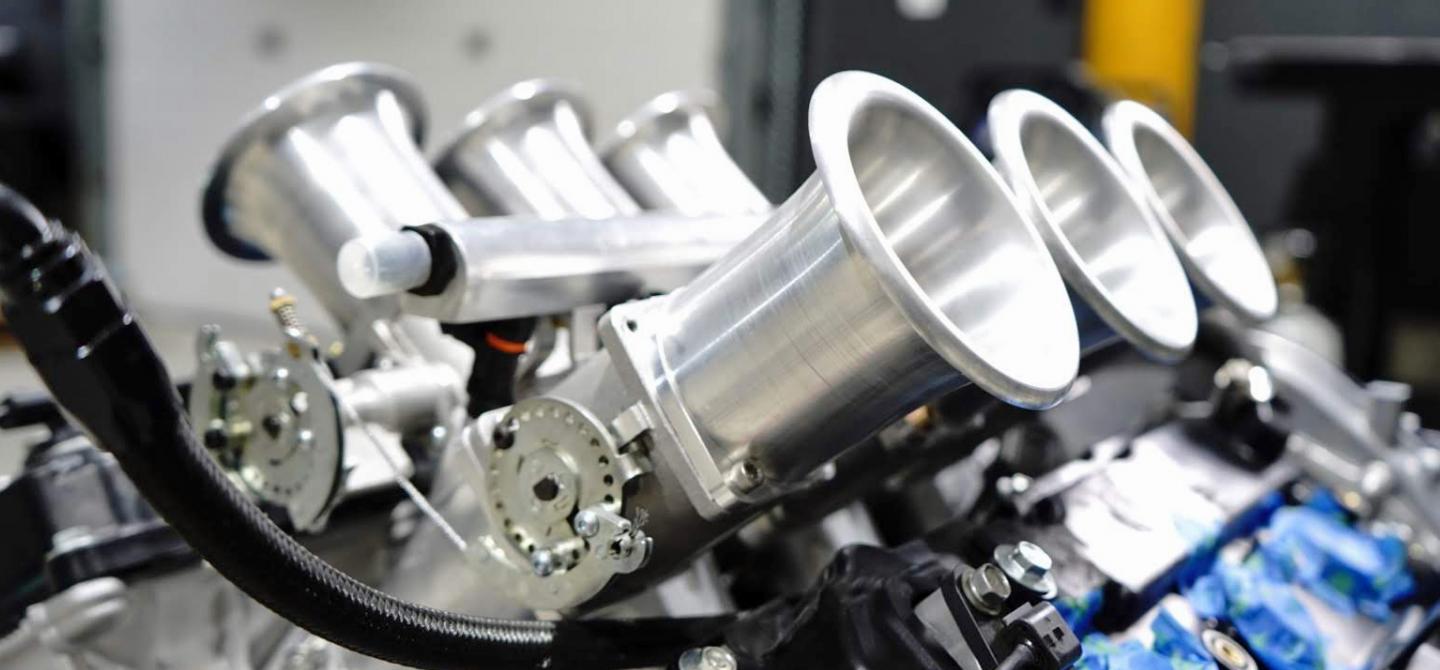
JE Pistons high-compression pistons, 53.5mm intake trumpets, and
Jim Wolf Technology cams. The package was enough for a reliable
413 horsepower at the rear wheels and a glorious bellow at its 9,000-rpm redline.
At those high engine speeds, it’s not surprising that a factory connecting rod eventually failed and punched a hole in the side of the block, which left the starter hanging by a wire. Believe it or not, the engine continued idling and had oil pressure, even with a windowed block! It was only due to the missing starter that the engine wouldn’t start again.
Anis considered his options. One professional team offered to sell him a race-proven, 410-whp VQ37 — the engine from the 370Z — for a fantastic deal, but Anis decided to take a different route. He and some of the bright minds at
Jim Wolf Technology were talking about a prototype 4.2-liter race engine for almost three years, and Anis felt this was the right time to try.
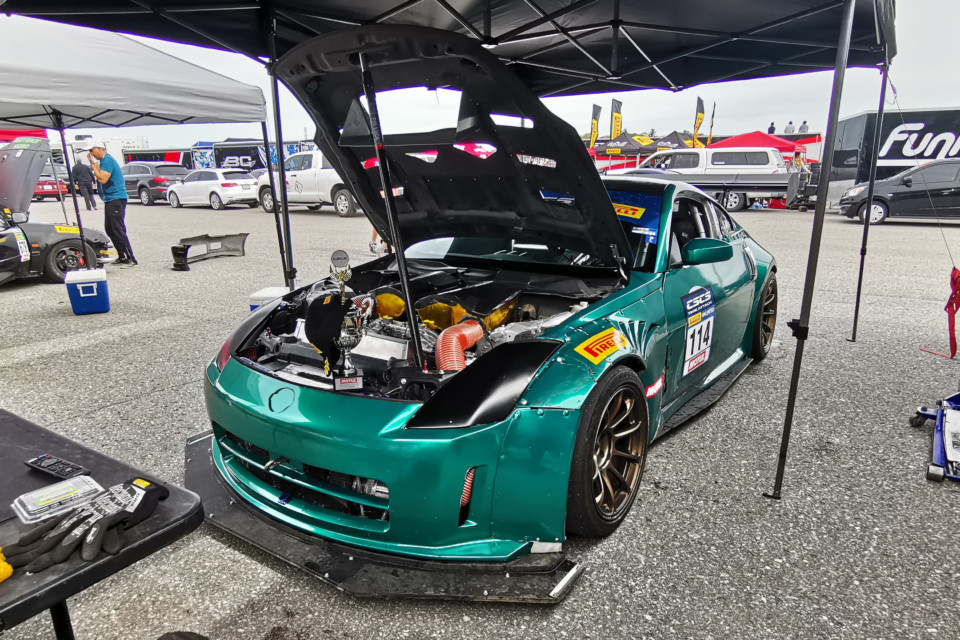
The naked engine, only clothed in heat shielding and ducting, screams bonafide racing car.
The objectives weren’t set in stone, but Anis knew he wanted to avoid forced-induction. In a front-engine, front-heavy car, adding roughly 70 pounds with a turbocharger and the ancillary coolers wouldn’t jive with his vision for a well-balanced road racing car. “It would be too easy, it wouldn’t have the right powerband, and it would have heat issues,” Anis admits. This engine had to be pure, revvy, lightweight, powerful, and
atmospheric.
Indeed, what Anis sought was something nearing a factory-built GT3-class engine. He knew he’d have to get creative to reach his goal with limited resources and a fraction of a big team’s budget.
Asking for Aid
Though Jim Wolf Technology doesn’t always focus on professional racing, they had a great deal of experience with race-spec VQ engines prior to stepping in with Anis’ build. Back in the heyday of Grand-Am racing, Nissan Motorsports requested Jim Wolf build camshafts for its 350Z race cars.
This gig led to JWT building engines for some of the 370Z racecars in IMSA Grand Sport from 2011 to 2015. Because Jim Wolf didn’t have the time to engineer a high-lift solution to suit the Variable Valve Event and Lift (VVEL) system in the VQ37, instead, they decided to build a VQ37 with heads from the non-VVEL VQ35HR. Some might see it as a step backward, but the relative simplicity of the VQ35HR heads meant greater reliability, less weight, and no loss of performance on the track.
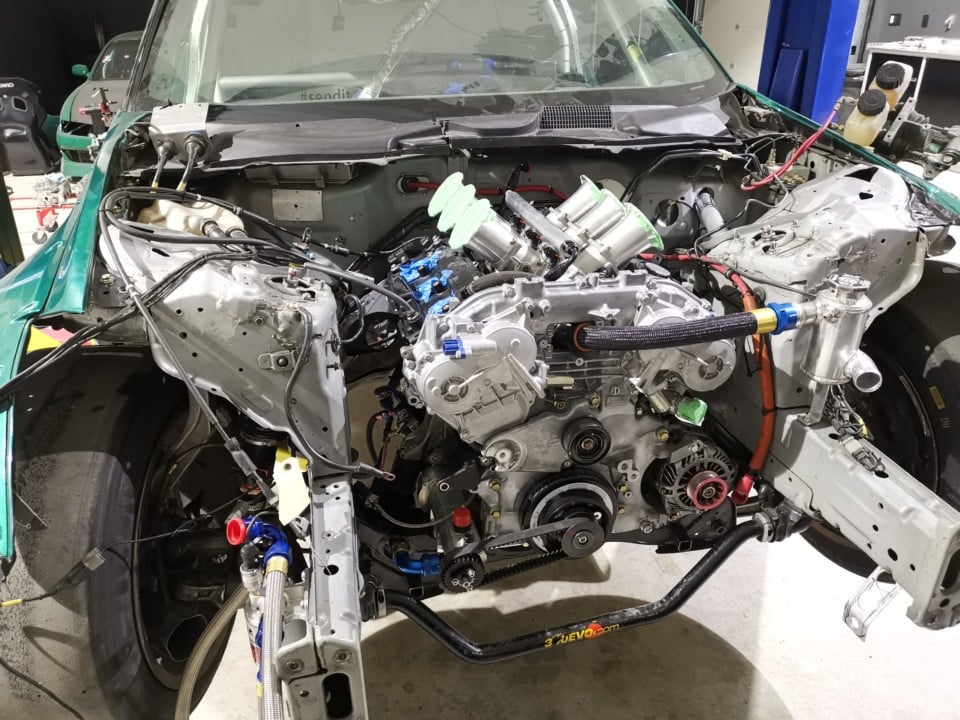
Meanwhile, Clark Steppler and Jim Wolf were involved with Anis’ efforts for some time. Just after Anis retired the car from professional racing, Steppler stepped in and ground a custom set of cams for Anis’ VQ as part of a camshaft shootout for
Modified Magazine more than a decade ago.
The JWT cams won handily, and a partnership was formed then and there. “We were given the information on the competitors’ cams and strove to do our best within the constraints. These weren’t race cams, but just S1 street cams, and we still made 400 horsepower,” said Jim Wolf proudly.
That auspicious outing encouraged them to push their partnership through the years. Eventually, they started to outline goals for an ideal VQ powerplant organically. The salient question in their conversations was, “How could we make Porsche GT3R-level power?” As one of the most impressive naturally-aspirated engines made, with a similar displacement, trying to match the Porsche’s 550-odd horsepower with their modest budget was an ambitious goal.
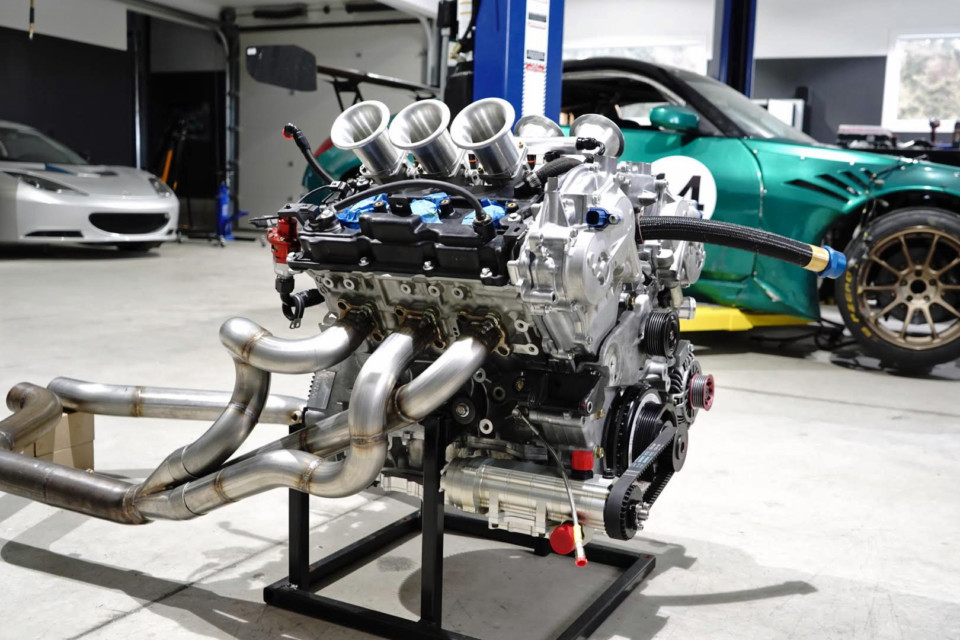
Relatively compact, the custom VQ engine helps Anis near his ideal weight distribution of 52-percent, front, 48-percent, rear.