3. It’s all in the Microns
Apparently, there is great confusion out there regarding micron sizing of fuel filters. Performance fuel filters are categorized by their ability to filter out dirt — generally expressed in microns. A micron is a millionth of a meter. To put it in perspective, a human red blood cell is five microns in diameter. Expressed digitally, 1 micron = 0.000039-inch and 100 microns = 0.00393-inch. This means that a 100-micron filter will trap dirt larger than 0.004-inch. A 10-micron filter will remove everything larger than 0.0004-inch!
Here’s where the confusion begins. High-pressure electric fuel pumps need a 100-micron filter on the inlet side to remove the big chunks of dirt and debris before it gets into the pump. Because these 100-micron filters are less restrictive, this reduces the inlet restriction, allowing the pump to operate correctly. If the pump is restricted on the inlet side with a finer filter, this radically reduces the pump’s ability to function properly.
This is a common problem where the 10-micron filter is placed ahead of the fuel pump, which is not correct. The proper position for a 10-micron filter is after the pump, to screen out the tiny stuff that can clog fuel injectors. The second photo shows a 100-micron filter that should be used on the inlet side of the pump. So, to recap: The 100-micron filter goes ahead of the pump inlet and the 10-micron filter is used on the high-pressure side of the system. Now you know!
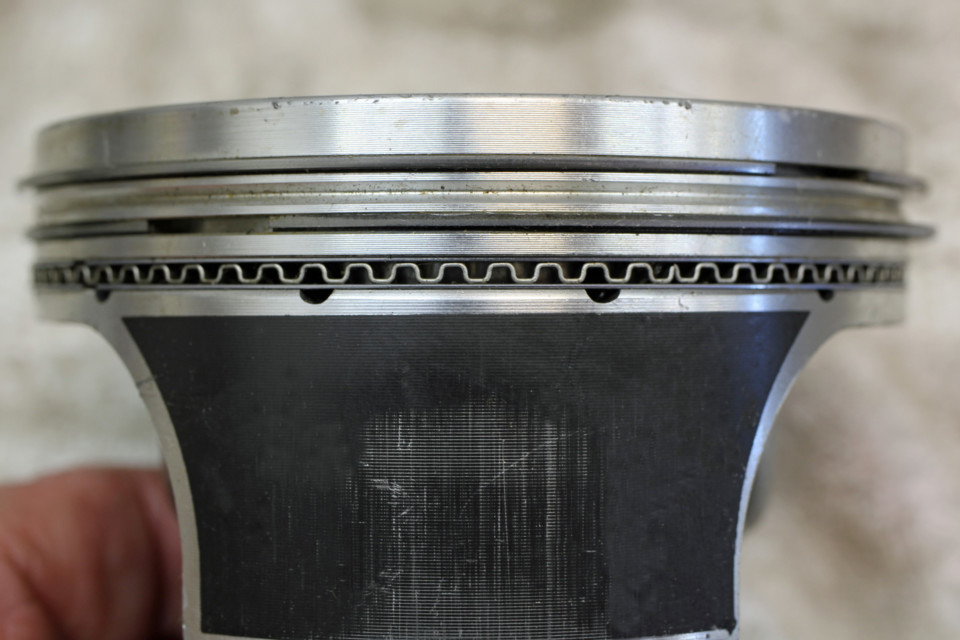
4. What is Standard Tension?
Several factors determine the definition of standard tension for an oil ring, and it is anything but consistent. The tension an oil ring creates is related to both its width and bore size. As an example, the older small-block Chevy uses 3/16-inch (0.1875) radial-width steel rings that are 0.024-inch thick. Fast forward to a typical production LS engine and the oil ring package shrinks to 3mm (0.117-inch) radial-width oil rings that are 0.018-inch thick — or 33-percent thinner than a small-block Chevy.
All of this contributes to reducing the amount of radial tension exerted by the oil ring package because the thinner ring offers a reduced contact point. A thicker ring must exert a greater outward force to create the same load as a thinner ring.
Total Seal’s Ed Law offered this analogy: a butter knife’s cutting edge is broad and blunt and has difficulty slicing hard butter.
Conversely, a thin steak knife cuts much easier because, with the same force applied, the load is concentrated in a smaller area. According to Total Seal, a 3/16-inch standard-tension oil ring generates 20 to 25 pounds radial (outward) tension while a 3mm standard LS oil ring only creates a 9- to 11-pound radial load. This is half the force. These numbers represent the radial force created by the rings, not the sliding friction force.
However, common sense dictates that higher radial tension will generate greater sliding friction — and that means lost horsepower. The point is you can gain some horsepower merely by running a thinner oil ring package. This is one reason (among many others) why a late-model LS engine makes more power (and pulls down better fuel mileage) than a Gen-I small-block Chevy. It also shows how the older small- and big-blocks can be updated with more modern components, like pistons designed to accommodate more current technology oil rings.