17k shares
The Process of Certifying Wheels For Drag Racing’s Ultimate Classes
By
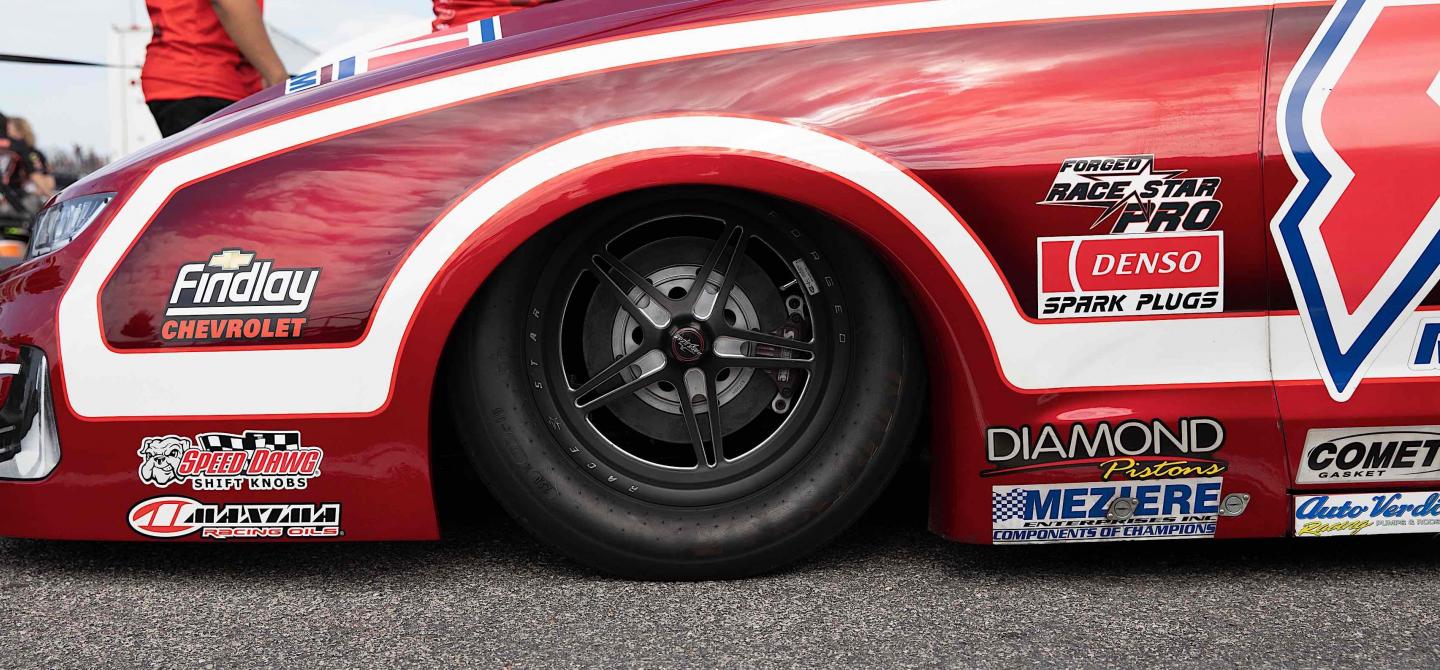
Todd Silvey December 01, 2019The racing wheel is one of the most diverse components on a race car, varying greatly in appearance between each manufacturer. Each design may offer a unique presentation for the race car, but strength and durability need to outweigh the “looks” when it comes to the rolling stock on many of today’s fastest drag cars.
Classes ranging from NHRA Top Fuel to Top Sportsman require an
SFI Foundation wheel certification. With the diverse population of drag classes out there, from nostalgia nitro to 10-inch tire outlaw classes, the requirements for certified wheels can fluctuate depending on your rulebook.
Like other various components ranging from seat belts to complete chassis, wheels built for the highest horsepower demands must pass a rigorous testing process to be certified. These tests are required for both front and rear wheels and have differing procedures for each.
“The SFI Foundation utilizes different outside laboratories that perform each testing procedure,” says Mike Hurst, SFI Foundation Technical Manager. “These wheel testing labs use the same machines used to test production wheels built for auto manufacturers. These labs are experts at the wheel testing process.”
I hate to say it, but pretty much every standard, certification, and testing criteria for use in motorsports safety program the SFI Foundation has developed were written with blood. – Mike Hurst, SFI Foundation
“These standards have been developed from experience,” Hurst continues. “We don’t just make up programs or specs on our own. It is the sanctioning bodies who come to us when they see a problem. It can be racing wheel failures, superchargers flying off of engines, or seat belts breaking. All of the certification processes we have developed quite simply help to separate the good from the bad for safety’s sake.”
These wheels are being tested in a direct motorsports application. The dynamic radial fatigue test spins the wheel mounted on a racing tire to simulate extreme load characteristics. The dynamic cornering fatigue test clamps the wheel's outer lip while an oscillating force is placed against the lug area. Photos courtesy Standards Testing Labs, Massillon Ohio.
.”