Below 106 mph, there is a small vacuum in the air scoop with reduced air intake. As with the carbureted example, the fuel mixture is richer. At 106 mph, there is atmospheric pressure in the air scoop. Fuel delivery is operating at atmospheric air pressure. With no fuel system changes from the launch, the fuel mixture will lean out.
Above 106 mph, there is pressure in the air scoop. That pressure increases with greater vehicle speed. Up to 3 psi pressure increase in the scoop was reported at 250 mph in this scenario. Without any adjustment from the low end, the fuel mixture leans out. At this point, fuel enrichment from a jetting change is usually necessary. The traditional high-speed bypass jet common in mechanical fuel injection is usually in the wrong direction as pressurized air is added via the scoop.
A pressure increase of 3 psi in the inlet of a supercharged engine can equate to as much as 8 psi more boost in the manifold. That is the inlet pressure times the supercharger boost ratio (boost pressure divided by atmospheric pressure) as follows:

However, oftentimes, that much of an increase is not measured from on-board data recorders, because of cumulative changes in manifold heating and increased blower leakage during the run.
Effects of RPM-Based Air-Demand Changes
Both of the previous examples are for one engine-demand level, which occurs for one specific engine speed. In most cases, the engine is operating over a varying RPM range. To illustrate, the actual airflow demand of a blown alcohol V8 engine would change from about 3,700 to 4,600 cfm through the typical engine speed range.
When setting up a tuning plan for sub-CASS, CASS, and above-CASS fuel demand changes, you need to take into consideration the effect the engine’s changing air volume demands have on the critical speed of the scoop as both the vehicle and engine are accelerating.
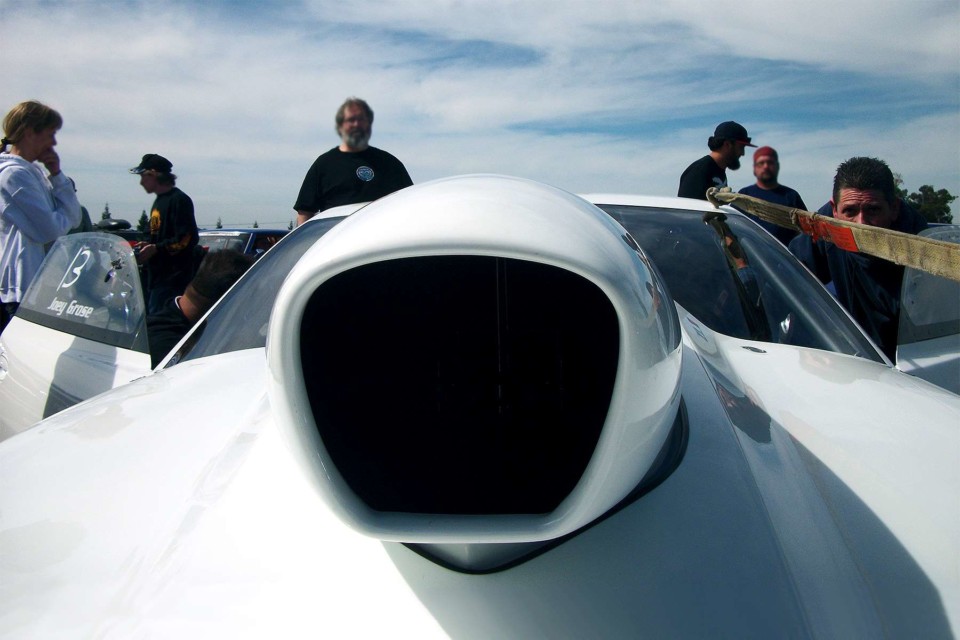
Large air scoop inlet on this NHRA carbureted ProStocker saw ram-air at higher speeds. Approximately 2 psi of air pressure from ram-air occurs on a scoop this size at 200 mph. 2 psi translates to 4 inHg of barometric air pressure increase. That can result in as much as 10-percent more horsepower at the top-end if properly accounted for.
Tuning Considerations with CASS knowledge
In many of the top ranks of drag racing and other racing classes, timer-controlled bypasses are used to achieve multiple fuel mixtures during a run. However, a throttle interruption will change the run profile if the timer-controlled events are independent of the throttle. This changes the relationship between engine RPM and run time, and any hiccup in the run complicates the fuel mixture needs. The hiccup can also affect CASS events and performance, as well.
Most motorsports tuners use trial-and-error to dial-in a combination, often reading the spark plugs for primary tuning indications. A spark plug reading is a summary reading from the run, and these intermediate changes may not be visible from the spark plug reading alone. With all of these CASS considerations, this method is very time-consuming. Any change to the vehicle’s gearing in the transmission, rearend, or even tire size can change the engine consumption profile vs. vehicle speed and affect the CASS.
Effects of Headwinds and Tailwinds
As stated in our
previous article on engine tuning for ram-air, a head-wind or tail-wind changes the fuel curve adjustment. A vehicle traveling 200 mph with a 30 mph head-wind can now be considered to be going 230 mph for the purposes of ram-air adjustments, as well as tuning with CASS. Conversely, a vehicle traveling 200 mph but with a 30 mph tail-wind can now be considered to be going 170 mph for ram-air adjustments.
The measurement of air-fuel ratios, the CASS, and the performance effects are all science. However, the decisions for what to test and implement, such as from the CASS effects, might be considered an art form. Thus, motorsports tuning is a constant task throughout the lifetime of the vehicle.