“We’ve got fully isolated, remote-mount sensors in ranges from a 1-bar MAP sensor up to a 1,600 psi sensor for nitrous applications. These are available in blocks from one to four sensors, making them compact. The sensor cores are all high-quality, all half-percent-accurate, but the other nice thing is, instead of running dozens of wires around the car, a six-wire loom comes out of the box, and it shares a common feed and ground. These are compatible with all ECU’s and all data-loggers, as well as any 0-5v gauge,” Cotteleer explains.
Temperature sensors have been developed for both liquid and air, with the primary advantage being both speed and accuracy, relative to traditional OEM sensors.
“Even the fast-response GM IET sensor that everybody recommends is horribly slow by today’s standards,” Cotteleer says. “GM quotes a less-than-15-second response time, but our sensors are less than 1-second. Technically, they’re 15 times faster, and three times more accurate.”
Rife offers these in a range of mounting options — for boosted cars or supercharged cars, for example, there is a 1/4″-28 sensor with an O-ring seal that may be placed post- or pre-intercooler, to pick up temperatures anywhere they’re needed. In partnership with Motion Raceworks, Rife also has an LS-specific temperature sensor (with a pressure readout for monitoring right at the head). It plumbs directly into the cylinder head and reads coolant pressure — a useful tool for stock bottom-end racers who are often lifting head gaskets.
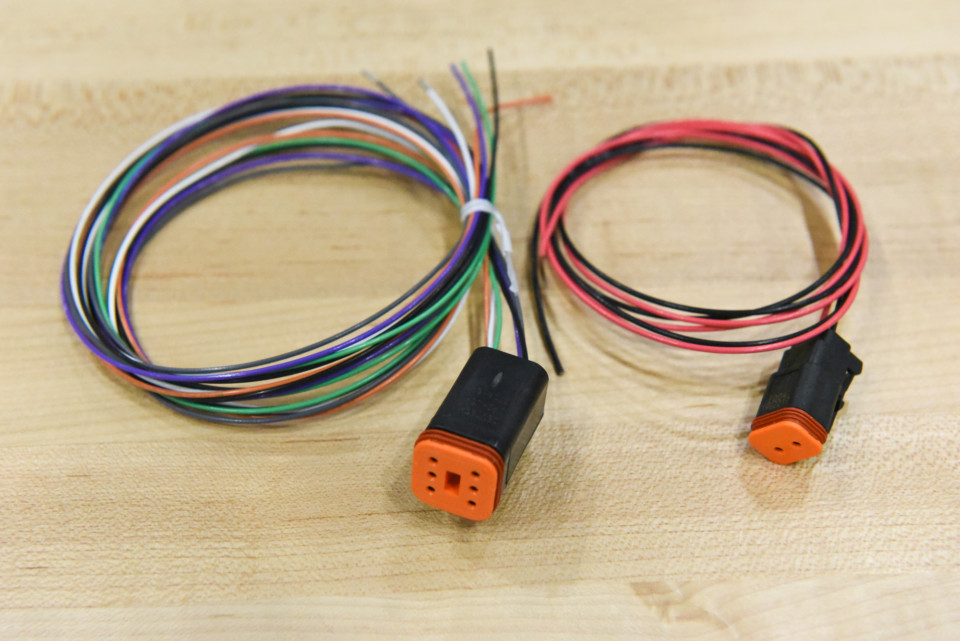
The sensor wiring harnesses.