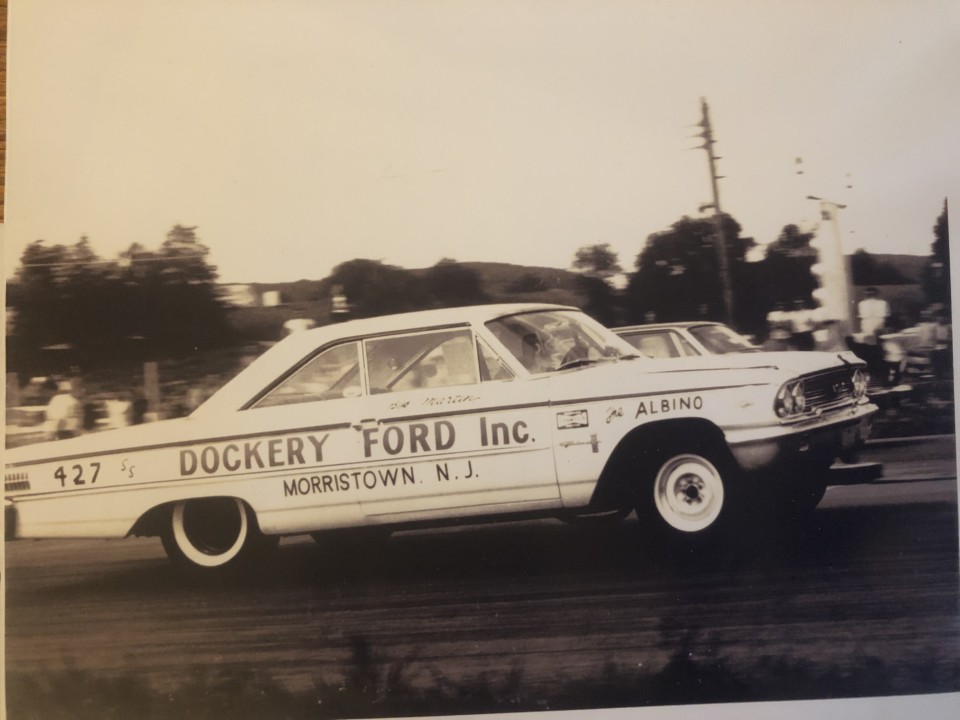
The lightweight Galaxie in question was one of Ford’s “R”-lettered cars, with a 427 cubic inch powerplant and 4-speed transmission from the factory. The body was equipped with fiberglass fenders and inner fenders, a flat fiberglass hood, and fiberglass decklid, as well as aluminum bumpers. There was no heater, radio, arm rests, passenger sun visor, or carpet. Instead, a rubber mat was installed in its place.
The glovebox notice says it all: “This vehicle has been built specially as a lightweight competitive car and includes certain fiberglass and aluminum components. Because of the specialized purpose for which this car has been built and in order to achieve maximum weight reduction, normal quality standards of the Ford Motor Company in terms of exterior panel fit and surface appearance are not met on this vehicle.”
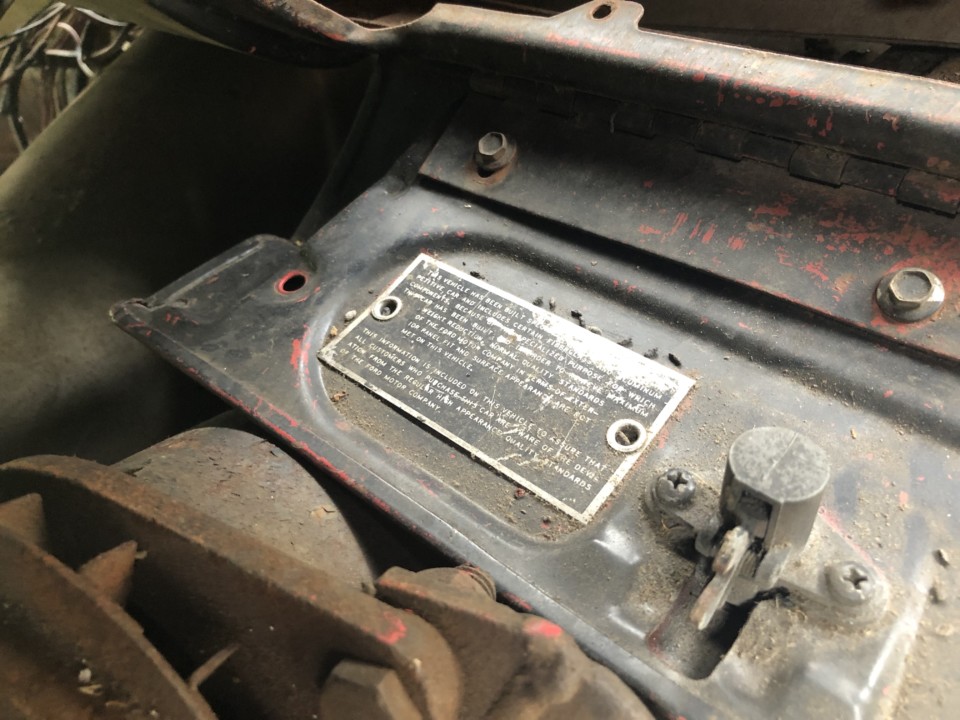
The current state of the glovebox notice.
Each one had specific Kelsey-Hayes steel wheels, 11×3 brakes front and rear (opposed to 2.5 on regular production Galaxies), and no power steering or brakes. Interestingly enough, they did have wipers, which Davies noted is pretty odd. They had operating lights, as they could be driven on the street. They also had a full exhaust system when sold new. It was, in essence, a factory race car with street car characteristics.
Almost every one of the cars was built in Wimbleton White, and was available to only a handful of dealerships. The Martins decided to name the car “The Albino” and outfitted it with red lettering and red headlights. The car would go on to gain the respect of fellow racers, who weren’t keen on going head to head with it.
A copy of the original invoice from Dockery Ford (the copy is blurry, but many of the details can be made out) and copies of several time slips from its time as The Albino.
Once the car belonged to the Martins, it wasn’t long before it made its debut appearance at New Jersey’s Island Dragway in Great Meadows. It was on that very same day that Barbara would become an employee of the track, taking a position in its timing tower.
Just one year later, in 1964, Bob decided it was time to retire from drag racing, and sold the Galaxie. Barb’s racing career continued, however, and she went on to work for NHRA Division 1 and win multiple powder puff derbies. She was also one of the first women to ever hold a full competition NHRA driver’s license.