41 shares
How to Ruin (and Fix) a Perfectly Good Fuel Pump in a G-body
By
Scott Parker August 27, 2019There are two things you need to know when it comes to the installation and care of your electronic fuel pump, regardless of what platform you choose: don’t trust an old tank of gas and always use secure wiring connections. Failure to heed either of these warnings can ruin a perfectly good fuel pump, which is exactly what happened in my 1983 Buick Regal.
G-bodies can be an acquired taste, and I have to admit this Regal has grown on me over the years. It was built into a Pro Touring machine with
Detroit Speed suspension,
Forgeline wheels,
Antivenom/
American Powertrain T-56 transmission, and 426-horse
Chevrolet Performance LS3 E-Rod. To fuel the LS3, the low pressure factory fuel system was swapped for an ‘86-’87 style tank, bucket, and fuel pump with Russell fuel lines. Unfortunately, multiple moves from NJ to FL to CA left the Buick dormant for long stretches of time. Long story short, some fresh fuel was added to the tank, but there was several-years-old sludge clinging to the bottom of the tank. This was discovered when engine suddenly wouldn’t fire. It was then brought into the Power Automedia shop for diagnosis.
After taking delivery of the Buick, it was immediately apparent not all of the wiring was the most tidy or even safe. Before the Regal was even pulled into the shop, the most logical guess was that it suffered from a (hopefully) simple wiring issue. Once the tank was lowered, tech manager Dean Jigamian and shop tech Scott Nogrady immediately called my attention to the sludge. They also pointed out that the fuel pump wires had been simply twisted and were held together mostly by corrosion. Clearly the 10% ethanol content of the fuel wasn’t helping matters, but the shoddy wiring could have easily sparked a fire. Yikes!
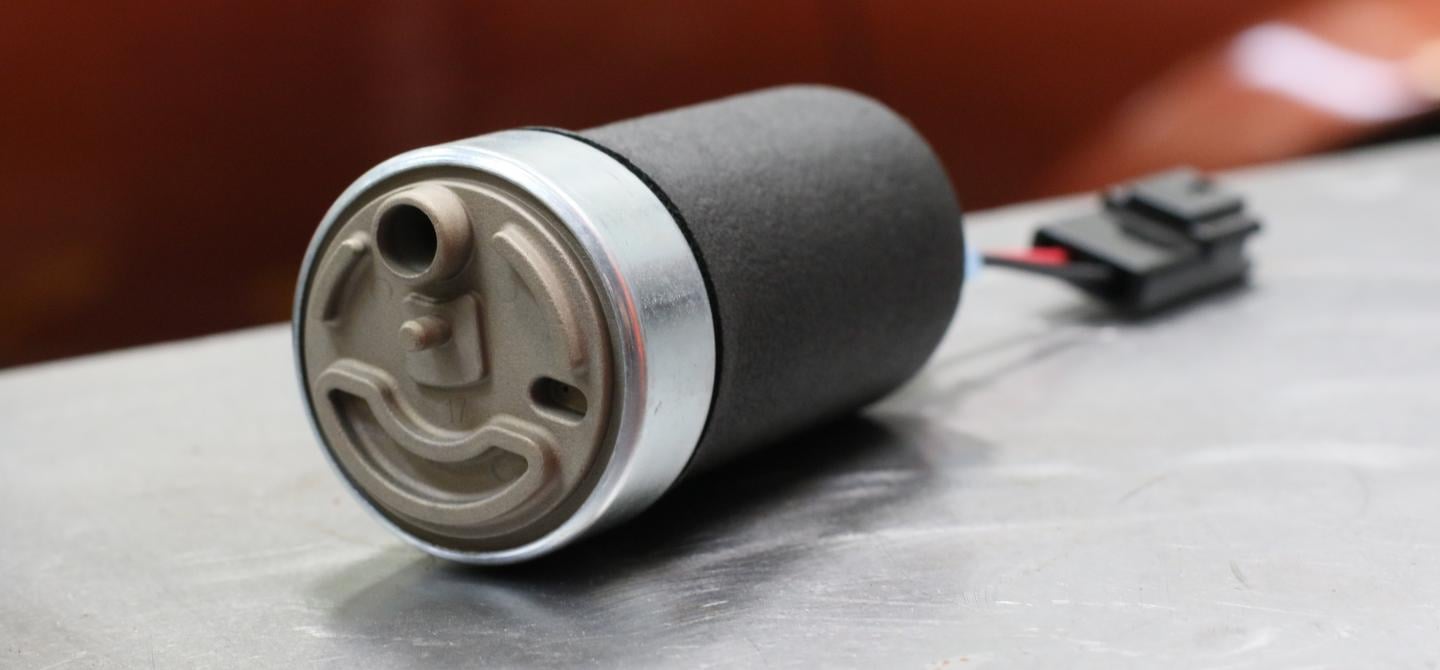
Faulty wiring and old gas (with ethanol) in the tank spelled failure for this zero-mile aftermarket fuel pump.