78 shares
True SStreet: The Science Behind Street/Strip Fuel Systems
By
Andrew Wolf July 30, 2019The fuel system: simple, yet in some regards, complex. In this text, we’re going to peel back some of said complexity, specifically in regards to engineering a fuel system for a high-horsepower, street and strip machine.
Our
Project True SStreet is a street-and-strip 2010 Chevrolet Camaro that’s powered by a
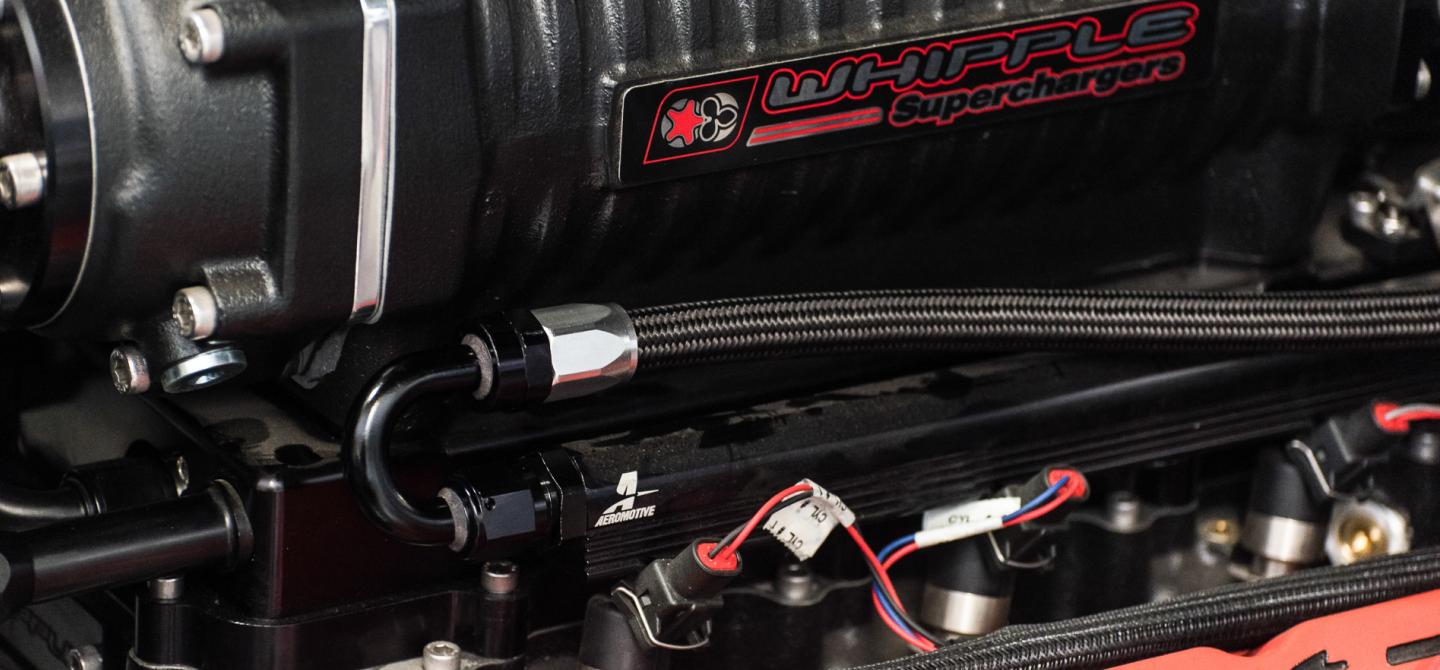
Chevrolet Performance LSX376-B15 crate motor topped with a 4.5-liter Whipple twin-screw supercharger, producing 1,025 horsepower at 6,600 rpm. That kind of power, plus the demands of stop-and-go driving places added importance on the fuel system. But as
Weldon Fuel Systems’ Jim Craig notes, a fuel system isn’t a perfect science, and there’s no need to overthink it.

“We want to keep it simple,” Craig continues, as we delve into the topic of designing a fuel system for a street-strip vehicle. He explains that the first variable to cover is the type of fuel that’s going to be used in the car — is it going to be pure racing fuel, pump gas, or perhaps ethanol? This is key for a couple of different reasons: one, different fuels contain varying energy contents, meaning it requires more or less fuel to be flowed depending on the fuel choice. E85, for example, burns faster than gasoline, and the fuel system has to be able to keep up; second, the wrong fuel mated with the wrong fuel system components will corrode the internal seals and parts, leading to leakage and failures.
“Is there a possibility of it being oxygenated, like a Q16? Or an oxygenated E85? These fuels can be a whole different animal, where you have to look at fuel pump sizing, fuel lines, and system components to keep the fuel from doing damage,” Craig notes. “If you run an oxygenated fuel, you can’t have any bare aluminum fittings in the system. Guys get away with the fuel rails, but as you’re moving the fuel through the system, the oxygenated fuel will corrode the parts. You’ll see a white powdery residue in the system.”
You always look at the total amount of fuel pressure, base plus boost, as where the total calculation comes from. When I size a fuel pump for a customer, I go to total fuel pressure. – Jim Craig, Weldon Racing
In regards to fuel choice relating to fuel system requirements, Craig noted the following math:
Producing 1,025 flywheel horsepower with the LSX376, our combination requires a minimum of 140 gph (gallons per hour) at 60 psi on gasoline to support said horsepower. Craig arrives at this number by figuring the maximum system pressure of 42 psi added to a hypothetical 20 psi of boost. If we were to switch to E85 or a straight ethanol fuel, we’d need to add 30 to 40 percent to that calculation to ensure the system — the pump, filters, lines — are sized correctly so we don’t shortchange anything.

While fuel flow calculators and varying formulas exist, Craig says he looks at a horsepower rating and then takes a more analytical approach to the elements in play. Using our example, a Whipple supercharger is regarded as an efficient supercharger, and at 10 psi of boost, Craig estimates it requires about 100 horsepower to turn the supercharger. As such, one would need to add about 10 gph to the calculation to account for the parasitic horsepower loss.
“Depending on the model and boost, you might be looking at upwards of 600 horsepower to drive the blower. If it were a turbo, there is no extra fuel needed, because a turbo is essentially free horsepower. If it’s nitrous, you look at the total amount of horsepower that you’re making. You always look at the total amount of fuel pressure, base plus boost, as where the total calculation comes from,” Craig says. “When I size a fuel pump for a customer, I go to total fuel pressure.”
