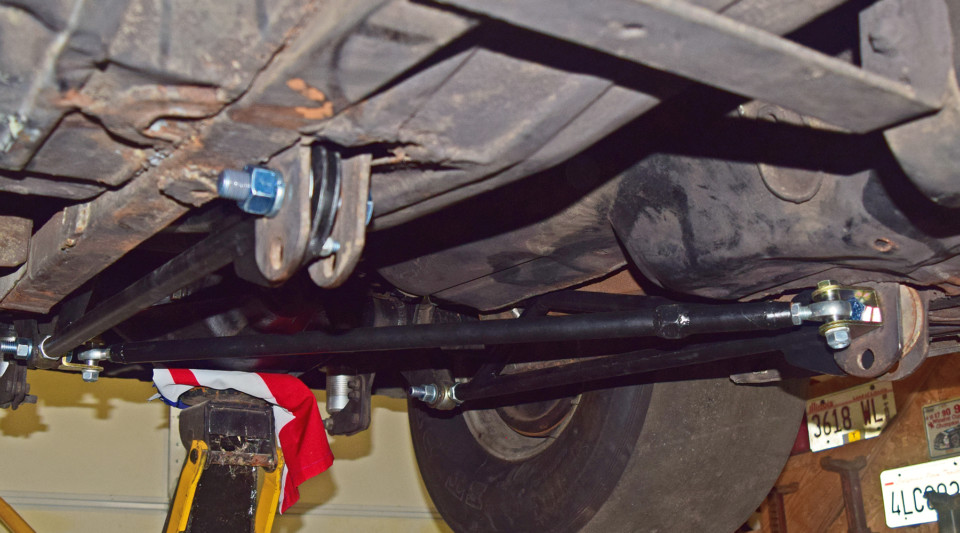
With our rear suspension reassembled, we aligned the housing in relationship to the chassis with our diagonal link and confirmed our proper pinion angle. A final "crank down" of all bolts and jam nuts completed the job.
Most pre-fabricated diagonal links are designed for a standard 24-inch width spacing of the ladder bars. With our bars constructed at only 22.5-inches of spacing, we ordered an unwelded kit so we could customize the diagonal length to match accordingly.
Chassis Engineering offers multiple diagonal link options. Its standard link setup can handle the typical tube chassis car and is constructed of 3/4-inch x .156-inch mild-steel tubing. The optional heavy-duty and Top Gun diagonal links are designed with larger 1-inch tubing. We ordered the more substantial 1-inch unit kit for our heavier back-half Camaro compared to a lighter tube chassis car.
Perry practices what he preaches on his own vehicles — he is currently applying the same suggested maintenance to the chassis of his personal racecar.
He noted that he has been so busy in his job at Chassis Engineering that he hadn’t really raced his own car for a few years. “Just yesterday, we took my car out and make a few laps in it for fun,” He says. “Following our track day, my son and I made the decision to update the tires and a few other pieces, but we’re also going to put it up in the air, remove all of the tires, brakes, and go through all of the front and rear suspension hardware piece by piece to make sure everything is right.”
If you can imagine the stress your chassis undergoes to get down the track in quick fashion, lap after lap, weekend after weekend, it just makes sense that examining all the components in a hard-working suspension is a matter of performance and safety.
Article Sources
Chassis Engineering
(800) 327-9402