What Makes Up A Dedicated Fuel System For A Nitrous Application
The concept and execution of a dedicated fuel system is really simple, however, the right parts must be used to get the greatest benefit. Generally, a user will put a high octane fuel in the fuel cell so it can be pumped directly into the fuel solenoid of the nitrous system.
“We offer both custom and universal tanks with our dedicated fuel systems that will work with nearly any application. All of the universal tanks are plastic or aluminum, while all of the custom tanks are made of aluminum. The aluminum tanks are laser-cut, welded, and assembled in-house here at Nitrous Outlet. Inside the tank, there’s a Deatschwerks 255 liter-per-hour fuel pump capable of supporting up to 500 horsepower. We have an
Aeromotive adjustable fuel pressure regulator that’s also included that you can run at either high- or low-pressure setting depending on your setup,” McDonald explains.
Nitrous Outlet put a lot of thought not only into the parts they selected to be used in its fuel systems, but also how the system would be designed. The placement of the tank and other parts inside the vehicle plays a big role in how it performs.
“We wanted to keep the fuel pressure regulator under the hood because all of the fuel pressure changes happen to the engine quickly — this way you’re not getting a delay in fuel delivery. Systems that have the regulator away from the engine experience a delayed response to the engine because you have all that line that has to change pressure when there are changes based on boost or vacuum. By keeping the amount of pressurized line short and the regulator under the hood, that allows any pressure changes that occur to affect the engine much quicker. That will affect the nitrous system quicker so you’re not dipping either lean or rich depending on the type of pressure change. The regulator is boost reference compatible, so if you’re running boost they will adjust pressure accordingly,” McDonald says.
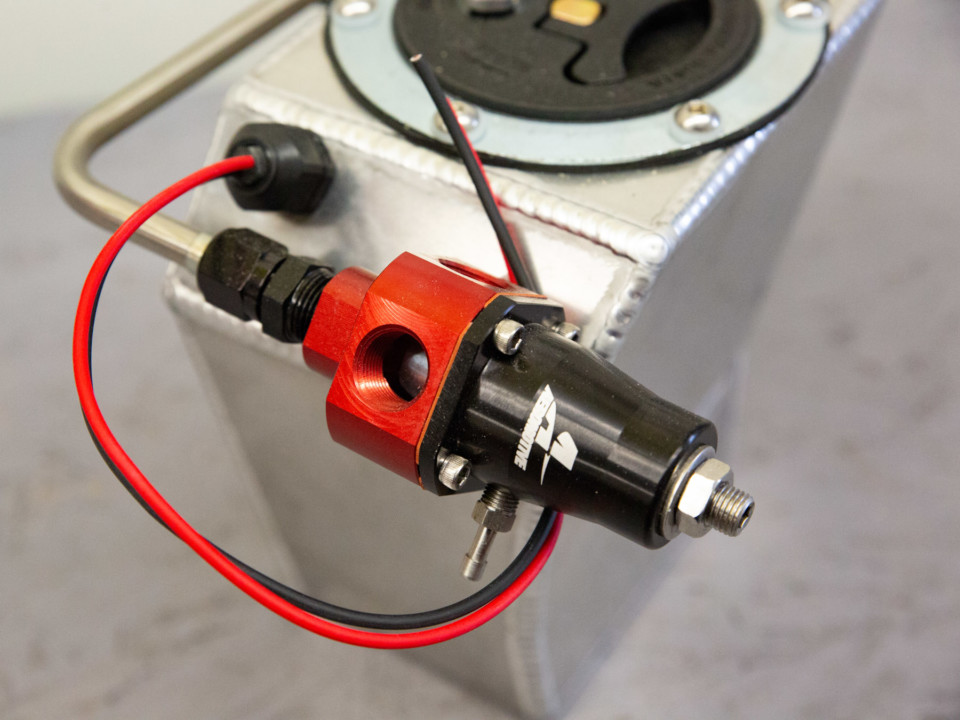
The correct fuel pressure provided by the Aeromotive fuel pressure regulator used in the dedicated fuel system plays a critical role in how it functions, but there has to be a solid pump behind it making sure the fuel flows. McDonald explains why the Deatschwerks fuel pump was selected to be a part of the Nitrous Outlet fuel system.
“We went with this pump setup because typically you’re not going to need more than 500 horsepower of fuel for nitrous in a street car. These pumps have proven to be very reliable, the pumps are widely available, they’re affordable, and they work with E85. The different fuel compatibility and ability to swap pumps if there is an issue gives our users a lot of options.”