part 3
The downside to the Crowerglide is that you can’t leave the starting line at virtually any engine RPM you want. With the automatic, there’s a point that you can’t leave any higher without dragging the car through the beams. The maximum achievable RPM could be as low as 4,500, Levine notes. Using the pedal with the Crowerglide, you may be able to get away with an additional 1,000 RPM.
Cost and wear-and-tear are similar and vary by how extreme and harsh the application is on parts on a run — a fuel car will go through more parts than an alcohol car might, for example.
The automatic clutch, Levine suggests, is a little more tedious and more labor-intensive to set up, as the air gap has to be set up accurately by sticking feeler gauges in, versus the simple pre-load adjustment on a pedal clutch. Remember, a pedal clutch is engaged when the pedal is not depressed, whereas an automatic clutch is the opposite — the air gap is there until the engine reaches a given RPM.
…all it knows is RPM, and as the engine RPM goes up, it throws the arms out and they put pressure on the donut, which closes up an air gap in the clutch. So when you start the car up and run it at an idle, it’s basically slipping, and then as you bring the engine up, that pack tightens up. – Roger Levine, Crower
Versus A Torque Converter
You may be questioning how an automatic clutch differs from a lock-up torque converter, and from a mechanical perspective, they are similar: each operates off of engine RPM to engage, slipping to a tuned degree before achieving near or full lock-up. But that’s where the similarities end.
First, a torque converter is able to multiply torque, wherein the fluid coming off the vanes of the turbine is redirected off of the stator while locked against the one-way clutch, creating what is effectively a reduction gear. A clutch, however, cannot do so — it can only be slipping or locked up. Levine notes that A/Fuel and nostalgia Top Fuel cars, both high-gear-only cars, will sometimes slip the clutch out to 1,000-feet, using the clutch to take the place of a transmission. But that’s effectively a controlled slip until it can reach an RPM to lock up.
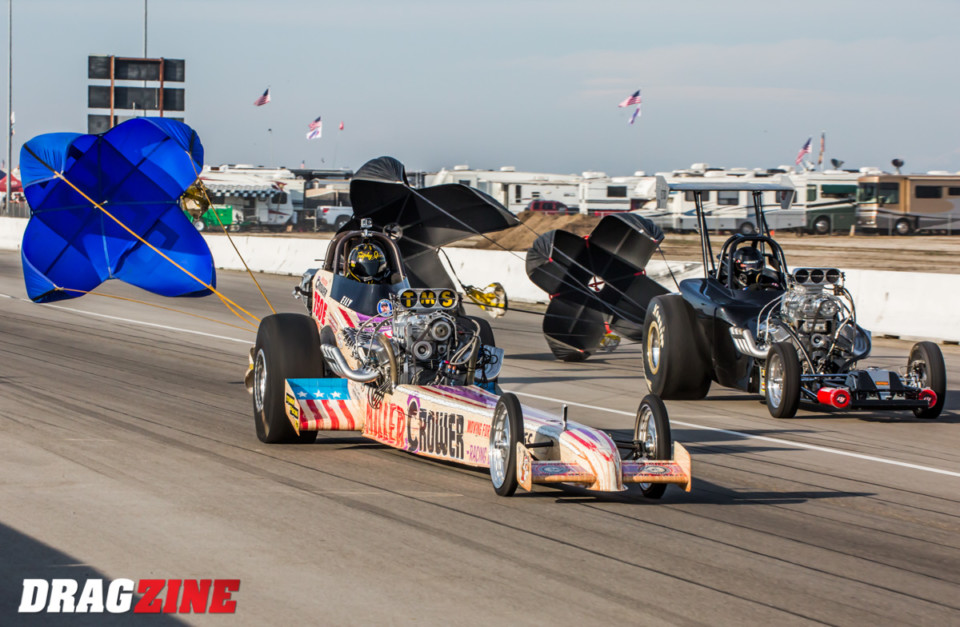
Secondly, the fluid inside a torque converter, which can heat up as much as 100 degrees per second against the transbrake on the starting line, still serves to cool the inner workings of the converter to some extent. But a clutch cannot do so, and if one were to stab the throttle on the starting line to bring up the engine RPM against the clutch pedal (driving it similar to a torque converter), it would quickly destroy the clutch and possibly the inside of the bellhousing (something Levine notes has happened before with racers testing its uses).
Whether it’s an automatic clutch, pedal clutch, or a torque converter, the intent remains the same: to engage and disengage power between two rotating shafts. But the methodology is about pairing the proper mechanical device with the application that best suits its characteristics — what works for one engine or fuel type may not be the best fit for something else, even when the power level is similar. For the applications noted above, it just so happens a high-dollar version of the mini-bike clutch from your childhood does the trick.
[/QUOTE]
[/QUOTE]
Article Sources
Crower Racing Products
(619) 661-6477art 2