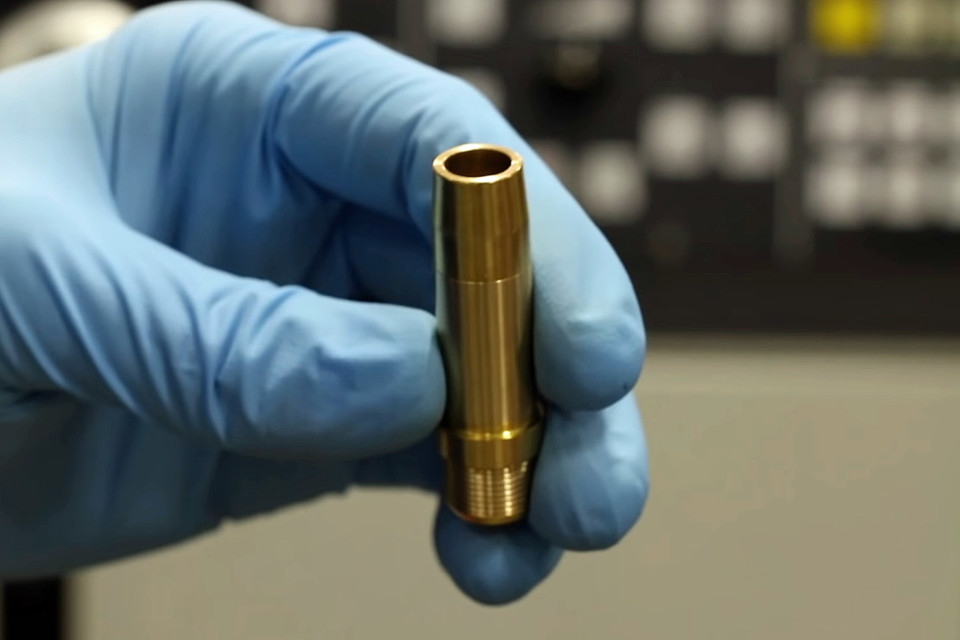
Bronze valve guides are a must with titanium valves. Since titanium is much more affected by excess heat, you need a guide which will dissipate heat rather than hold it it. The natural lubricity of brass is also a friction-reducing (and by extension, heat-reducing) benefit.
“If I could tell you how long a titanium valve will last, exactly, I could probably also tell you the winning lottery numbers. It’s usually elongation that spells the end of a titanium valve. If you’ve got a drag race or road race engine, and it’s getting to where you are lashing the engine two or three times [per event], it’s usually time to replace the valves.
In an 11/32-inch-stem valve, when you get anywhere from .010 to .015 inches of stretch, that’s about time to replace them. Another indicator would be any wear in the seat area or the stem of a titanium valve. When you’re running titanium valves, you need to do much more maintenance on the engine to monitor these factors.”
Can you mix titanium intake valves and stainless exhaust valves?
“Absolutely. We use the combination of titanium intake and stainless exhaust valves in a lot of different combinations, as I alluded to in question two. You want to always, always look at valvetrain mass and weight overall. Titanium is always looked at for its light weight. You’ve got a valve that is 40-42-percent lighter than a stainless valve, and when you look at the valves, the intake valve is the larger of the valves in an engine. So you want to lighten up that larger intake valve and reduce some of the valvetrain mass, by replacing them with titanium valves.”
About the author
Greg Acosta
Greg has spent over a decade in automotive publishing as Senior Editor of Race Pages magazine. In his free time, he is a firearms instructor and volunteer in the police armory.