Dwayne Rice
“They’re talking about putting rpm limits on us, easing up the rpm limits on them. Maybe letting them have the scoops or whatever carburetor or fuel injection they want. They said everything is open and they’re welcoming of any suggestions and data, and if it does come together, it’s going to be like Pro Modified was, where the combinations are closely monitored and changes are made on a per-race basis until they get the parity fine-tuned.”The Extreme Pro Stock competitors have, as a means of limiting costs for the sake of the health and viability of the class, collectively agreed over the last several years to curb engine development costs — a gentleman’s agreement, if you will — but their potential participation in the NHRA could well change all of that. That fact — the required costs to meet the NHRA’s regulations and that to be competitive — ranks among the group’s primary concerns.
Three of the engine and carburetor/fuel injection combinations that exist in the Extreme Pro Stock division.
“That’s the unknown. We don’t know what kind of restrictions will be put on us. We’ve always done our best to contain costs within the class, and that’s why we’ve lasted so long,” says Montecalvo. “But what will happen [regarding development costs] remains to be seen … it’s the NHRA’s game, and it’s up to what they want to do. We’re open to whatever their suggestions are, and once they come up with a plan, I’m sure there will be a lot of conversation before things are finalized. If we feel their plan is reasonable, we’ll take it from there.”“I’m the only wedge engine here, and it’s the fastest in the country, so I can’t say we aren’t going to throw a bunch of money at it. I have my blood, sweat and tears in this thing… every dime I have. It’s real … it has a real GM part number on it,” says Rice of his unique 840 cubic-inch Chevrolet wedge powerplant and the costs to make it competitive.They said everything is open and they’re welcoming of any suggestions and data, and if it does come together, it’s going to be like Pro Modified was, where the combinations are closely monitored and changes are made on a per-race basis until they get the parity fine-tuned. – Dwayne RiceMontecalvo, Rice, and the DeFlorian camp shared in no uncertain terms that, regardless of the outcome of this weekend’s exhibition, they intend to continue supporting the PDRA, which has provided their brand of Pro Stock racing a professionally-run venue in which to compete over the last several years. “We definitely want to support the PDRA,” Montecalvo says. “We aren’t looking to desert them, but we’re definitely looking to do some races over here, too. I can’t do 24 races, but I could do quite a few.”There are currently an estimated 28 Mountain Motor Pro Stock teams in existence (but not all are active) and Montecalvo says, if anything, the move to NHRA would promote greater participation among the big-inch racers.
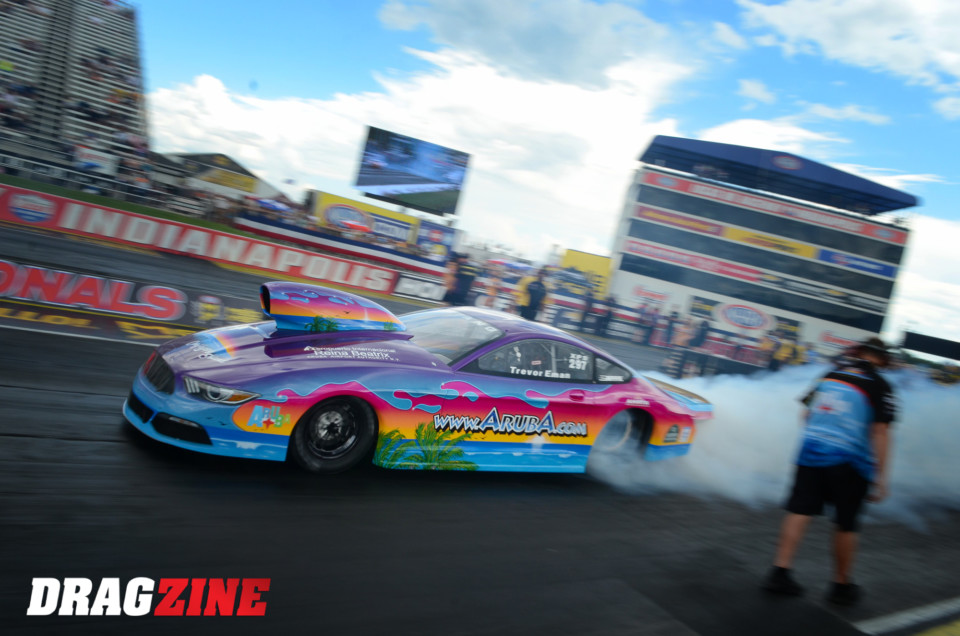
“Some have been sitting home because they
do want to run quarter-mile, and others just aren’t ready to come out, but the biggest thing I see is that it’s going to bring out more competitors. To me, if I was running Top Sportsman, I have the car…I go to Kaase, to Sonny’s, to Ron Miller, to Mike Allen — all four engine builders — buy a motor and be able to go Pro Stock racing. I think it’s going to bring in a lot of new competitors,” Montecalvo shares.Race says with a considerable influx of sponsorship he’d be open to contesting a full 24-race schedule, but otherwise would target the East coast events.“It will be interesting to see what they come up with. Pro Stock over here has been suffering we’ve been suffering, so if they add the Mountain Motors cars it might create a great situation for all of us,” Rice says