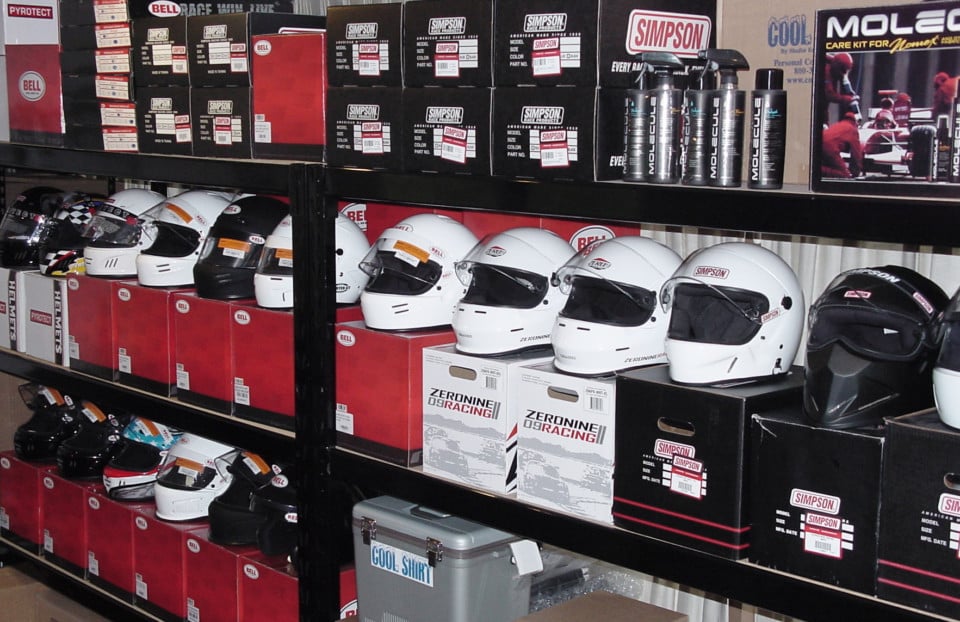
 I/O Port Racing Supplies
 has many helmet options to choose from. According to owner Ken Myers, it is helpful to take the time to test fit different helmets before making your final decision.
One of the considerations when buying a helmet is the material the shell is made of. More expensive helmets are made of carbon fiber and are lightweight. Ken Myers says there are some advantages to a lighter helmet in a collision. “The more mass on your head in a collision, the more chance for injuries to the neck. Additionally, lighter helmets are easier on the drivers during long stints behind the wheel, like for endurance racers.”
This advice was echoed by Patrick Utt from RaceQuip, “The weight factor is mostly important to racers who spend an hour or more in the car during a race. The lighter weight is less likely to fatigue the neck muscles.”
Ken did offer this warning about lightweight carbon-fiber helmets — not all carbon fiber is actual carbon fiber. “Many helmet manufacturers use a mix of fiberglass, Kevlar, and one layer of carbon fiber on the outside of the helmet to make it appear as if it is made completely with carbon fiber, which it isn’t. A $500 carbon-fiber helmet, isn’t really a carbon-fiber helmet.”
Ken also indicated that just because a helmet is more expensive, it doesn’t mean that it is actually a safer or better helmet, “All SA 2015 helmets have passed the same criteria to meet that Snell standard. A $250 SA 2015 helmet from Pyrotect met the same standards as a $1,300 SA 2015 Bell Carbon helmet. What matters is does the helmet meet your needs?”
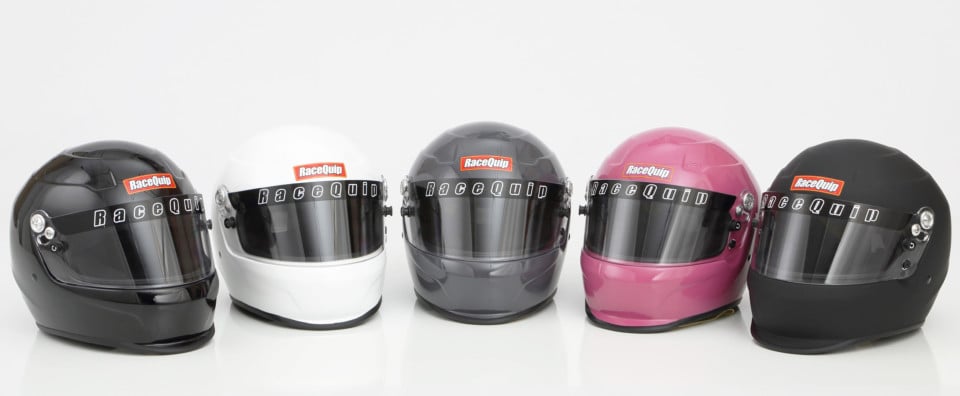
There are many different helmets to choose from. The important thing to look at when deciding is comfort and rating for usage (does your helmet fit the rules of the sanctioning body you are racing with?).
Other things to consider when purchasing a helmet are options. Do you want forced air into your helmet? Then you need to purchase a helmet that allows you to pipe in air. Do you race on a dirt track with a lot of dust? You may want a helmet with less air vents in the front. Do you have a radio in your car? You may want to purchase a helmet that has radio speakers already in it.
 Sampson Racing Communications
 can add a radio to any helmet you have, however, some helmets, like this Stilo have radio communications designed into the helmet from the factory.
Shawn Sampson, racer and owner of
Sampson Racing Communications (SRC) outfits teams with radio equipment and sells helmets with radio gear already installed. “I love the
Stilo helmet line. It’s the helmet I wear when I am racing in the 25 Hours of Thunderhill. You don’t have to worry about ear buds coming out of your ears; the speakers are built right into the helmet. It works great.”
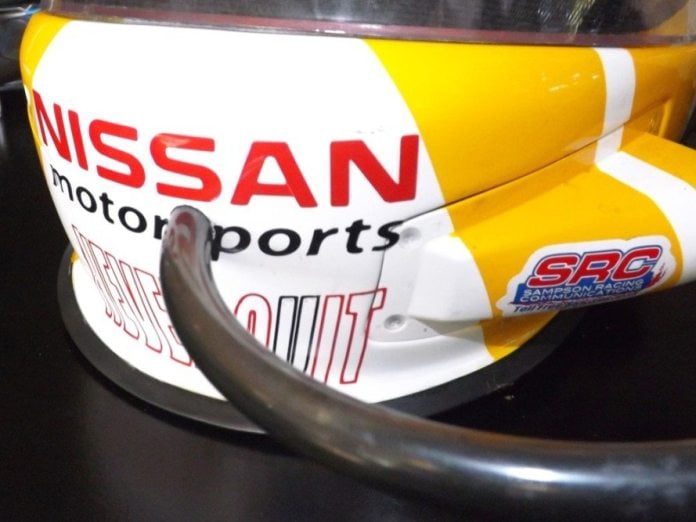
For you guys who get thirsty out on the track you can even modify your helmet to allow for drinking water.
Other things to consider: if you race at night, you will want a clear face shield. If you race in a sunny place, you may want a dark or smoked shield. If you are an endurance racer and need to drink water during a race, you may need to add
driver hydration to your helmet by routing a tube through the front to a camel pack with water.
There are a lot of things to consider when you make your helmet purchase, so it is crucial to think about all of these options before getting out your credit card. For example, if you are going to road race with the
National Auto Sport Association (NASA), you are required to have a full-face helmet. Open-face helmets, which are used frequently in autocross events, are not allowed in wheel-to-wheel road racing with
NASA. Knowledge is power — read your rule book!