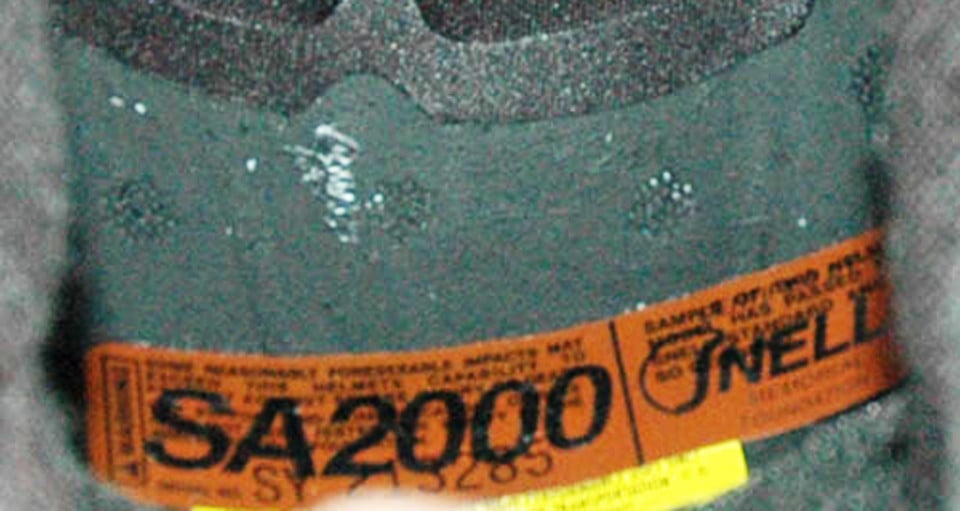
This helmet has a Snell SA 2000 rating, which means it is out of date. The ratings are good for approximately 11 to 12 years from the Snell date (depending on new ratings, and a particular sanctioning body’s rules). When you go through tech inspection, this is the sticker tech inspectors are digging to find inside your helmet.
So, how in the “snell” did this certification come about? Great question. Pete Snell died in a motor racing accident in 1956 from a rollover collision. Afterwards, a team of doctors, engineers, and scientists got together and, in Snell’s memory, dedicated their work to certifying safety standards in helmets. Since 1957, the
Snell Memorial Foundation has been certifying helmets. Why do you care? Because unless your helmet has their certification sticker inside, you ain’t racin’.
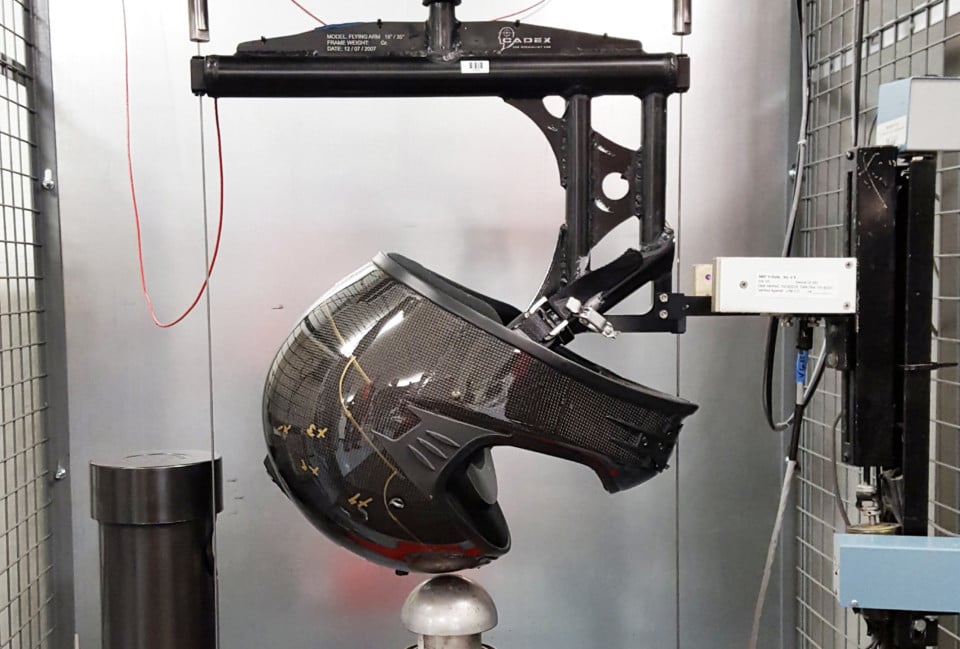
This is the drop test at the Snell Memorial Foundation, where engineers spend all day smashing stuff.
To find out how helmets can earn a Snell rating I spoke with Ed Becker, executive director and chief engineer at the Snell Memorial Foundation. The simple answer is helmets are test rated by bashing them into things. One of the tests performed is when a helmet has a 6.1 kilogram metal head placed in it (yes, kilograms because scientists use the metric system), and then the helmet is dropped from 11 feet. Sensors inside the helmet measure the G’s felt by the simulated head. No, they don’t use live humans for this test, for obvious reasons. If the G’s felt are above 243 G’s for a size large helmet, the helmet fails and does not receive a Snell certification.Ed said helmet manufacturers have their own choice in how they build a helmet, Snell does not mandate a construction process, they only designate the tests the helmet must pass in order to be certified. The goal at Snell is “impact energy management,” which means when the outside of your helmet stops, the inside of the helmet should let your head “ride down” the impact by compressing the inner layer of the helmet, so your brain doesn’t feel the heavy hit.For the SA 2015 standards, the SA rated helmets are being hit harder than the M rated helmets. Currently, most helmets that arrive at the foundation for testing do pass the tests as the helmet manufacturers engineer the helmets with the Snell standards in mind. However, occasionally helmets do fail, and then they are sent back to the manufacturer for a redesign. Snell rated helmets are safer, because they are tested beyond the government requirements for a basic D.O.T. rating. Those government requirements date back to standards set in 1966 which Ed considers, “Ancient technology.”
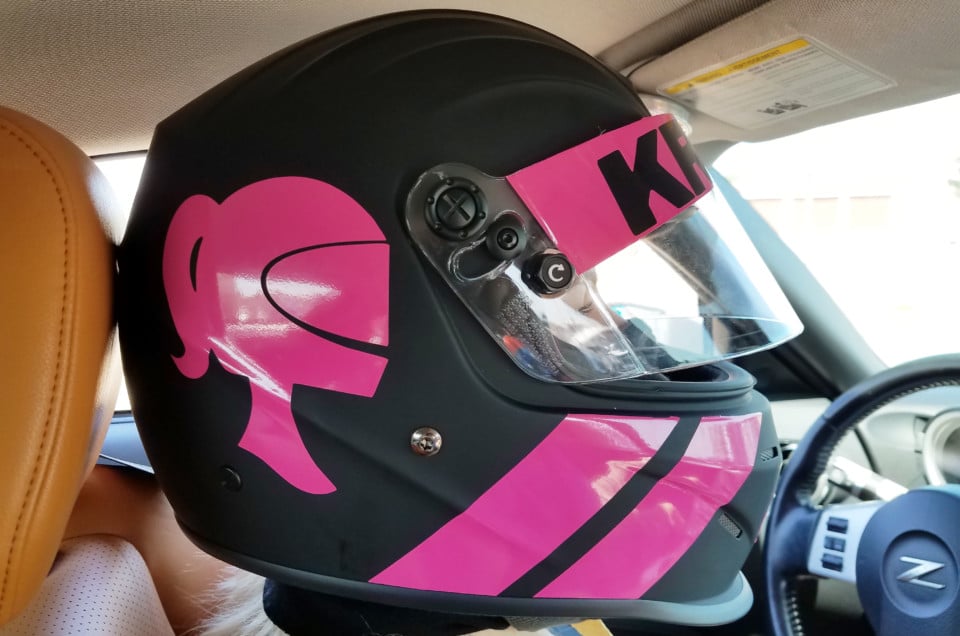
Some sanctioning bodies allow you to run an M rated (motorcycle) helmet, however, the recommendation for automobile competition is the SA rating should be used. The motorcycle rated helmets are not designed for impacts with roll cages and are not built with fire-retardant materials. The helmet in this photo, decked out in Girl Power livery, is a
Pyrotect SA 2015 rated helmet for auto racing.
Patrick Utt, president of
RaceQuip, explained how his helmets are built, “Helmet construction, from inside out, starts with a layer of fire retardant cloth covering a thin layer of soft foam against your head. This covers a 2-inch thick Expanded Polystyrene (EPS) dense foam insert. The EPS liner fits into an outer shell made from one of any various composite materials including fiberglass, Kevlar, and/or carbon fiber. The outer shell has a layer of gelcoat (or clear epoxy) that was sprayed into the mold to ensure the helmet has a good surface finish and releases from the mold more easily. Lastly, a layer of fire retardant paint covers the gelcoat layer.” RaceQuip prides itself for its affordable helmet designs and only builds SA rated helmets.
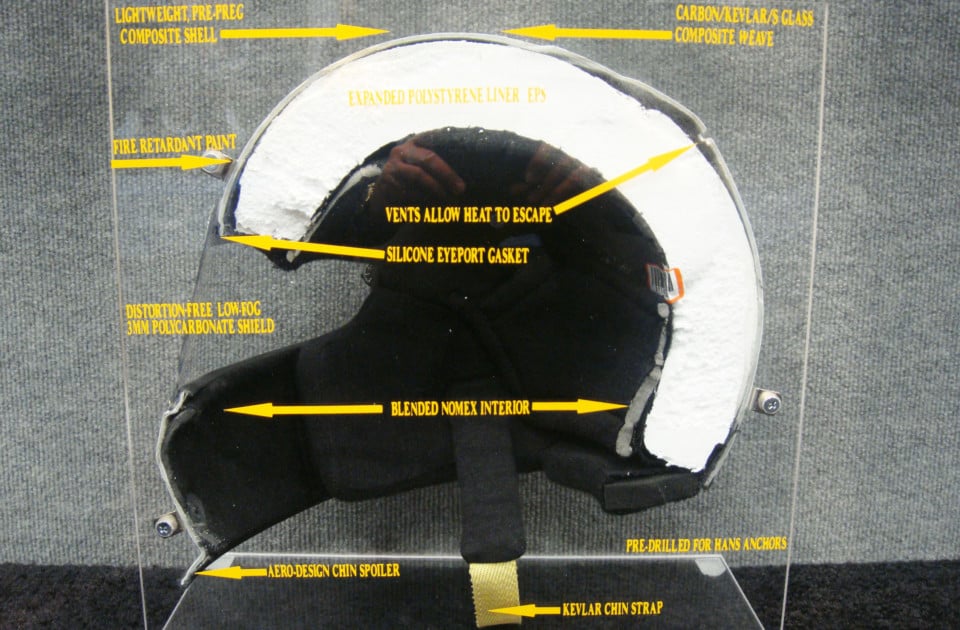
This helmet cut away shows the construction of an SA rated helmet. There is a lot of engineering in the design of these helmets to ensure you have the best chance possible in a collision.
When deciding which helmet is the right one for you, the best advice I have seen comes from Ken Myers, owner of
I/O Port Racing Supplies, who races cars and sells helmets to racers all day long. “If you can go to a store and try the helmet on, you will be much better off versus buying one on the internet and hoping for the best,” he says.
Ken says fitment is the key to being comfortable in the race car. “Size large doesn’t always mean large, and a large helmet in a Pyrotect that fits you doesn’t mean a large helmet in a Bell will fit you the same,” he mentions. “
Bell’s higher-end helmets are sized in hat sizes, for example 7 5/8ths. However, just because you wear a 7 5/8ths hat doesn’t mean that same helmet size will fit your head properly. You need to try the different helmets on.”