SCCA's Low Cost, No Instructors, No Hassle Track Night in America
We take on the SCCA's radical experiment—a new, inexpensive take on the traditional trackday experience
By Jack Baruth
It's more ironic than anything Alanis Morrissette ever sang about, really: The open-trackday scene as we know it today is almost entirely the product of organizations formed in response—make that
rebellion—against the SCCA. Dozens of groups, from Chin Motorsports to TrackDAZE to the 800-pound gorilla of High Performance Driver Education, NASA, were formed by people who wanted to drive their street cars on racetracks instead of following the SCCA's cautious safety and equipment guidelines. But as the years have gone by, those organizations have been forced to adopt an increasingly strict series of rules themselves, due in no small part to several instructor deaths and enough crunched metal to fill a Houston junkyard.
In the meantime, the SCCA has become vaguely aware of open-lapping's tremendous popularity, in much the same way that a
Brontosaurus will eventually become aware of a
Velociraptor biting its tail. Which led, in classic SCCA fashion, to the appointment of an SCCA Director of Experiential Programs. Now that there's a director, it's time for an Experimental Program. That program is called "Track Night in America", and it's a radical rethinking of the traditional trackday.

SCCA

Think of Track Night as a major-label band tour. It's crossing the country and hitting all the best venues, from Atlanta Motorsports Park to Portland International Raceway, with plenty of racetracks in between. Thanks to support from the Tire Rack and an FIA Sport Grant Program, the cost is the lowest I've seen in years: $150, even for tracks that normally charge $350 or more for a single day on course. The program is simple: you get three twenty-minute sessions plus one free parade-lap session in the course of an evening.
The most interesting thing about Track Night In America, however, is this: there is
no in-car instruction. Nearly every trackday organization in the country offers a comprehensive (and usually mandatory) program of in-car coaching for novice drivers. The SCCA, on the other hand, does paced laps for the first beginner session of the evening. After that, you're on your own, subject to some simple rules for passing and on-track behavior.
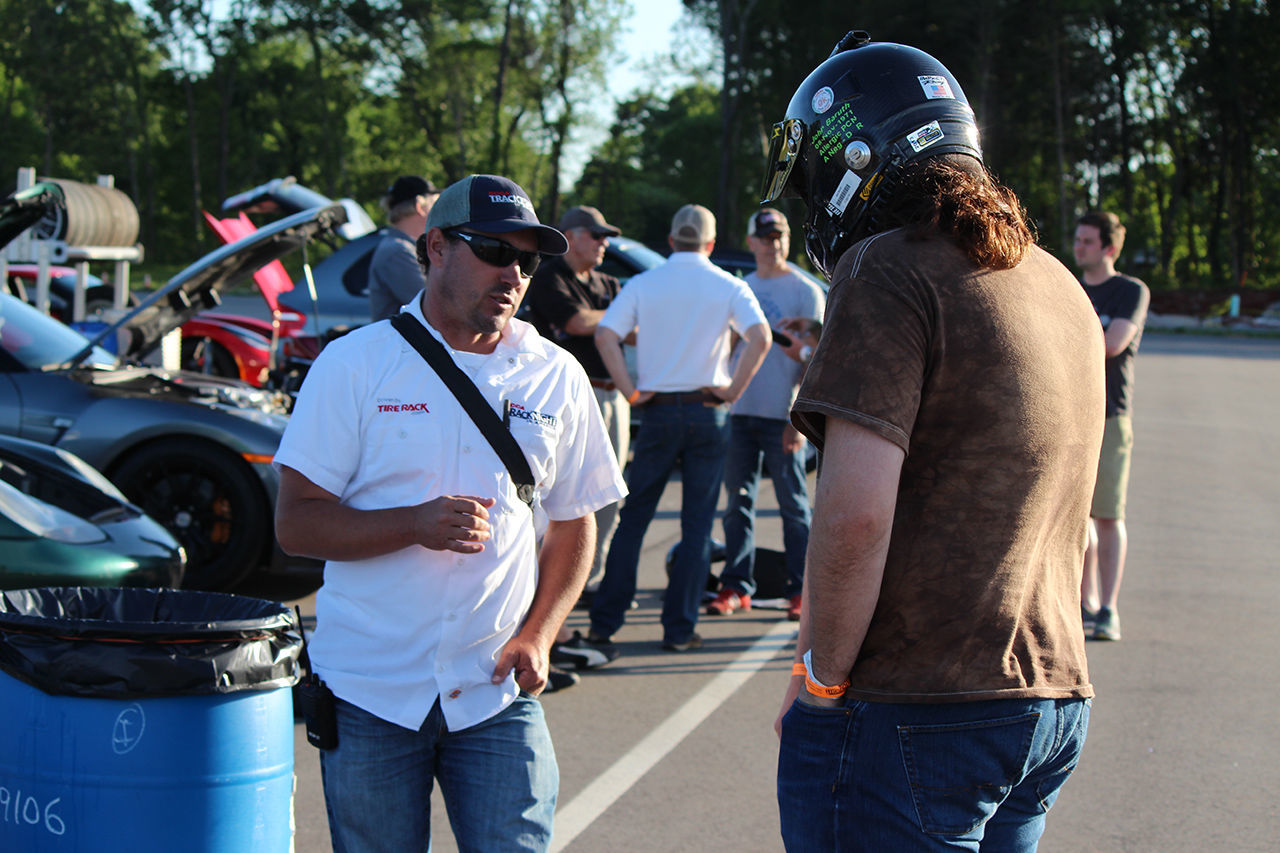
Charley Willis
Can this really work? Can the SCCA turn people loose on racetracks in their own cars with just a lead-follow session under their belts? To find out, we took a couple of cars—a
Corvette and a
Fiesta ST—to the Track Night at the new Corvette Motorsports Park. We also took a few novice drivers with no track experience.
While most of the novices were obviously terrified before their first session, the slow pace of the lead-follow session gave all of them a chance to adjust. The second session featured a few spinouts but no crunched fenders or hurt feelings. Failure to yield to faster traffic was punished by aggressive "black flagging", a procedure by which wayward drivers are brought to pit lane for a brief chat with the SCCA stewards. We were black flagged once ourselves, even though we were in the "Advanced" group, for pitching a car off the end of one turn in a fit of late-braking enthusiasm.