1941 Tatra A VW Influence
By Jason Torchinsy
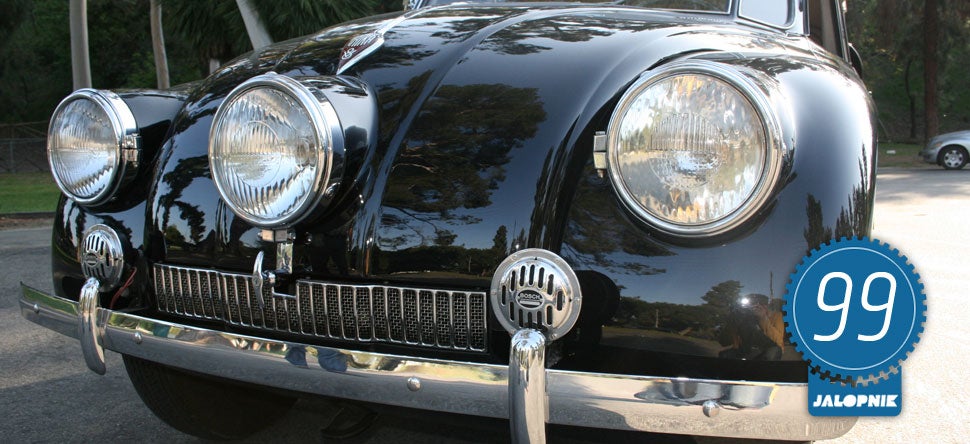
I'm sure you're seeing that '99' up there and are a little incredulous. How can an archaic, bizarre car like this possibly get almost a perfect score? Nothing's ever scored that high! The answer's easy: because I really want it to. The only reason I'm not giving it a 100 is because I don't own it.
I'm not even going to pretend it's rational. Here's how it'll work: I'm going to give as objective scores for each section as I can, and then I'm going to add in as many points as I need to get it to 99 because this car, this bizarre Czech Art Deco land-zepplin, is pretty much my dream car.
In fact, I remember talking with Matt, our esteemed Editor-in-Chief and my Pilates instructor, at my first Detroit Auto Show a few years back. We got to the "what car would you get if you could have any car, all rules of reality suspended" question, and I answered "Tatra T87." Sure, there's many, many other cars I love dearly, but that one fantasy car has always been this Tatra.
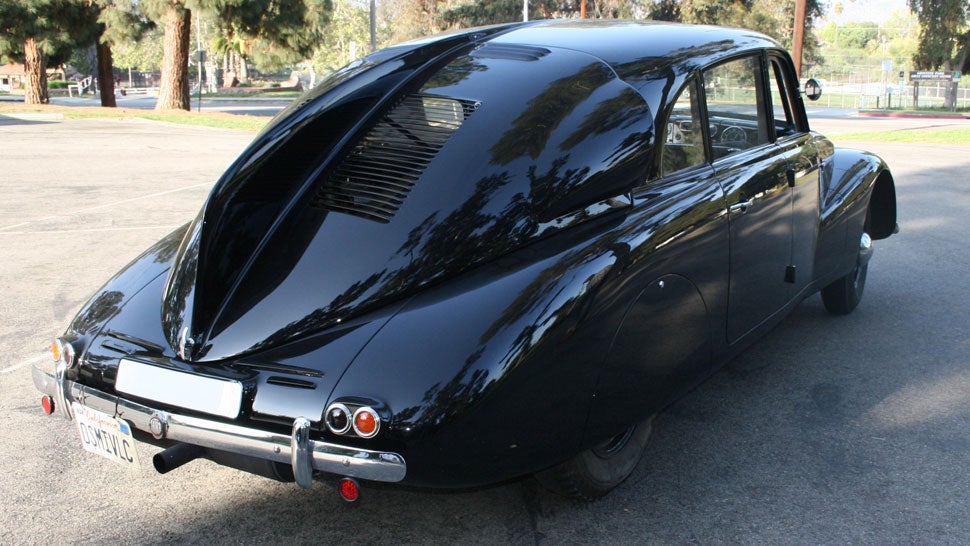
It's a little tricky to explain exactly why, but I'll try. It's technically innovative, sure, it's unorthodox — rear air-cooled V8, three headlights, dorsal fin — and you could argue it was the supercar of its era. But it's also pretty archaic, has some nontrivial handling issues, and is a product of an era when things were, frankly, quite primitive.
But here's the thing about the Tatra — it's like a refugee from an alternate timeline of a world that never happened. Being around a T87 makes you feel like you live in a world that split off from ours somewhere in the early 30s, and continued on to this utopia of gleaming, benevolent, elegant machines and avoided all of the horrors of the Depression and WWII and all that mess.
It's from a world of sleek skyscrapers with zeppelin moorings at their tops, a world where you travel by airship and hovercraft before putting on a nice tie and climbing aboard a silver rocket to the expansive Lunar base, where you dine on perfect vat-grown steaks and sip gin served to you by an atomic-powered robot. It's a misplaced relic of this wildly optimistic technological future that never quite happened, and it's thrilling just to be around this lost orphan of that world.
That's how I feel around a Tatra T87, and that's why I'm scoring it a 99, dammit.
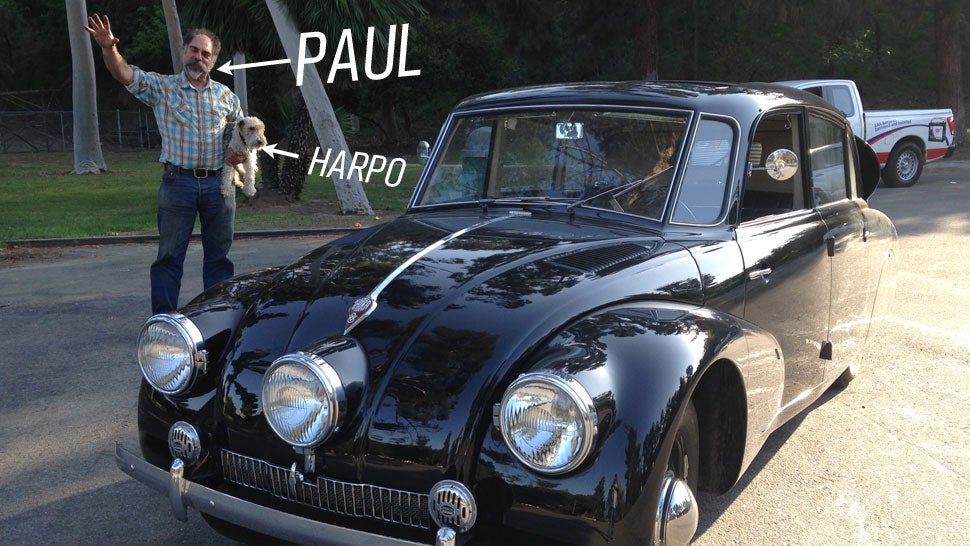
This particular T87 is owned by Paul Greenstein, and is one of three other Tatras he owns. He also has a rougher pair of T600s and a T603. Paul also has an incredible collection of other fascinating cars, including this Mercedes-Benz 170H, which is really amazing to see.
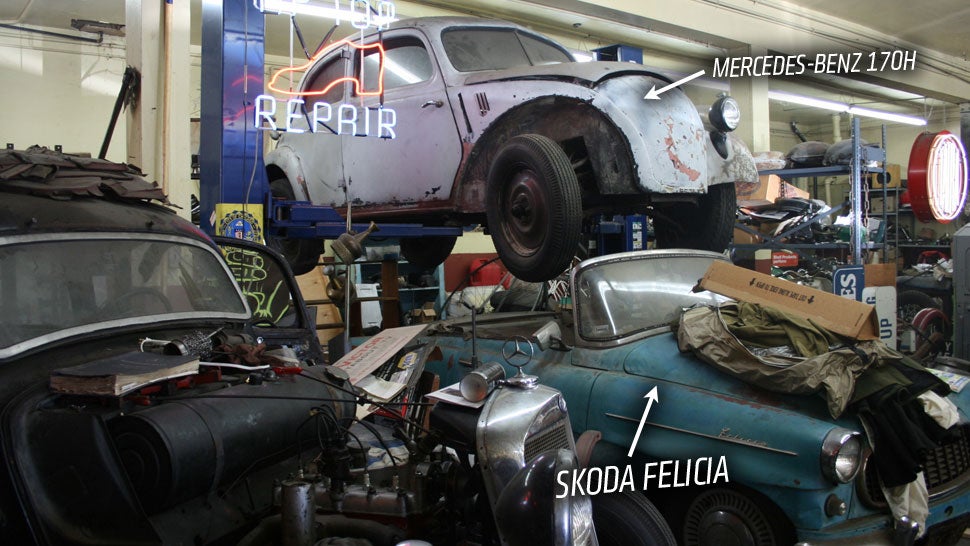
Paul is also an ideal steward for the Tatra because he is incredibly skilled at making things. He's cast his own parts and hinges from brass when needed, and he even re-silkscreened the instruments on the Tatra's dash himself. He knows these cars inside and out, and his standards of originality and quality are incredibly high.
He got this T87 in rough shape, and worked with restorers in the Czech republic to get it to the pristine state it's in now. Even better, even though the car is perfect, he's not holing it up in some climate-controlled prison. He drives it, lets his dog ride in it, and, more importantly, let me drive it.
And for that, I really am grateful.
Exterior: 9/10
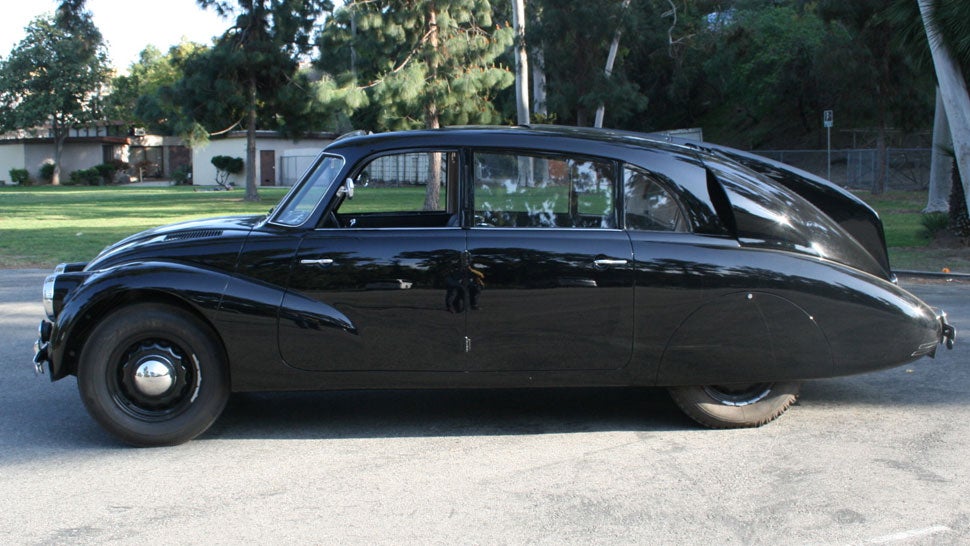
The look of the T87 was dictated by the still-new science of aerodynamics — its predecessor, the Tatra 77, was the first car to be seriously designed with drag coefficients in mind. Based on work by zeppelin designer Paul Jaray, Hans Ledwinka and Erich Überlacker designed the T87, and in that design you can find the seeds of the Volkswagen Beetle, the Porsche 356, and even cars like the Tucker Torpedo.
Sure, rear-engined, streamlined cars like the Rumpler Tropfen-auto were earlier, but the T87 is really the wellspring for so many iconic rear-engine cars.
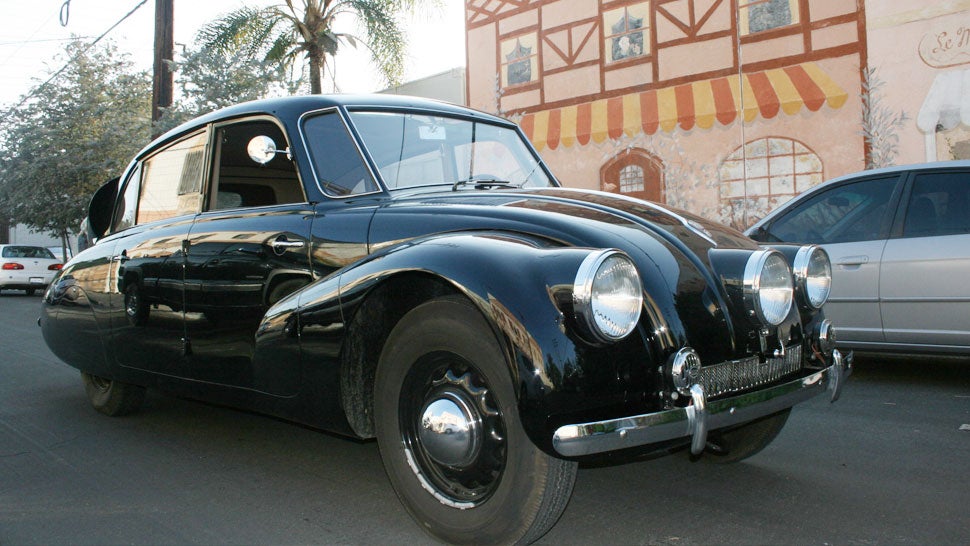
It's got beautiful Art Deco detailing all over it, and I love the elongated yet oddly stubby proportions, with that amazing dorsal fin. The car reads large when you look at it, but in reality, it's pretty small, roughly the dimensions of a modern Honda Civic. With its three headlights, skirted rear wheel, multi-pane windshield, windowless-and-louvered rear it looks like nothing else on the road.
The front and rear doors are both hung from the B-pillar, with the front pair being suicide and the rear pair opening conventionally.
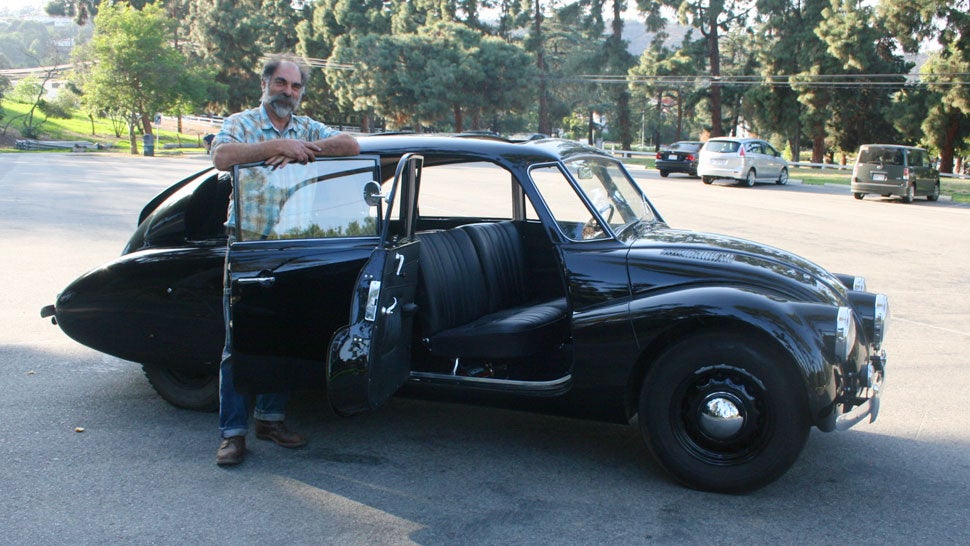
As I mentioned before, it looks like the tomorrow we were promised yesterday and never quite managed to find. In black, like Paul's is, the car takes on a stately feeling, and the brightwork really stands out. It's a car that people notice, though not exactly in the same way that other classics get attention. Nobody knows what the hell it is, but everyone
feels that it's Something Special. They're right.
Interior: 10/10
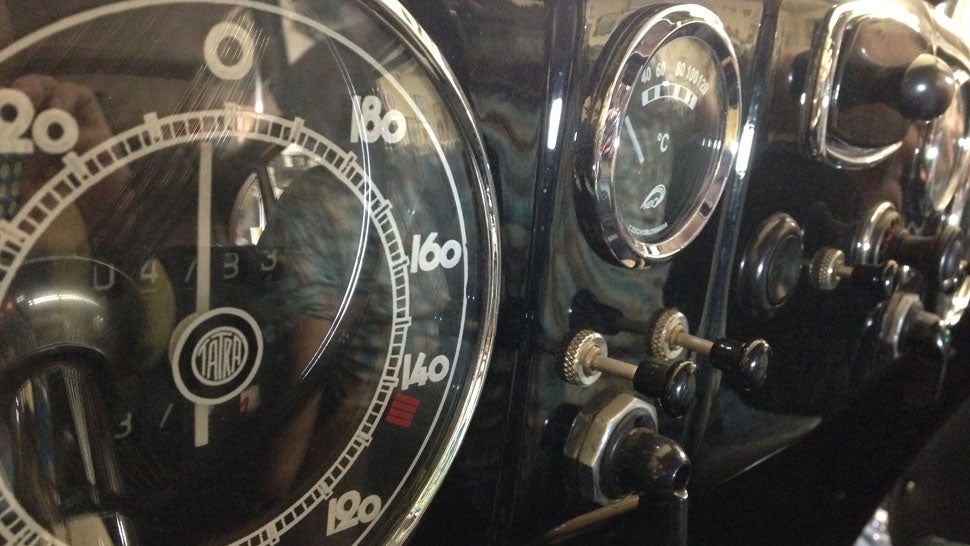
The big Tatras were cars for big shots, and it feels like it inside. Everything is finished with attention and care, and it's clear no expense was spared. There's no crappy rubber accordion boot on the bottom of the shifter, for example, there's just a lovely chrome ball-and-socket that looks like it's ready to be implanted in your Grandma's hip.
The dash is a dazzling array of deco instruments, ringed in chrome, with a heathly spattering of bewilderingly and tantalizingly unlabeled switches, and knobs, the function of which even Paul isn't exactly sure of. The instrument printing that Paul re-silkscreened uses three inks: white, red, and a special ink with ground glass, to be nice and reflective for nighttime reading.