Part 2 By Jason Torchinsky
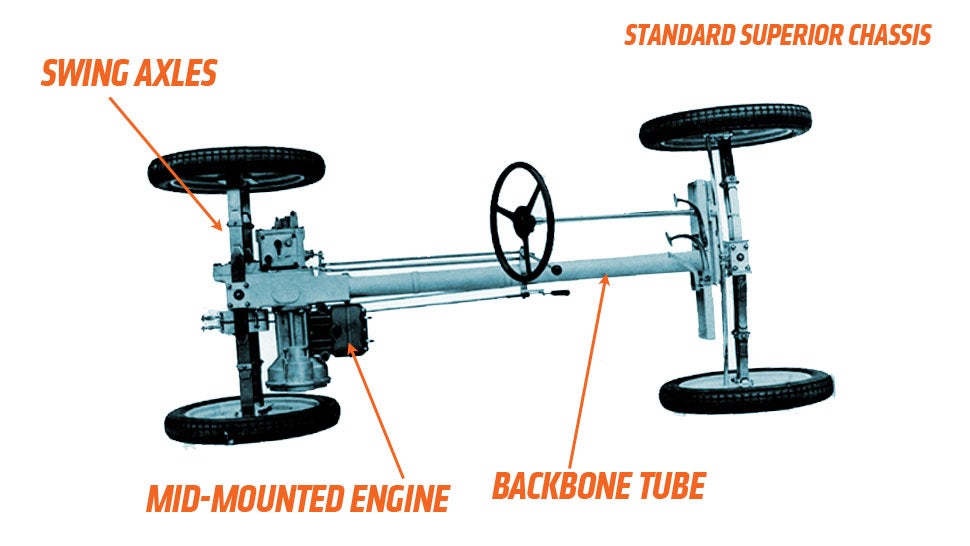
It's remarkably easy to see the Superior as a Beetle ancestor. The backbone chassis is shared between both cars, and while the Beetle uses a stamped, inverted U-shaped tunnel for its backbone and the Standard uses an actual cylindrical pipe-like tube, the principles are the same.
Of course, there were a number of other cars of this era being built on similar principles, and ending up looking remarkably Beetle-like; the
Tatra V570 comes to mind as an example. Even so, Ganz' wide publication of his ideas and the fact that the Superior made it into production (albeit limited) makes me still willing to give the nod to the Standard for Beetle-dadhood.
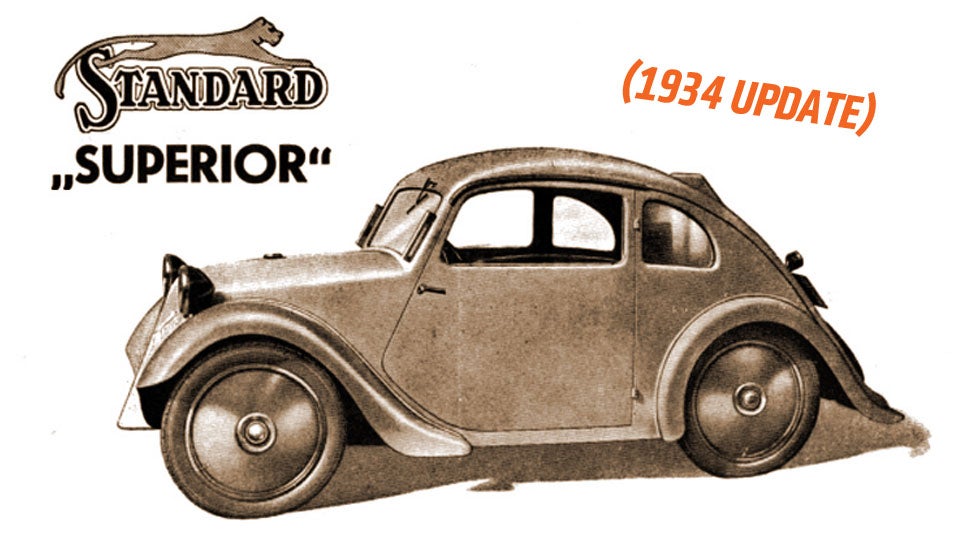
Early Beetles used a swing-axle suspension system much like the Superior's, and the overall plan, design, and layout of the Superior feel eerily like a foreshadowing of what the Beetle would become. The 1934 redesign of the Superior is even closer than the first version, incorporating rear side windows and a rudimentary luggage/seat area in the back for your hapless, crammable kids. The side profile of the Superior is remarkably close to the eventual Beetle shape.
The one key area where the Superior and VW differ is in the engine. While both are air-cooled and mounted behind the driver, with horizontally-laying cylinders, the Standard uses a 396cc (later 500cc) two-stroke inline engine. The type of engine is less of a big difference than is the precise location: Ganz' designs stipulated an engine
within the wheelbase of the car, so the Superior was a mid-mounted design.
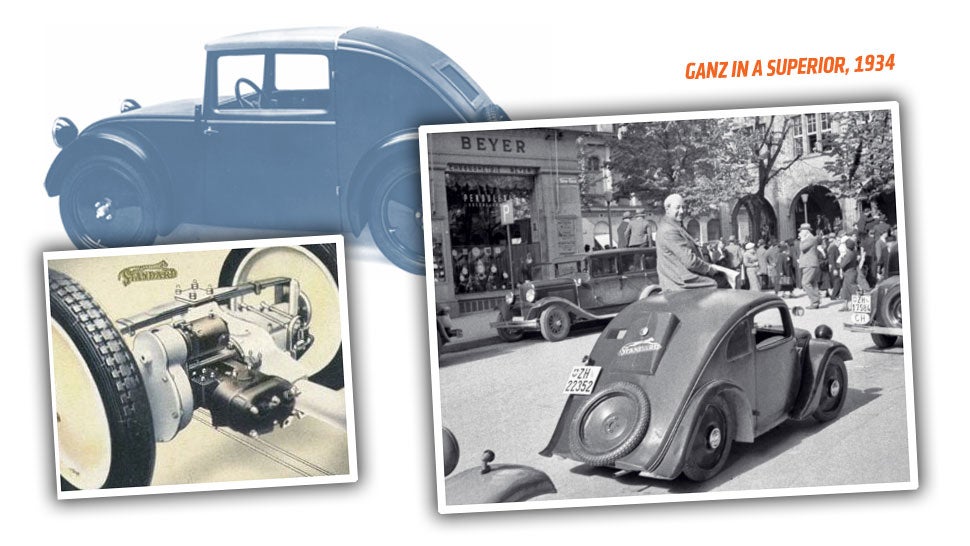
Porsche was fine with placing the engine outboard of the wheelbase to the rear, which is the primary factor for handling issues and idiosyncrasies of not just the Beetle, but nearly every other air-cooled VW and Porsche to follow for decades. You could easily and annoyingly argue that the Superior was, in fact, superior, at least in this trait.
The Standard Superior was designed to fill the exact same role as the Beetle as well: a small, useful, rugged, and extremely cheap entry-level car. The Standard was able to be cheap by having a tiny engine and a body made largely of wood and artificial leather, save for the steel fenders. The Beetle, built more robustly out of steel, was to be cheap thanks to massive volumes and economies of scale.
The Standard Superior was never a great seller, for a variety of reasons, not the least of which has to do with all the upheaval going on in Germany at the time and the intervention of the Nazis into the German car industry. Production stopped in 1935, and
only one manages to survive to this day.
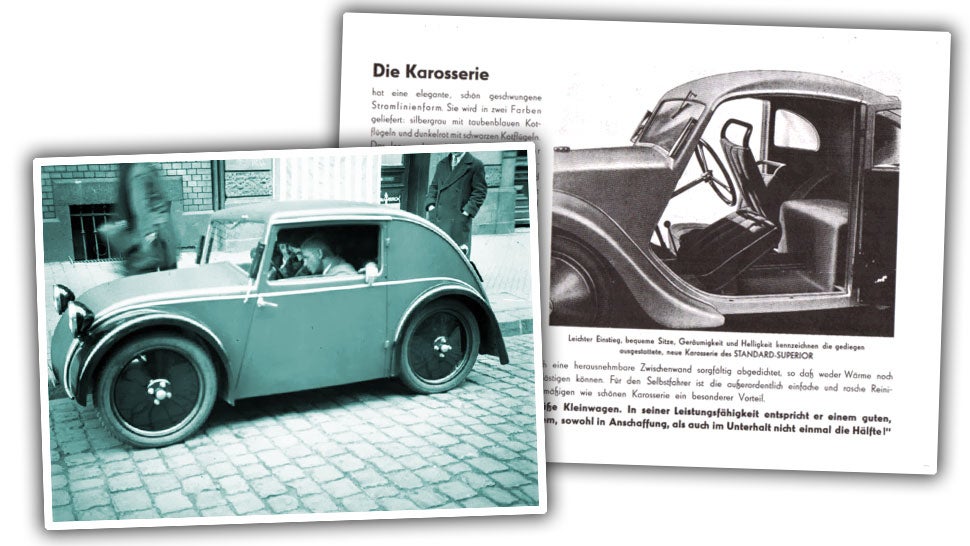
Looking at pictures of the Standard Superior sort of gives me chills, though I'm not exactly sure why. Maybe it's sort of like when you see a doppelgänger of yourself or someone familiar in a very old photograph. The car is clearly not a Beetle, but there's so many familial and familiar traits there, it's hard not to equate the two. I think you could even argue that the Superior has more in common with what became the final Beetle than Porsche's Zündapp prototype, which was significantly bigger and used a doomed radial engine.
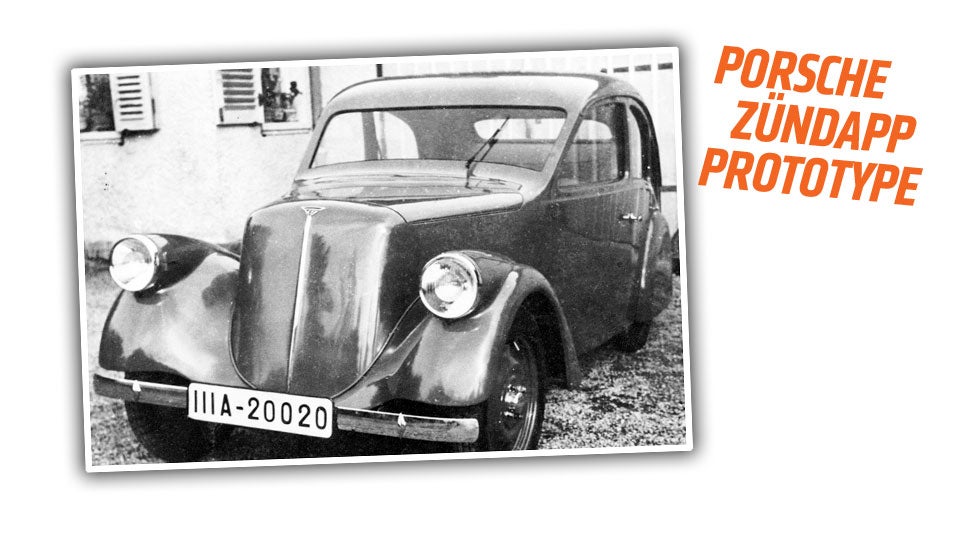
I'm not trying to disregard Porsche's huge, crucial role in the development of the Beetle; I just feel it's worth giving attention to those other incredibly important cars and designers that eventually helped to create that car that inspired me to waste so much time as a kid reading about its origins in the first place.
I would love to drive a Standard Superior; I feel lucky enough I got to drive a
Tatra, so I'm not really going to hold my breath, but if I can't confess these desires to you, who can I confess to?